中国五千年:汉朝:丝绸之路与独尊儒术
汉朝由刘邦建立,前后历经西汉与东汉,是秦之后又一个大一统王朝。秦末天下大乱,刘邦与项羽争夺天下,约公元前二〇二年,刘邦在垓下取胜,建立汉朝,定都长安,史称西汉。汉初统治者吸取秦亡教训,实行休养生息,轻徭薄赋。
文帝与景帝时期,社会逐渐安定,史称文景之治,为后来的强盛打下基础。汉武帝即位后,加强中央集权,推行推恩令,削弱诸侯势力,独尊儒术,设立太学,并派张骞出使西域,开通了连接中原与西域的通道。武帝还多次派兵反击匈奴,收复河西走廊,设置河西四郡,疆域大为扩展。
西汉后期,外戚与宦官势力交替膨胀,政治日渐腐败,王莽篡位后改国号为新,旋即失败。公元二五年,刘秀重建汉朝,定都洛阳,史称东汉。光武帝整顿吏治,释放奴婢,恢复生产,东汉前期出现光武中兴。
东汉后期,外戚与宦官轮流专权,黄巾起义爆发后,地方豪强拥兵自重,中央权威瓦解。公元二二〇年,曹丕代汉称帝,东汉灭亡。汉朝四百余年间,汉字、汉人、汉文化的称谓由此定型,儒学成为主流思想,造纸术的改进、丝绸之路的开通,都对后世中国与世界产生了深远影响。
汉朝的制度也影响深远。中央设三公九卿,地方实行郡县与封国并行,后逐步削藩。汉武帝时设立刺史监察地方,盐铁官营增加财政收入。张骞两次出使西域后,丝绸、漆器西传,葡萄、苜蓿等物产东来,东西交流日益频繁。
东汉蔡伦改进造纸术,以树皮、麻头、破布等为原料,纸张价廉易得,逐渐取代竹简与帛书,为文化的保存与传播创造了条件。班超经营西域数十年,班固撰写《汉书》,为后世留下系统的断代史体例。汉朝的郡县制、儒学教育与法律观念,皆为后世王朝所继承。汉朝疆域东至辽东,西至西域,南至交趾,北抵漠北,盛时人口据史书记载达数千万之众。
信息来源:《史记》《汉书》《后汉书》及中国国家博物馆公开史料
Five Thousand Years of China: The Han Dynasty: The Silk Road and the Ascendancy of Confucianism
The Han was founded by Liu Bang and, across the Western and Eastern Han, was another great unified dynasty after the Qin. In the chaos at the end of Qin, Liu Bang contended with Xiang Yu for the realm; around 202 BCE Liu Bang prevailed at Gaixia, founded the Han and made Chang'an his capital — the Western Han. The early Han rulers learned the lesson of Qin's fall and practised recuperation, with light taxes and corvée.
Under Emperors Wen and Jing, society gradually settled — the famed 'Rule of Wen and Jing' — laying the ground for later strength. After Emperor Wu took the throne, he strengthened central power, issued the Order of Expanding Grace to weaken the regional lords, honoured Confucianism alone, founded the Imperial Academy, and sent Zhang Qian to the Western Regions, opening the route between the Central Plains and the west. Emperor Wu also campaigned repeatedly against the Xiongnu, recovered the Hexi Corridor and established the four Hexi commanderies, greatly extending the territory.
In the late Western Han, consort clans and eunuchs waxed in turn and politics decayed; Wang Mang usurped the throne and changed the dynastic name to Xin, only to fail swiftly. In 25 CE Liu Xiu refounded the Han with Luoyang as capital — the Eastern Han. Emperor Guangwu reformed the administration, freed slaves and restored production, and the early Eastern Han saw the 'Restoration of Guangwu'.
In the late Eastern Han, consort clans and eunuchs alternated in power; after the Yellow Turban Rebellion, local magnates raised their own armies and central authority disintegrated. In 220 CE Cao Pi took the throne in place of the Han, and the Han fell.
Over its more than four hundred years, the names of the Han characters, the Han people and Han culture were fixed; Confucianism became the mainstream thought; and the improvement of papermaking and the opening of the Silk Road had far-reaching effects on later China and the world.
Han institutions were likewise far-reaching. At the centre stood the Three Dukes and Nine Chamberlains; locally commanderies coexisted with kingdoms, which were gradually pared away. Emperor Wu established regional inspectors to supervise local government, and state-run salt and iron monopolies increased revenue. After Zhang Qian's two missions to the Western Regions, silk and lacquerware travelled west and grapes, alfalfa and other products came east, and exchange between east and west grew ever more frequent.
In the Eastern Han, Cai Lun improved papermaking, using bark, hemp waste and rags, making paper cheap and easy to obtain; it gradually replaced bamboo slips and silk, creating the conditions for preserving and spreading culture. Ban Chao managed the Western Regions for decades, and Ban Gu wrote the Book of Han, leaving later ages a systematic model of dynastic history.
The commandery system, Confucian education and legal ideas of the Han were all inherited by later dynasties. Han territory reached Liaodong in the east, the Western Regions in the west, Jiaozhi in the south and the Mobei steppe in the north, and at its height its population, as recorded in the histories, numbered in the tens of millions.
Sources: Shiji; Book of Han; Book of the Later Han; public historical materials of the National Museum of China.
来源:GSM·美国(原文链接)
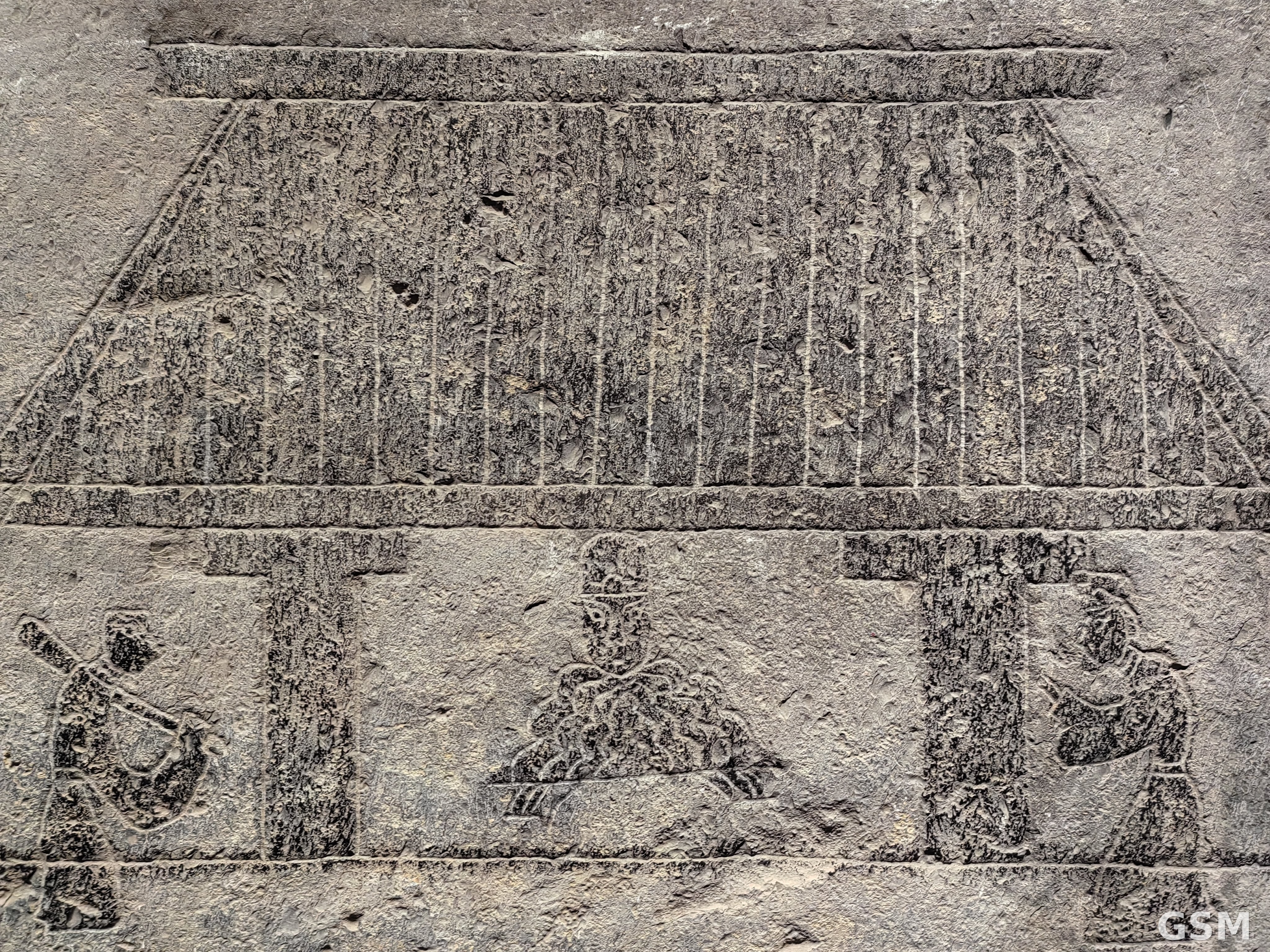
图片来源:徐州汉画像石艺术馆藏汉代画像石实景,Yumeto 摄,CC BY-SA 4.0,Wikimedia Commons / A Han-dynasty pictorial stone at the Xuzhou Han Pictorial Stone Art Museum. Photo by Yumeto, CC BY-SA 4.0, via Wikimedia Commons.