美国第100次太空行走10月29日登场:两名宇航员为国际空间站安装第七块卷轴式太阳能电池板,11月5日装完最后一块
Houston——美国国家航空航天局(National Aeronautics and Space Administration,NASA)10月26日发布的国际空间站日志显示,远征75队乘组周一开始为本周的太空行走做最后准备:NASA宇航员 Anil Menon 与加拿大航天局(Canadian Space Agency,CSA)宇航员 Joshua Kutryk 将于10月29日(周四)美东时间上午8时出舱,执行美国第100次太空行走,为空间站安装第七块卷轴式太阳能电池板(International Space Station Roll-Out Solar Array,IROSA);NASA+将于美东时间上午6时30分起直播这次行走。
按NASA公布的程序,这次太空行走预计持续6小时45分钟。两人将从 Quest 气闸舱出舱,先把卷轴式电池板从外部托盘上释放;Menon 将固定在 Canadarm2 机械臂末端、乘机械臂把电池板送到站体左侧桁架的安装位置,Kutryk 则系着安全绳沿桁架移动到同一工位,两人会合完成安装,随后由地面控制中心激活新电池板。周一,两人与负责舱内支援的 NASA 宇航员 Jessica Watkins、Luke Delaney 一起熟悉了机械臂配合动作,并检查了宇航服应急喷气背包的燃料、电量与推进器状态,Watkins 还协助 Kutryk 确认宇航服冷却与供水系统配置无误。
这块电池板将安装到空间站的 2A 电力通道上。NASA表示,它将为空间站的关键运行提供额外电力,包括保障空间站未来安全、受控地离轨。
系列行走的第二次定于11月5日:Menon 与 Kutryk 将安装第八块、也是最后一块卷轴式电池板,装到空间站的 3B 电力通道上,为空间站历时数年的电力扩容工程收尾。八块卷轴式电池板全部就位后,空间站可用电力将提升至多30%,发电能力从约160千瓦升至约215千瓦。这两次行走分别是支持空间站组装、维护与升级的第285次和第286次太空行走。
周一站内的其他工作还包括:乘组在 SpaceX 的 Dragon 货运飞船与空间站之间转运物资——该飞船10月15日自动对接 Harmony 舱,定于11月中旬装载科学样品与硬件返回地球;Delaney 继续记录睡眠数据、参与长时太空飞行减压研究,并照料生物打印的血管组织,该研究利用微重力环境为患者定制个体化组织。
U.S. Spacewalk 100 Set for Oct. 29: Two Astronauts to Install the Space Station's Seventh Roll-Out Solar Array, With the Final One on Nov. 5
HOUSTON — NASA's International Space Station blog for Oct. 26 said the Expedition 75 crew began the week gearing up for a spacewalk to upgrade the station's power generation system: NASA astronaut Anil Menon and Canadian Space Agency (CSA) astronaut Joshua Kutryk will exit the Quest airlock at 8 a.m. EDT on Thursday, Oct. 29, to install the seventh International Space Station Roll-Out Solar Array (IROSA) in U.S. spacewalk 100. Live coverage begins at 6:30 a.m. EDT on NASA+.
The spacewalk is planned to last six hours and 45 minutes. Menon and Kutryk will first release the roll-out solar array from an external pallet; Menon will then attach himself to the Canadarm2 robotic arm, retrieve the array and ride the arm to the installation worksite on the port-side truss, while Kutryk, tethered to the truss, translates to the same worksite to join him and complete the installation, after which mission controllers will activate the new array. On Monday the pair, joined by NASA flight engineers Jessica Watkins and Luke Delaney, who will help them in and out of their spacesuits and assist with the Canadarm2, familiarized themselves with the arm maneuvers and checked their emergency spacesuit jetpacks for fuel, battery power and thruster function.
The array will be installed on the station's 2A electrical power channel. NASA said it will provide additional power to support critical station operations, including the station's eventual safe and controlled deorbit.
In the second spacewalk, on Nov. 5, Menon and Kutryk will install the eighth and final IROSA on the station's 3B channel, completing the power augmentation upgrades. Together, the eight roll-out arrays will increase available power by up to 30 percent, boosting the station's electric power generation capacity from 160 kilowatts to approximately 215 kilowatts. The two outings will be the 285th and 286th spacewalks in support of space station assembly, maintenance and upgrades.
Other work aboard the station on Monday included transferring supplies to and from SpaceX's Dragon cargo spacecraft, which docked autonomously to the Harmony module on Oct. 15 and is due to return to Earth in mid-November loaded with science and hardware, and Delaney documenting his sleep patterns for a stress-reduction study and tending bioprinted blood vessel tissues, part of research using microgravity to create customized, individualized tissues for patients.
来源:GSM·美国(原文链接)
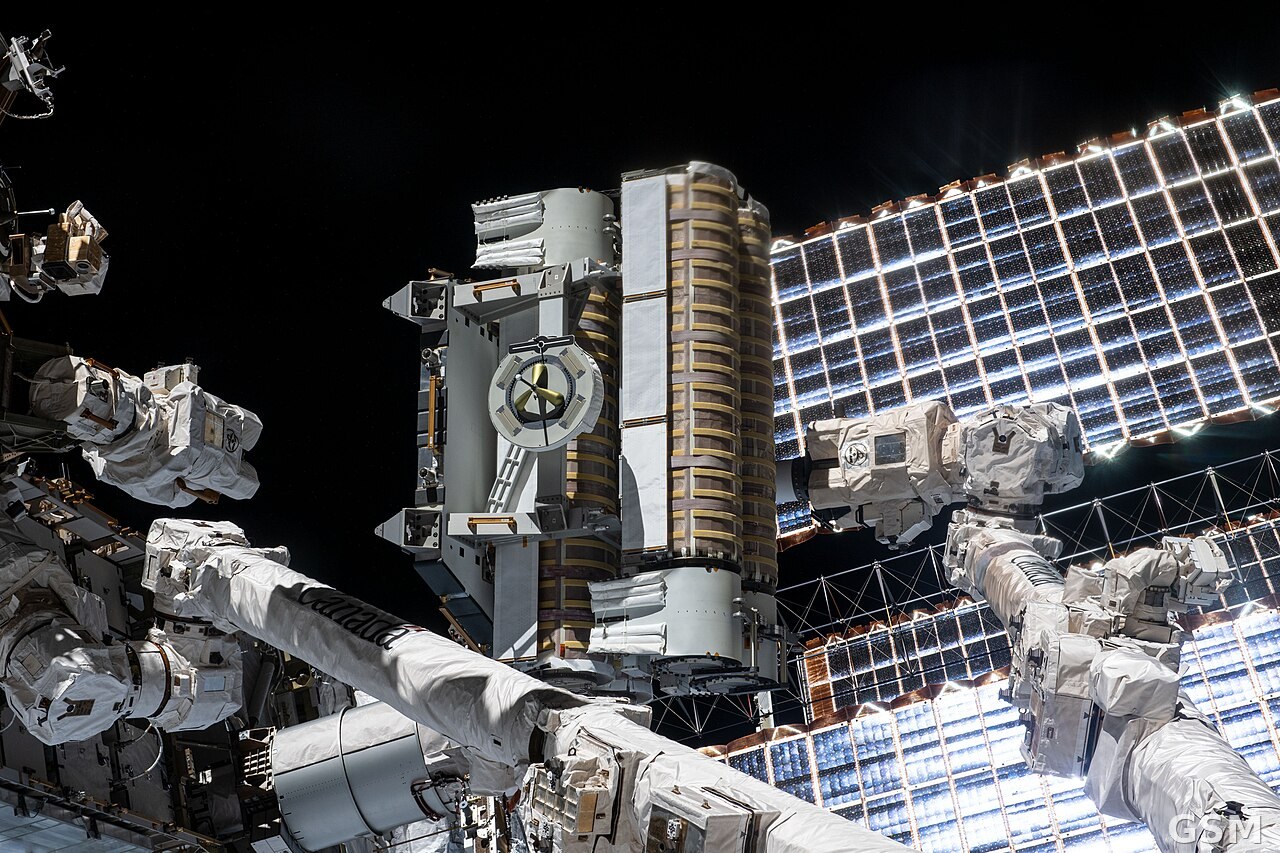
图片来源:图:Canadarm2机械臂抓握着一块卷轴式太阳能电池板(资料图,摄于此前一次同型电池板安装任务)。图片来源:美国国家航空航天局(NASA),公共领域,经 Wikimedia Commons。/ Photo: A roll-out solar array (IROSA) in the grip of the Canadarm2 robotic arm (file photo from an earlier installation of the same array type). Source: NASA, public domain, via Wikimedia Commons.