司法部法律顾问办公室10月26日意见:FDA自家法规「基本上阻止」公开食源性疫情供应链企业名单、改规则即可解禁
美国司法部法律顾问办公室(Office of Legal Counsel,OLC)10月26日向卫生与公众服务部(HHS)代理总法律顾问出具一份8页法律意见,题为《食源性疾病疫情与召回中供应链信息的公开披露》。卫生与公众服务部提出的问题是:食品药品监管局(FDA)是否有法律授权向公众公布致病食品供应链上的企业。意见的结论是:挡住 FDA 的主要是 FDA 自己的法规,而非法律本身;FDA 有权通过修改法规解禁,但至今没有这样做。
意见首先指出,《商业秘密法》只禁止联邦雇员披露「未经法律授权」的保密商业信息,而一部依法制定的法规本身即构成授权。FDA 现行法规(21 CFR 20.61)把供应链上企业的名称与地址列为保密商业信息并加以封存;意见据此认定,在现行法规下,《商业秘密法》「基本上阻止(largely prevents)」FDA 公开供应链信息。
意见第二点指出,FDA 惯常援引的例外条款(21 CFR 20.91,允许为召回等执法行动之必要而披露)在实践中「极为狭窄(exceedingly narrow in practice)」:它只在正式执法行动存在时才启动,意见原文称「在召回正式启动之前,FDA 的手脚是被绑住的」;且信息收集完成时往往已不再「必要」。意见还指出,成文法「从未要求」FDA 在2020年收货方指引中采用的那种逐案分析,并称那种做法「繁琐(arduous)」。
意见第三点给出解法:《联邦食品、药品和化妆品法》第705(b)条允许 FDA 在局长认为存在「对健康的紧迫危险或对消费者的重大欺骗」时发布食品相关信息;结合 FDA 的一般规则制定权,意见认定 FDA 可以修改法规、授权公开供应链信息,此类依规披露即属「经法律授权」,不违反《商业秘密法》,且这「算不上 FDA 权力的变革性扩张」;《信息自由法》的商业信息豁免与该法自身的商业秘密条款同样不构成障碍。意见同时划出边界:在疫情已经结束之后再授权披露的法规,可能与第705(b)条不一致——紧迫危险授权是为进行中的疫情准备的工具。意见还在脚注中质疑:供应链伙伴的身份是否本就属于《商业秘密法》保护的那类信息。
这一意见与正在发生的疫情直接相关:据食品安全律师 Bill Marler 10月26日公布意见书全文并撰文分析,FDA 与农业部食品安全检验局(FSIS)正联合调查一起鸡肉卷大肠杆菌 O157:H7 疫情(编号 #1421),已有50人患病;涉事产品为 Trader Joe's 龙蒿鸡肉沙拉卷的消息来自诉讼与报纸报道,而非任何一家机构的公布。Marler 表示,他已据这份意见修改两份请愿:一份要求 FDA 按意见所述路径制定新的披露规则,另一份要求 FDA 在每起一级召回宣布时同步公布收货方名单;两份请愿同时抄送卫生与公众服务部代理总法律顾问。FDA 方面此前于7月回复食品安全组织 Stop Foodborne Illness 称,其待决请愿涉及「复杂问题」。
Justice Department OLC Opinion of October 26: FDA's Own Regulations 'Largely Prevent' Naming Supply Chain Firms in Foodborne Outbreaks, and a New Rule Could Fix It
On October 26, the Justice Department's Office of Legal Counsel (OLC) issued an eight-page opinion to the Acting General Counsel of the Department of Health and Human Services (HHS), titled Public Disclosure of Supply Chain Information in Foodborne Illness Outbreaks and Recalls. HHS had asked a simple question: is the Food and Drug Administration (FDA) authorized by law to tell the public who is in the supply chain of a food that is making people sick? The opinion concludes that what mainly blocks FDA is FDA's own regulations, not the statute; that FDA can amend those regulations to authorize disclosure; and that it has not done so.
First, the opinion explains that the Trade Secrets Act bars federal employees from disclosing confidential business information only when the disclosure is not authorized by law, and a properly issued regulation is itself such authorization. FDA's regulations, at 21 CFR 20.61, treat the names and locations of firms in a supply chain as confidential commercial information and wall that information off. Given those regulations, the opinion concludes, the Trade Secrets Act largely prevents FDA from disclosing supply chain information.
Second, the exception FDA leans on, 21 CFR 20.91, which permits disclosure to the extent necessary to carry out an enforcement action such as a recall, is exceedingly narrow in practice, the opinion says: it applies only when there is an actual enforcement action, and in the opinion's words, FDA's hands are tied before a recall is officially initiated; by the time FDA collects the information, it is often no longer necessary. The opinion also says the statute nowhere requires the case-by-case analysis in FDA's 2020 consignee guidance, which it calls arduous.
Third, FDA can fix it. Section 705(b) of the Food, Drug, and Cosmetic Act lets FDA disseminate information regarding food in situations involving, in the Commissioner's opinion, imminent danger to health or gross deception of the consumer. Combined with FDA's general rulemaking authority, the opinion concludes, that provision lets FDA amend its regulations to authorize disclosure of supply chain information; disclosure under such a rule would be authorized by law and would not violate the Trade Secrets Act. The opinion adds that this would hardly be a transformative expansion of FDA's power, and that neither the FOIA exemption for commercial information nor the Act's own trade secret provision stands in the way. It also draws a limit: a regulation purporting to authorize disclosure after an outbreak has already ended would likely be inconsistent with section 705(b), because the imminent-danger authority is a tool for an open outbreak. In a footnote, the opinion questions whether the identity of a supply chain partner is even the kind of information the Trade Secrets Act protects.
The opinion bears on a live investigation: food safety attorney Bill Marler, who published the full text of the opinion on October 26, wrote that FDA and the USDA's Food Safety and Inspection Service are jointly investigating a chicken wrap E. coli O157:H7 outbreak, reference #1421, with 50 people sick, and that the public learned the wraps were Trader Joe's Tarragon Chicken Salad Wraps from a lawsuit his firm filed and from a newspaper, not from either agency. Marler said he has revised two petitions in light of the opinion: one asking FDA to adopt a new disclosure rule along the lines the opinion describes, and one asking FDA to publish consignee lists when every Class I recall is announced; both now also copy the HHS Acting General Counsel, who requested the opinion. FDA had told the organization Stop Foodborne Illness in July that its pending petition on this question raised complex issues.
来源:GSM·美国(原文链接)
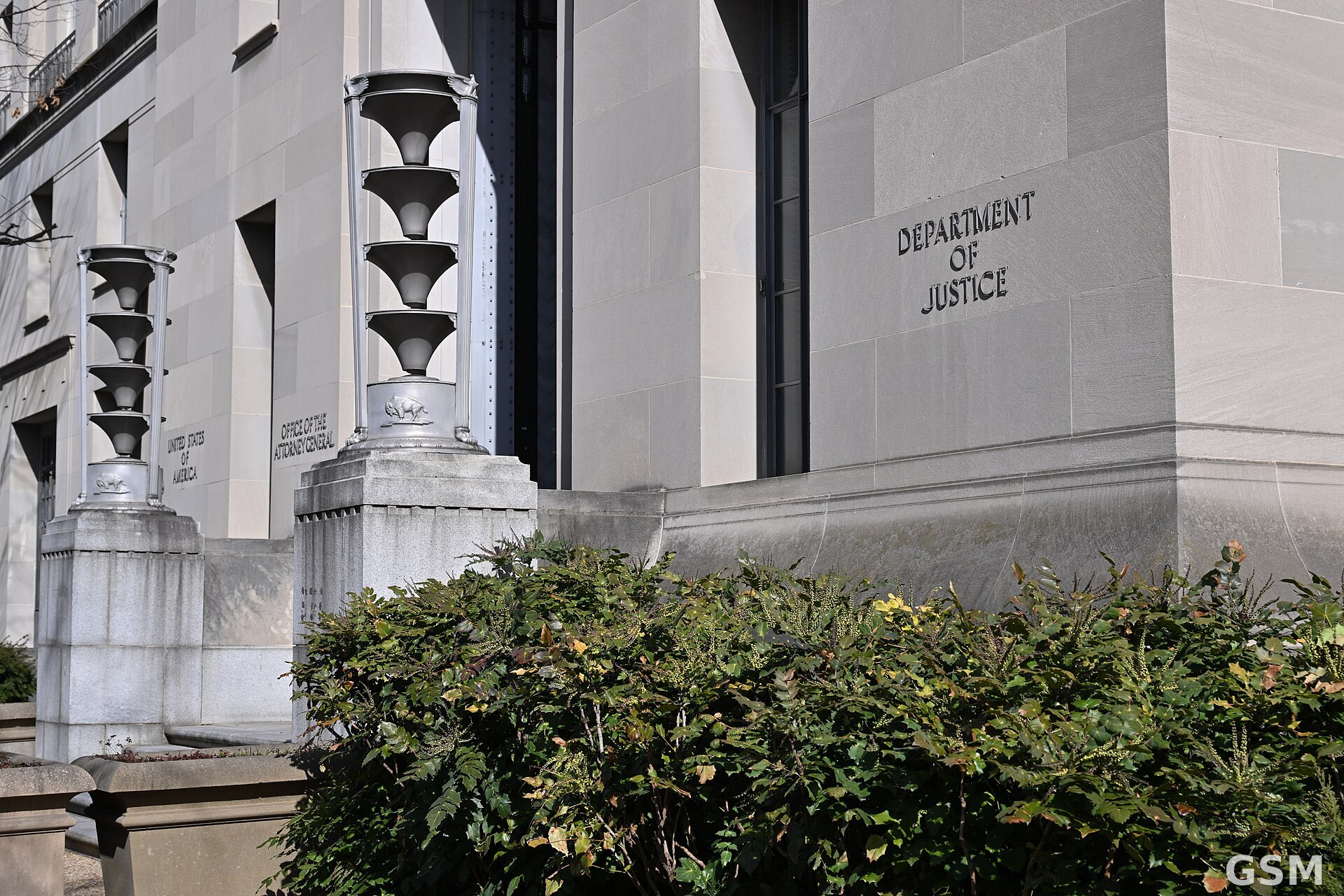
图片来源:华盛顿司法部总部(Robert F. Kennedy 大楼)外墙标识,G. Edward Johnson 摄,CC BY,Wikimedia Commons