FDA批准他拉唑帕利联合恩扎卢胺治疗HRR基因突变转移性激素敏感性前列腺癌:进展或死亡风险降低52%
华盛顿——美国食品药品监管局(FDA)10月26日批准他拉唑帕利(talazoparib,商品名 Talzenna)联合恩扎卢胺(enzalutamide,商品名 Xtandi),用于治疗伴有同源重组修复(HRR)基因突变的转移性雄激素通路调节未治或敏感型前列腺癌,即转移性激素敏感性(去势敏感性)前列腺癌。这是该联合疗法继2023年获批用于HRR基因突变的转移性去势抵抗性前列腺癌之后,适用范围向更早病程阶段的扩展。
此次批准依据三期临床试验 TALAPRO-3(NCT04821622)的数据。该试验共纳入599名伴HRR基因改变的转移性去势敏感性前列腺癌患者,随机分配接受他拉唑帕利每日0.5毫克加恩扎卢胺每日160毫克(300人),或安慰剂加恩扎卢胺(299人)。结果显示,联合组影像学进展或死亡风险降低52%(风险比0.48,95%置信区间0.36至0.65);联合组中位影像学无进展生存期尚未达到,对照组为45.8个月;治疗3年时,联合组77%的患者无疾病进展,对照组为56%。疗效在BRCA突变与非BRCA的HRR基因改变患者中一致。
总生存期数据尚不成熟:中期分析显示联合组死亡风险比为0.77(95%置信区间0.56至1.04),3年总生存率联合组为78%、对照组为72%,差异尚未达到统计学显著。安全性方面,联合组最常见的不良反应为贫血、疲劳与中性粒细胞计数下降,3级及以上贫血发生率为51%,严重不良事件发生率联合组为42%、对照组为32%;辉瑞公司(Pfizer)表示,该组合的安全性与两种药物各自已知的安全性特征一致,未发现新的安全信号。
辉瑞首席肿瘤学官 Jeff Legos 表示:「对于转移性前列腺癌患者,在激素敏感阶段进行干预,是在疾病变得更难控制之前延缓进展的重要机会。」他同时指出,支持此次申请的数据也凸显了生物标志物检测对尽早指导治疗决策的重要性。据辉瑞介绍,HRR等DNA损伤修复基因改变见于约25%的转移性前列腺癌患者,这类患者预后较差、对现有标准治疗的反应相对有限。
他拉唑帕利是一种口服PARP抑制剂,恩扎卢胺是一种雄激素受体通路抑制剂,两药均由辉瑞销售。此次获批后,伴HRR基因突变的转移性前列腺癌患者可在激素敏感阶段即用上该联合方案,而不必等到疾病进展为去势抵抗阶段。
FDA Approves Talazoparib With Enzalutamide for HRR Gene-Mutated Metastatic Hormone-Sensitive Prostate Cancer, Cutting Risk of Progression or Death by 52%
WASHINGTON — The U.S. Food and Drug Administration (FDA) on October 26 approved talazoparib (Talzenna) in combination with enzalutamide (Xtandi) for metastatic androgen pathway modulation-naïve or -sensitive prostate cancer with homologous recombination repair (HRR) gene mutations — metastatic hormone-sensitive (castration-sensitive) prostate cancer. The decision expands the combination into an earlier stage of disease, following its 2023 approval for HRR gene-mutated metastatic castration-resistant prostate cancer.
The approval is based on the Phase 3 TALAPRO-3 trial (NCT04821622), which enrolled 599 men with HRR gene-altered metastatic castration-sensitive prostate cancer. Participants were randomized to talazoparib 0.5 mg daily plus enzalutamide 160 mg daily (300 patients) or placebo plus enzalutamide (299 patients). The combination cut the risk of radiographic progression or death by 52% (hazard ratio 0.48; 95% CI, 0.36-0.65). Median radiographic progression-free survival was not reached in the combination arm, versus 45.8 months in the control arm; at three years, 77% of patients on the combination were free of progression, compared with 56% on enzalutamide alone. The benefit was consistent across patients with BRCA and non-BRCA HRR gene alterations.
Overall survival data remain immature: an interim analysis showed a hazard ratio of 0.77 (95% CI, 0.56-1.04), with three-year overall survival of 78% in the combination arm and 72% in the control arm, a difference that has not reached statistical significance. The most common adverse events in the combination arm were anemia, fatigue, and decreased neutrophil count; grade 3 or higher anemia occurred in 51% of patients, and serious adverse events were reported in 42% of the combination arm versus 32% of the control arm. Pfizer said the safety profile was consistent with the known profiles of each agent, with no new safety signals.
"For men living with metastatic prostate cancer, intervening during the hormone-sensitive stage represents an important opportunity to delay progression before the disease becomes more difficult to manage," said Jeff Legos, Pfizer's Chief Oncology Officer, adding that the data also reinforce the importance of biomarker testing to inform treatment decisions as early as possible. According to Pfizer, alterations in DNA damage repair genes such as HRR genes are found in approximately 25% of metastatic prostate cancers and are associated with a worse prognosis.
Talazoparib is an oral PARP inhibitor and enzalutamide is an androgen receptor pathway inhibitor; both are marketed by Pfizer. With this approval, patients with HRR gene-mutated metastatic prostate cancer can receive the combination during the hormone-sensitive stage rather than waiting until the disease becomes castration-resistant.
来源:GSM·美国(原文链接)
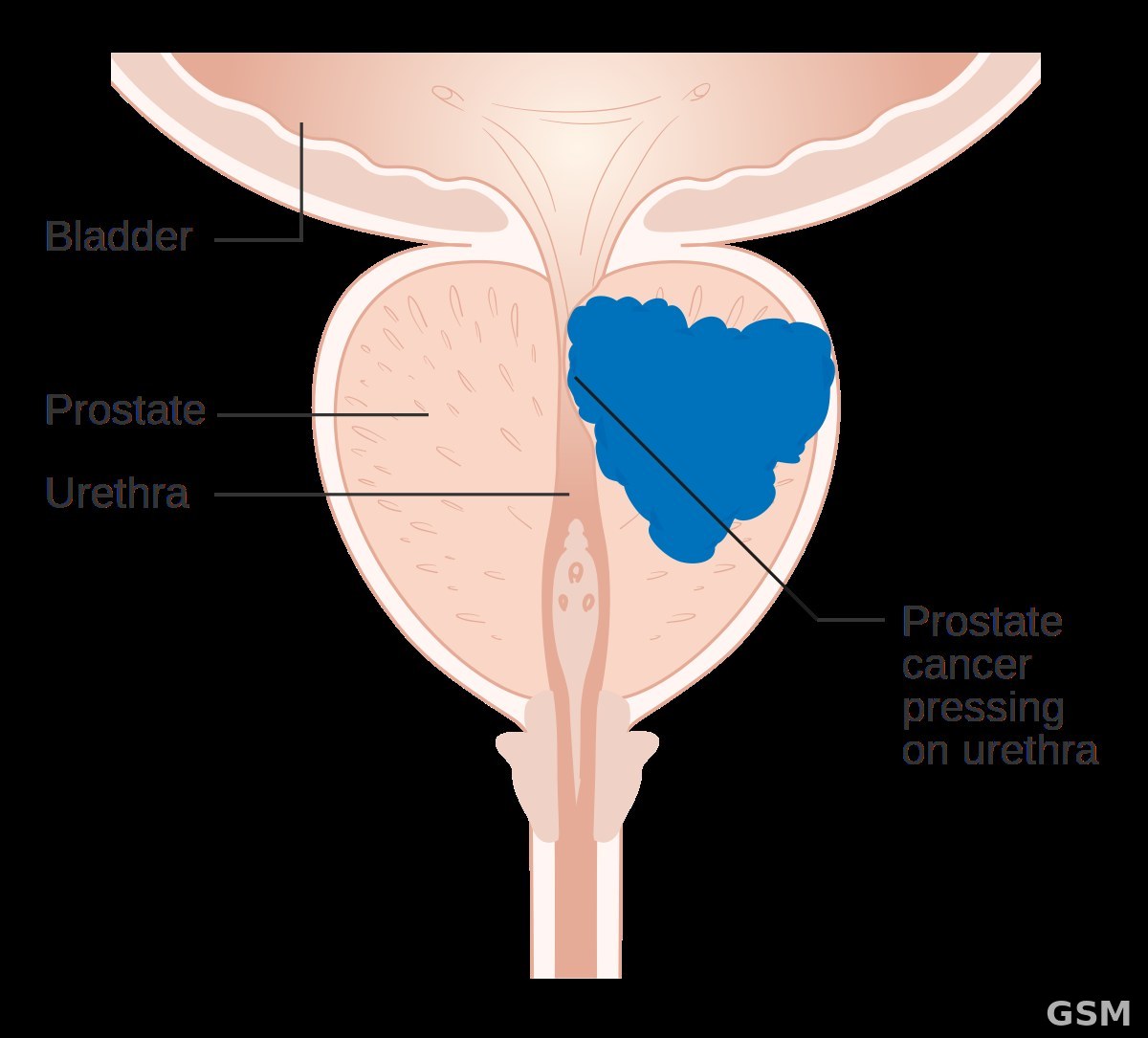
图片来源:图:前列腺癌压迫尿道示意图(资料图)。Cancer Research UK,CC BY-SA 4.0,经维基共享资源。 / Diagram of a prostate cancer pressing on the urethra (file image). Cancer Research UK, CC BY-SA 4.0, via Wikimedia Commons.