泰国:证交所10月26日推动双重股权修法,盼家族企业敢上市、市场流动性回升
泰国证券交易所主席吉迪蓬10月26日公开表态,推动允许双重股权的修法,以解决家族企业不愿上市、市场流动性不足的问题。泰国不少家族企业具备上市条件却完全不上市,或只放极小比例股份公开交易,核心原因就是担心股份卖给外人后,祖辈传下的控制权可能易主。在泰国,像曼谷吞武里区一家年营收过亿泰铢的老牌椰子糖工厂这样的家族企业主不在少数,他们宁可守着现金流也不入股市。数据显示,2026年以来泰国企业首次公开募股募资仅约7亿泰铢,折合2160万美元,同比下滑95%,照此进度,今年大概率成为自2003年有统计以来最惨淡的首次公开募股年份。截至7月,泰国证交所843家上市公司中705家是家族企业,总市值10.93万亿泰铢,约占全市场54%,主体缺席,市场自然缺水。双重股权机制把经济权益和投票权拆开,创始人卖普通股募资,高投票权股握决策,这套机制在美股和港股已被验证。对泰国而言,这不仅是首次公开募股改革,更是流动性改革:潜在上市池子扩大,存量公司也可依规增发公众股。不过普通股东投票权弱于创始人,监管必须拿捏平衡,披露要求和落日条款设计将是防滥用关键。吉迪蓬强调,修法草案预计今年议会通过,2027年正式引入。
Thailand: Stock Exchange Pushes Dual-Class Share Reform on October 26, Hoping Family Businesses Dare to List and Market Liquidity Recovers
Kittipong, Chairman of the Stock Exchange of Thailand, publicly stated on October 26 that he is pushing for legal amendments to allow dual-class shares, in order to solve the problems of family businesses being unwilling to list and insufficient market liquidity. Many Thai family businesses meet the conditions for listing but do not list at all, or float only a tiny proportion of shares for public trading, mainly because they fear that after selling shares to outsiders, the control passed down from their ancestors may change hands. In Thailand, family business owners like the owner of a long-established coconut sugar factory in Bangkok's Thonburi district with annual revenue of over 100 million baht are not uncommon; they would rather hold onto cash flow than enter the stock market. Data show that since 2026, Thai companies' initial public offerings have raised only about 700 million baht, equivalent to US$21.6 million, down 95% year on year; at this pace, this year will most likely be the bleakest IPO year since statistics began in 2003. As of July, 705 of the Stock Exchange of Thailand's 843 listed companies are family businesses, with a total market value of 10.93 trillion baht, accounting for about 54% of the whole market; with the mainstay absent, the market naturally lacks water. The dual-class share mechanism separates economic rights from voting rights: founders sell ordinary shares to raise funds while high-voting shares retain decision-making power; this mechanism has already been validated in the US and Hong Kong stock markets. For Thailand, this is not only an IPO reform but also a liquidity reform: the pool of potential listings expands, and existing companies may also issue additional public shares in accordance with regulations. However, ordinary shareholders' voting rights are weaker than founders', so regulators must strike a balance; disclosure requirements and sunset clause design will be key to preventing abuse. Kittipong stressed that the draft amendments are expected to pass parliament this year and be formally introduced in 2027.
来源:GSM·美国(原文链接)
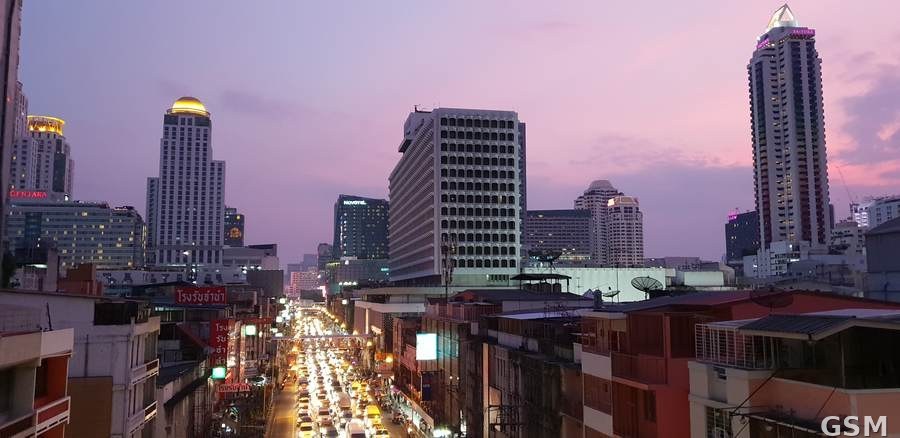
图片来源:曼谷市景(资料图),取自 Wikimedia Commons。Photo: Bangkok cityscape (file photo), via Wikimedia Commons.