2026中期选举选什么:众议院435席全改选、参议院33席与加州14项提案一次讲清
2026年中期选举将于11月3日举行。这一票要选的东西不少:从华盛顿的国会,到萨克拉门托的州长与州议会,再到14项直接决定加州政策的全州提案。本篇是《决战中期选举》专题总论,一次讲清这张选票上到底有什么;怎么投票、中文选票哪里有,见本专题《华人选民手册》。
一、联邦:众议院全改选,参议院改选33席
联邦众议员任期两年,众议院435个席位在每个选举年全部改选,2026年也不例外——加州选民手中的选票上,都有自己选区的联邦众议员一栏。
参议院每届改选约三分之一。2026年改选的是第二组(Class II)33个席位,分布在33个州:阿拉巴马、阿拉斯加、阿肯色、科罗拉多、特拉华、佐治亚、爱达荷、伊利诺伊、艾奥瓦、堪萨斯、肯塔基、路易斯安那、缅因、马萨诸塞、密歇根、明尼苏达、密西西比、蒙大拿、内布拉斯加、新罕布什尔、新泽西、新墨西哥、北卡罗来纳、俄克拉荷马、俄勒冈、罗得岛、南卡罗来纳、南达科他、田纳西、德州、弗吉尼亚、西弗吉尼亚、怀俄明。加州的两名联邦参议员不在本届改选之列。
国会多数党归属决定联邦立法的走向,这也是中期选举被称为总统任期「期中考试」的原因。
二、加州州级职位:九个全州职位加州议会
加州选票上有九个全州宪法职位在本届改选:州长、副州长、州检察长、州务卿、州财务长、州审计长、州保险局长、州教育厅长,以及州公平委员会委员。此外还有加州最高法院法官的留任表决、本选区的州参议员与州众议员,以及县、市、学区等地方职位——地方职位因住址而异,以各县选民指南为准。
三、14项全州提案:选民直接立法
加州选民还要对14项全州提案逐项表决,通过的提案直接成为法律。编号与官方标题如下(类型照官方选民信息指南标注):
1号:授权发行112.5亿美元州一般义务债券,用于住房可负担计划(立法机构法案)。
2号:提高州「雨天基金」预算储备(立法机构宪法修正案)。
3号:延长对高收入者的现行税率,为学校与医疗提供永久经费(公民动议宪法修正案)。
4号:废除禁止以公共资金资助竞选活动的规定(立法机构法案)。
5号:更改州级官员罢免选举程序(立法机构宪法修正案)。
37号:设立面向中等收入者的合格新房购买贷款计划(公民动议法案)。
38号:授权发行债券资助免疫学医学研究(公民动议法案)。
39号:禁止公民在未出示政府签发身份证件时投票(公民动议宪法修正案)。
40号:对某些纳税人征收一次性税,立法分析师摘要称最高5%(公民动议宪法修正案与法案)。
41号:禁止将收入排除在州支出上限之外的新州税,并要求对新州专项税审计(公民动议宪法修正案)。
42号:禁止新的州个人财产税与某些追溯性州税(公民动议宪法修正案)。
43号:限制选民为地方政府服务增收的权限(立法机构宪法修正案)。
44号:要求社区健康诊所将90%收入用于项目服务(公民动议法案)。
45号:修改某些项目的环境审查(公民动议法案)。
14项中,立法机构提交5项、公民动议9项。本专题下一篇将逐项梳理与华人选民关系最密切的提案内容与正反两方论点原文。
四、一张选票,三层政府
简单分:联邦职位决定华盛顿的议程,州级职位与州议会决定萨克拉门托的政策,提案由选民直接作主、绕过议会。选举日为11月3日,加州邮寄选票已寄出、投票中心已开放,投票方式与关键日期见《华人选民手册》。
关联:2026中期选举华人选民手册:加州邮寄选票、中文选票与投票中心一次讲清
来源:GSM·美国(资料来源:美国参议院、USAGov、加州州务卿、官方选民信息指南)
What Is on the Ballot in the 2026 Midterms: All 435 House Seats, 33 Senate Seats and California's 14 Propositions
The 2026 midterm election takes place on November 3, and the ballot is a long one: Congress in Washington, the governor and legislature in Sacramento, and 14 statewide propositions that will set California policy directly. This overview — the first installment of GSM's Decision 2026 midterm feature — explains what is on the ballot. For how to vote and where to find Chinese-language ballots, see the feature's Chinese Voter Guide.
1. Federal: all 435 House seats, 33 Senate seats
U.S. House members serve two-year terms, so all 435 House seats are up in every election year, 2026 included; every California voter will see their own House district on the ballot.
The Senate renews roughly a third of its seats each cycle. The 33 seats up in 2026 are the Class II seats, in 33 states: Alabama, Alaska, Arkansas, Colorado, Delaware, Georgia, Idaho, Illinois, Iowa, Kansas, Kentucky, Louisiana, Maine, Massachusetts, Michigan, Minnesota, Mississippi, Montana, Nebraska, New Hampshire, New Jersey, New Mexico, North Carolina, Oklahoma, Oregon, Rhode Island, South Carolina, South Dakota, Tennessee, Texas, Virginia, West Virginia and Wyoming. Neither of California's two U.S. senators is up this cycle.
Which party controls Congress shapes the federal legislative agenda — why the midterms are often called a midterm exam for the sitting president.
2. California state offices: nine statewide posts, plus the legislature
Nine statewide constitutional offices are on California's ballot this cycle: Governor, Lieutenant Governor, Attorney General, Secretary of State, Treasurer, Controller, Insurance Commissioner, Superintendent of Public Instruction, and Member of the Board of Equalization. Voters will also decide retention of California Supreme Court justices, their state senator and Assembly member, and county, city and school-district offices, which vary by address — see your county voter guide.
3. Fourteen statewide propositions: voters as legislators
Californians will also vote on 14 statewide propositions; those that pass become law directly. Numbers and official titles (types as labeled in the Official Voter Information Guide):
Prop. 1: Authorizes $11.25 billion in state general obligation bonds for housing affordability programs (legislative statute).
Prop. 2: Increases the state's rainy day fund (legislative constitutional amendment).
Prop. 3: Provides permanent funding for schools and health care by extending the existing tax on high incomes (initiative constitutional amendment).
Prop. 4: Repeals the prohibition against public funding of election campaigns (legislative statute).
Prop. 5: Changes the recall election process for statewide officers (legislative constitutional amendment).
Prop. 37: Creates a loan program for middle-income buyers of qualified new homes (initiative statute).
Prop. 38: Authorizes bonds for immunology medical research (initiative statute).
Prop. 39: Prohibits citizens from voting unless they present government-issued identification (initiative constitutional amendment).
Prop. 40: Imposes a one-time tax on certain taxpayers, summarized by the Legislative Analyst at up to 5 percent (initiative constitutional amendment and statute).
Prop. 41: Prohibits new state taxes that exclude revenues from the state spending limit and requires audits for new state special taxes (initiative constitutional amendment).
Prop. 42: Prohibits new state personal property taxes and certain retroactive state taxes (initiative constitutional amendment).
Prop. 43: Limits voters' ability to raise revenues for local government services (legislative constitutional amendment).
Prop. 44: Requires community health clinics to spend 90 percent of revenue on program services (initiative statute).
Prop. 45: Modifies environmental review for certain projects (initiative statute).
Five of the 14 come from the Legislature and nine from citizen initiatives. The next installment of this feature will walk through the propositions closest to Chinese-American voters, with the arguments for and against as printed in the official guide.
4. One ballot, three levels of government
In short: federal offices set Washington's agenda, state offices and the Legislature set Sacramento's, and propositions let voters legislate directly. Election Day is November 3; mail ballots are out and vote centers are open. For voting methods and key dates, see the Chinese Voter Guide.
Source: GSM·USA (Sources: U.S. Senate, USAGov, California Secretary of State, Official Voter Information Guide)
来源:GSM·美国(原文链接)
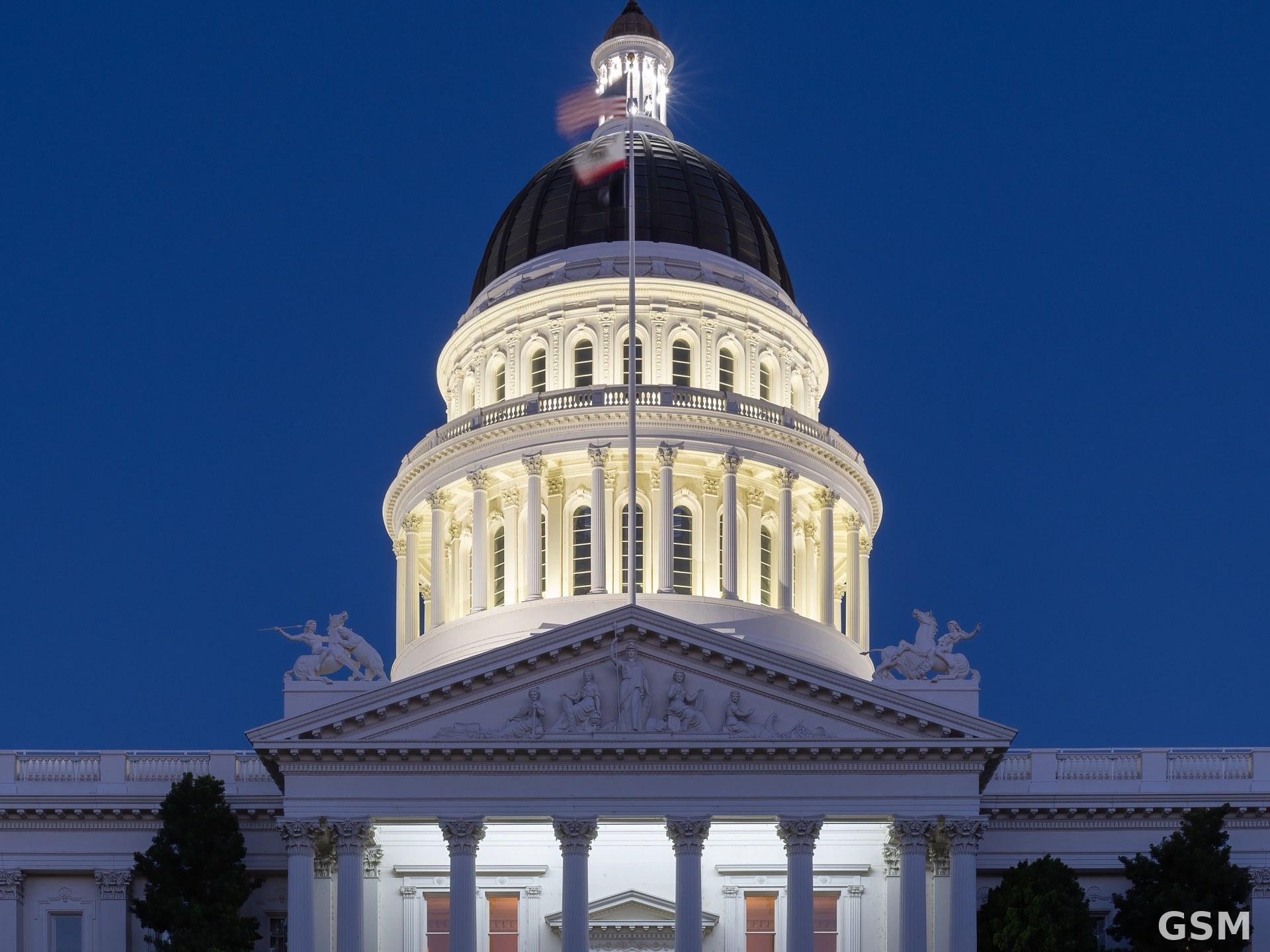
图片来源:加利福尼亚州议会大厦(位于萨克拉门托)蓝调时刻夜景(Frank Schulenburg 摄,CC BY-SA 4.0,裁切)— via Wikimedia Commons / The California State Capitol in Sacramento at blue hour (Frank Schulenburg, CC BY-SA 4.0, cropped) — via Wikimedia Commons
- 2026-10-25 03:392026中期选举华人选民手册:加州邮寄选票、中文选票与投票中心一次讲清
- 2026-10-25 03:462026中期选举选什么:众议院435席全改选、参议院33席与加州14项提案一次讲清本篇