冰川国家公园首次确诊蝙蝠白鼻综合征:一只小棕蝠5月在Saint Mary被发现死亡,致病真菌同在公园东侧检出
美国蒙大拿州 Glacier County——国家公园管理局(NPS)10月21日发布消息:位于蒙大拿州的冰川国家公园(Glacier National Park)首次确诊蝙蝠白鼻综合征(white-nose syndrome)。一只今年5月在公园 Saint Mary 一带被发现死亡的小棕蝠经检测确诊感染;6月从活蝙蝠采集的样本也在公园东侧多只蝙蝠身上检出致病真菌 Pseudogymnoascus destructans。这是该真菌与白鼻综合征在冰川国家公园及 Glacier County 的首次检出。
白鼻综合征由真菌感染冬眠蝙蝠引起:患病蝙蝠会在冬眠中反复醒来,耗尽过冬必需的脂肪储备,常导致脱水、饥饿与死亡。公园方面表示,该病对人类与宠物无感染风险,但人可能通过衣物、鞋与探洞装备无意间把真菌带到新的区域;公园提醒访客不要触碰或拾起蝙蝠,造访洞穴等蝙蝠栖息地后应按美国鱼类及野生动物管理局(USFWS)的指引为装备、鞋与衣物消毒。
冰川国家公园自2011年起持续监测蝙蝠的多样性、分布与健康状况,已在园内记录10种蝙蝠;园内蝙蝠全部以昆虫为食,也是猛禽与鼬类等野生动物的猎物,种群若大幅下降将对公园及周边生态产生连带影响。公园同时正参与一项白鼻综合征疫苗评估研究:2024至2026年间,研究人员共捕获处理529只蝙蝠,其中265只接种疫苗、264只接种安慰剂,每只均佩戴标记,以便在每年春季蝙蝠结束冬眠后追踪存活率,比较两组差异以判断疫苗在野外的保护效果。
据公园管理局介绍,白鼻综合征2006年在 New York 州首次发现,此后扩散至北美各地、已造成数以百万计蝙蝠死亡,目前已在美国42个州与加拿大9个省得到确认;致病真菌可在地下环境中存续多年,持续感染新的蝙蝠。本次确诊结果于10月21日对外发布,正文所述发现与检测时间分别为今年5月与6月。
White-Nose Syndrome Confirmed in Glacier National Park for the First Time: Little Brown Bat Found Dead in Saint Mary in May, Fungus Also Detected on Park's East Side
GLACIER COUNTY, Montana — The National Park Service (NPS) announced on October 21 that white-nose syndrome has been confirmed in Glacier National Park for the first time. A little brown bat found dead in the park's Saint Mary area in May tested positive for the disease, and samples collected from live bats in June also confirmed Pseudogymnoascus destructans, the fungus that causes white-nose syndrome, in multiple bats on the park's east side. These are the first detections of both the fungus and the disease in Glacier National Park and Glacier County.
White-nose syndrome is caused by a fungus that infects hibernating bats. The disease causes bats to wake during hibernation, depleting the critical fat reserves they need to survive winter and often leading to dehydration, starvation and death. The park said the disease does not infect humans or pets, but people can unintentionally spread the fungus to new areas on clothing, shoes and caving equipment; visitors are urged never to handle or pick up a bat and to decontaminate gear, footwear and clothing after visiting a cave or other bat habitat, following U.S. Fish and Wildlife Service guidance.
Glacier National Park has monitored bat diversity, occupancy and health since 2011 and has documented 10 bat species in the park. All bats in Glacier feed on insects and serve as prey for other wildlife, including raptors and weasels, so significant declines could have far-reaching effects on the park's ecosystems and neighboring landscapes. The park is also taking part in research evaluating a vaccine against white-nose syndrome: between 2024 and 2026, biologists captured and processed 529 bats, of which 265 received the vaccine and 264 a placebo, each fitted with a tag so survival can be tracked as the bats emerge from hibernation each spring.
Since its discovery in New York state in 2006, white-nose syndrome has spread across North America, killing millions of bats, and has now been confirmed in 42 U.S. states and nine Canadian provinces; the fungus can persist in underground environments for many years. The park announced the confirmation on October 21; the bat was found in May and the live-bat samples were collected in June.
来源:GSM·美国(原文链接)
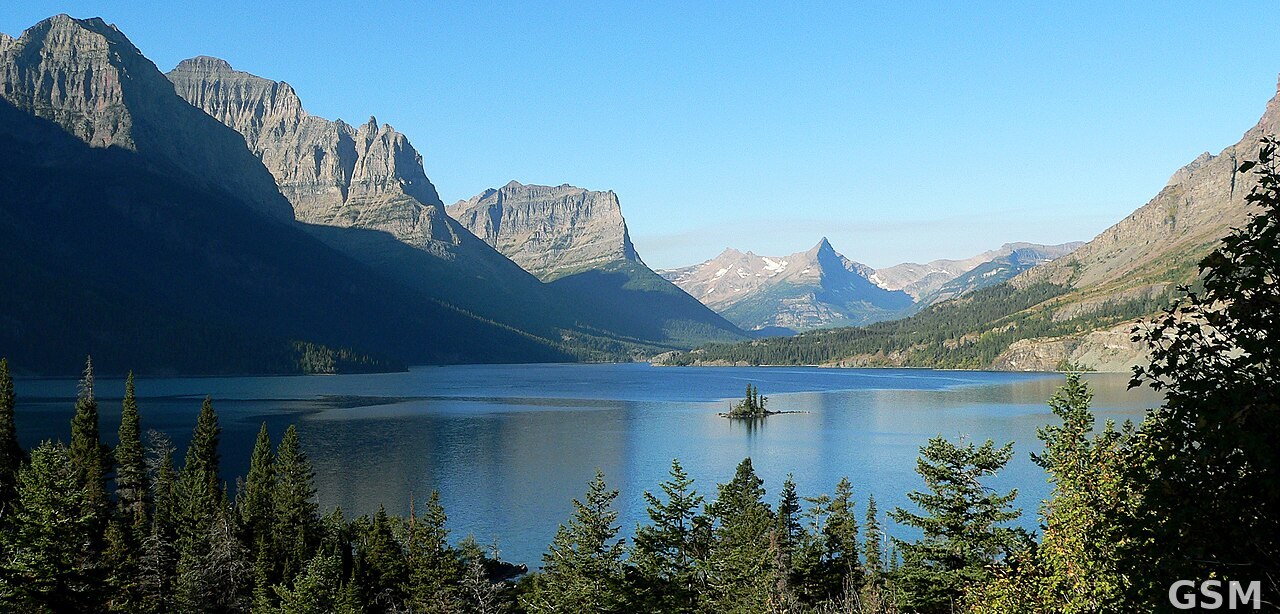
图片来源:图:冰川国家公园东侧的 Saint Mary Lake 与 Wild Goose Island(资料照片),确诊蝙蝠即在 Saint Mary 一带发现。Ken Thomas 摄,公共领域,经 Wikimedia Commons 发布。/ Saint Mary Lake and Wild Goose Island on the east side of Glacier National Park (file photo); the confirmed bat was found in the Saint Mary area. Photo by Ken Thomas, public domain, via Wikimedia Commons.