航天局 NASA 蜻蜓号完成首次完整模拟飞行:不早于2028年启程、2034年抵达土卫六
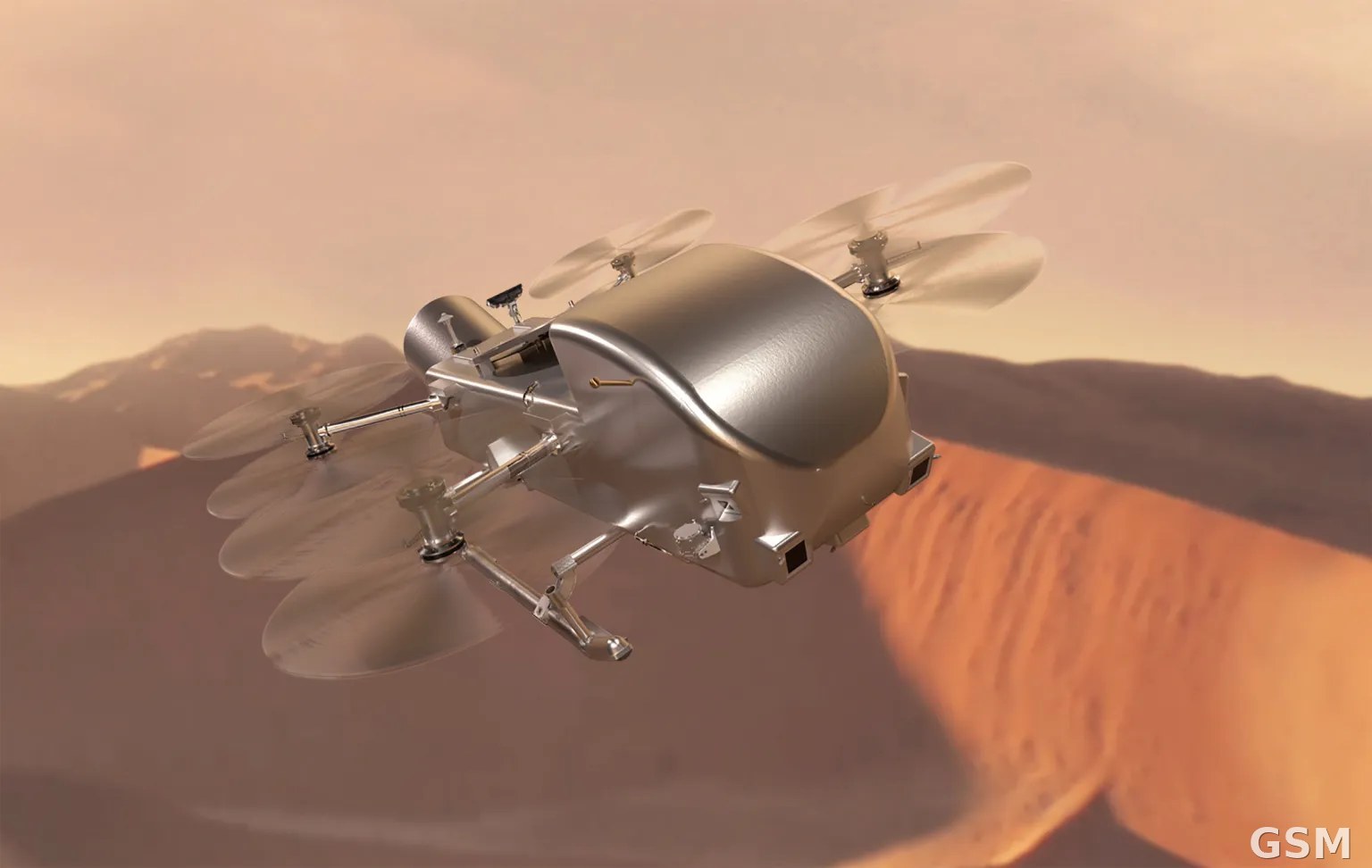
美国航天局(NASA)10月23日宣布,蜻蜓号(Dragonfly)旋翼飞行器在 Maryland 州 Laurel 的 Johns Hopkins 应用物理实验室(APL)完成首次飞行模拟,飞行器在类飞行航电设备上实时走完了与2034年抵达土卫六后相同的全套动作,是该任务迄今最完整的一次首次飞行演练。
模拟中,蜻蜓号从保护它的背罩中分离,在土卫六沙丘上空自主加速飞行,扫描下方地形寻找安全着陆点,发现合适地点后转向、下降并完成着陆。测试把飞行软件、航电设备与传感器模拟数据结合在一起,动用了蜻蜓号将在土卫六使用的导航相机、惯性测量单元与激光雷达(lidar)系统。团队为激光雷达生成了模拟地形,并实时生成导航相机将看到的画面;一套定制相机模拟器用图形处理器渲染每个模拟场景,曝光时间约为20至70毫秒,与蜻蜓号相机实际飞行时一致。
蜻蜓号机动子系统首席工程师 Zach Putnam 说:「首次飞行的妙处在于,它是我们最具挑战性的一次飞行。它用上了着陆器上的每一件飞行传感器硬件。」他表示,这类测试验证了所有部件能否协同工作;团队此前是逐步搭建飞行能力的,从单个旋翼转动模拟开始,后来完成短距离「重新定位」飞行与部分侦察飞行,每一步加入更多传感器与能力,激光雷达的加入补上了完整模拟首次飞行的最后一块。
与首次飞行模拟同步进行的还有「姿态」机构测试:蜻蜓号飞行前必须先从背罩下方降下、启动旋翼再分离。Lockheed Martin 在 Colorado 的工程师对该机构做了带配重质量的静态推拉测试,验证其能否承受预期载荷,又反复以不同角度倾斜测试硬件做展开测试,确认它在背罩于降落伞下摆动的各种情形下都能顺畅降下并锁定到位。这一过渡动作必须在距地球近十亿英里处可靠完成。
蜻蜓号计划不早于2028年发射,航行六年后抵达土星最大的卫星土卫六,之后三年间在多个地点之间飞行,考察这颗类地卫星的化学、地质与大气,推进对生命化学起源的理解。团队下一步将在蜻蜓号的实际飞行系统(而非测试台)上运行首次飞行,并测试其他飞行剖面、故意注入故障,验证飞行器在土卫六无实时地面协助条件下自主应对问题的能力。
NASA Dragonfly Completes First Full Simulated Flight: Launch No Earlier Than 2028, Arrival at Titan in 2034
NASA announced on October 23 that its Dragonfly rotorcraft has completed the most comprehensive simulation to date of its first flight, running the full sequence in real time on flight-like avionics at the Johns Hopkins Applied Physics Laboratory (APL) in Laurel, Maryland — the same maneuvers the rotorcraft will perform when it arrives at Titan in 2034.
In the simulation, Dragonfly separated from its protective backshell, sped autonomously over Titan's sand dunes, scanned the terrain below for a safe landing site, then turned, descended and touched down at the selected location. The test combined flight software and avionics with simulated input from the sensors Dragonfly will use at Titan, including its newly installed navigation cameras, inertial measurement units and lidar system. The team generated simulated terrain for the lidar and produced, in real time, the images the navigation cameras would see; a custom camera emulator used graphics processing units to render each simulated Titan scene in roughly the same 20 to 70 millisecond exposure times the cameras will use in flight.
"The cool thing about first flight is that it's our most challenging flight," said Zach Putnam, Dragonfly mobility subsystem lead engineer at APL. "It uses every piece of flight sensor hardware on the lander." Putnam said the tests validate that everything works together. The team built the capability incrementally, starting with simulations of a single rotor spinning, then a short reposition flight and a partial scouting flight, adding sensors and capabilities at each step; adding lidar, which measures terrain altitude and slope and identifies hazards, provided the final piece needed to fully simulate the first flight.
Testing is also underway on the "pose" mechanism that must lower Dragonfly below its entry system's backshell so it can start its rotors before separation and begin its final descent. Engineers at Lockheed Martin in Colorado, where Dragonfly's cruise stage and entry, descent and landing assembly are coming together, conducted static tests with representative mass to verify the mechanism can withstand expected loads, and deployment tests at different tilt angles to confirm it lowers smoothly and locks securely even as the backshell swings beneath its parachute — a transition that must work reliably nearly a billion miles from Earth.
Dragonfly is scheduled to launch no earlier than 2028 on a six-year voyage to Saturn's moon Titan, where it will spend three years flying between sites to study the chemistry, geology and atmosphere of the Earthlike moon and advance understanding of life's chemical origins. Next, the team plans to run the first flight on Dragonfly's actual flight system rather than a testbed, test other flight profiles, and deliberately introduce faults to make sure the rotorcraft can respond autonomously at Titan, where no real-time help from Earth is possible.
来源:GSM·美国(原文链接)
图片来源:NASA 蜻蜓号旋翼飞行器飞越土卫六沙丘概念图。图片:Steve Gribben / NASA / Johns Hopkins APL,公共领域,经 Wikimedia Commons