俄克拉荷马州59个学区因成绩不达标被列为警告评级:全州三大校区在内,新规首次动用
美国俄克拉荷马州教育委员会本周表决,将59个学区列为「评级加警告」(accredited with warning),原因是这些学区的学生在州级阅读与数学考试中成绩不达标。被列入的包括全州最大的三个教育单位:Tulsa 公立学区、Oklahoma City 公立学区与 Epic 特许学校。据 Oklahoma Voice 报道,这是该州首次动用这项把学业成绩与学区评级挂钩的新规。
按新规,一个学区若连续两年有超过半数学生在年度州级阅读或数学考试中得分低于「基础」(below basic)等级,即记一项缺陷。「低于基础」意味着学生连本年级内容的部分掌握都没有达到,按州教育厅的说法,这表明学生尚未走上大学或就业准备的轨道。此次59个学区中,56个学区被降级的唯一原因就是学业缺陷。州教育厅(Oklahoma State Department of Education)表示,若这些学区的成绩不能提高5%,其评级还可能进一步降至「试用」(probation),届时将面临更多州级监督。
州教育委员会成员 Becky Carson 在表决前表示,她最关心的是州与教育厅如何支持这些学区,帮助它们走出名单。受影响学区各自作了回应:Epic 特许学校是一所虚拟特许学校、在校生约2.9万人,其校监 Shaun Ross 表示,学校不会等评级结果来推动改进,已在实施针对性的学业干预;他同时指出,Epic 已符合全部既有的运营评级要求,如今是用历史考试数据按新标准被评判。Oklahoma City 学区在校生约3.1万人,该学区表示,新规刚获批准时就已知道按将采用的历史数据、本周期达不到门槛,并表示将继续加强教学与支持,让更多学生达到年级预期。Tulsa 学区在校生超过3.2万人,该学区周四发表声明称,其成绩已连续三年呈上升势头,但承认仍有工作要做。
这项新规由前州教育总监 Ryan Walters 于2024年提出,主张把学业表现纳入年度评级问责;州议会未采取行动后,州长 Kevin Stitt 批准了该规。新规于2025-26学年生效,此前学区评级只看是否遵守州法律、财务标准与治理运营要求。由于评级审核比考试滞后一年,本次降级依据的是2023-24与2024-25两个学年的成绩。州教育厅公布,全州共有358个学区评级无缺陷,100个学区有一项缺陷,25个学区有多项缺陷。一些教育倡导者与州议会民主党人曾反对这项新规,认为它会不公平地惩罚贫困率较高、英语学习者较多的学区。
Oklahoma Puts 59 School Districts on Accredited-With-Warning Status Over Test Scores in First Use of New Rule
The Oklahoma State Board of Education voted this week to designate 59 school districts as accredited with warning because their students scored poorly on state reading and math tests. The affected districts include the three largest in the state: Tulsa Public Schools, Oklahoma City Public Schools and Epic Charter School. According to Oklahoma Voice, it is the first time the state has applied its relatively new rule tying academic performance to a district's accreditation status.
Under the rule, a district receives a deficiency if more than half of its students score below basic on yearly state reading or math tests for two years in a row. Scoring below basic means a student has not demonstrated even partial mastery of grade-level content, which the state says signals the student is not on track to be college or career ready. For 56 of the 59 districts, the academic deficiency was the only reason for the downgrade. The Oklahoma State Department of Education said that if the districts' test scores do not improve by 5%, their status could fall further to probation, which would bring additional state oversight.
State board member Becky Carson said before the vote that her main concern was that the state and the agency support the districts so they can come off the list. The affected districts responded: Epic Charter School, a virtual charter school educating about 29,000 students, said through Superintendent Shaun Ross that it is not waiting for an accreditation designation to drive improvement and is implementing targeted academic interventions, while noting it has met all established operational accreditation requirements and is now being evaluated under a new standard using historical data. Oklahoma City Public Schools, with about 31,000 students, said it understood when the rule was first approved that it would not reach the threshold in this cycle based on the historical data to be used, and said it must keep strengthening instruction and support so more students reach grade-level expectations. Tulsa Public Schools, enrolling over 32,000 students, said in a statement Thursday that its results show momentum over three consecutive years, while recognising there is still work to be done.
Former state Superintendent Ryan Walters proposed the rule in 2024 to tie academic performance to accreditation; Gov. Kevin Stitt approved it after the state Legislature took no action. The rule took effect in the 2025-26 school year; accreditation had previously been based on compliance with state laws, financial standards and other governance and operations requirements. Because accreditation reviews lag a year behind testing, the downgrades are based on test scores from 2023-24 and 2024-25. The Education Department reported that 358 Oklahoma districts were accredited with no deficiencies, 100 had one deficiency and 25 had more than one deficiency. Some education advocates and legislative Democrats opposed the rule, saying it would unfairly punish districts with higher rates of poverty and more students learning English as a non-native language.
来源:GSM·美国(原文链接)
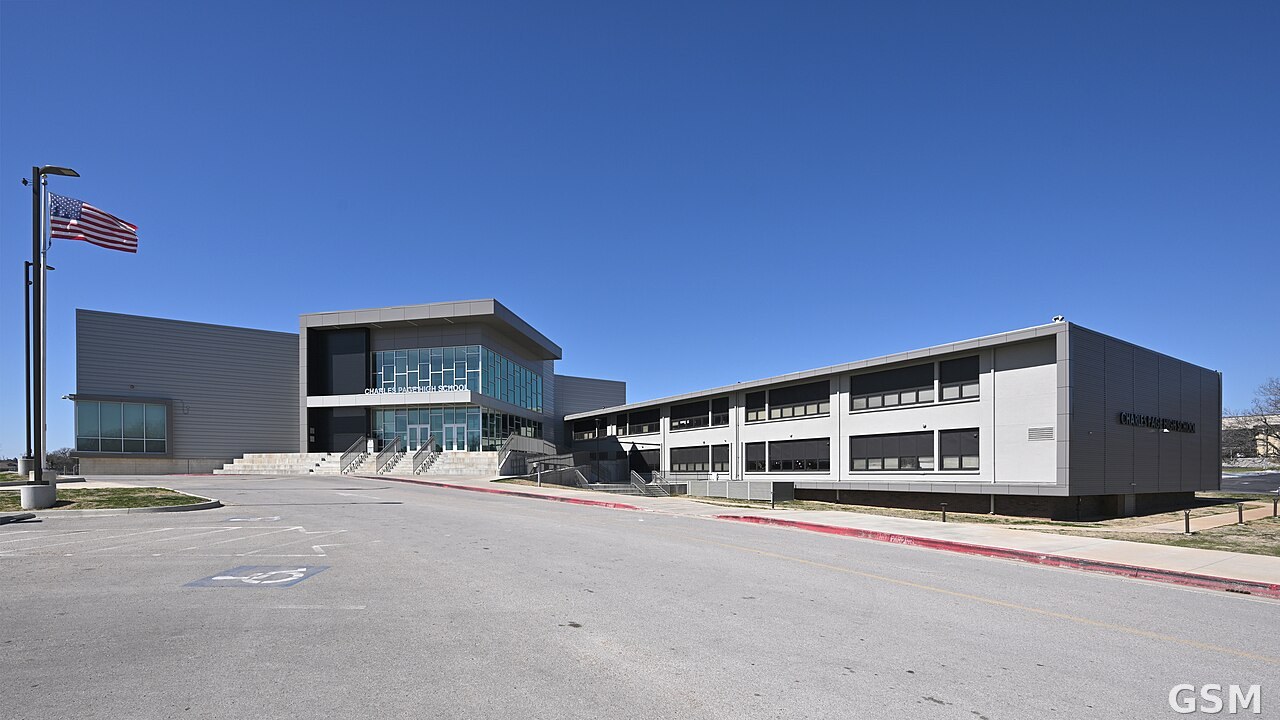
图片来源:图:位于俄克拉荷马州 Sand Springs 的 Charles Page High School 校舍(资料照片,非本稿所涉学区)。照片:G. Edward Johnson 摄,CC BY 4.0,经 Wikimedia Commons。 / File photo: Charles Page High School in Sand Springs, Oklahoma (not a district named in this story). Photo by G. Edward Johnson, CC BY 4.0, via Wikimedia Commons.