NASA:Artemis III 按计划2027年夏天发射 四名宇航员将在近地轨道对接测试两款月球着陆器
位于佛罗里达州的肯尼迪航天中心——美国国家航空航天局(NASA)10月23日下午在「Artemis 加速」简报会上表示,Artemis III 任务仍按计划于2027年夏天从肯尼迪航天中心发射:四名宇航员将执行为期14天的近地轨道飞行,分别与 Blue Origin 与 SpaceX 研制的月球着陆器对接测试,为2028年 Artemis IV 载人登月做准备。(GSM 据 Florida Today 报道)
按 NASA 公布的任务顺序,Blue Origin 将先从卡纳维拉尔角太空军基地 36A 发射场把一艘 Blue Moon Mark 2 测试着陆器送入轨道;随后 NASA 用太空发射系统(SLS)火箭与 Orion 飞船从 39B 发射台送乘组升空,Orion 与 Blue Moon 对接,宇航员进入着陆器座舱测试生命保障系统与操控设备;之后 SpaceX 从肯尼迪航天中心 39A 发射台发射一艘 Starship 测试着陆器,Orion 与 Blue Moon 分离后与 Starship 对接约两小时;最后 Orion 再入大气层、溅落海面。整个任务将动用 SLS、New Glenn 与 Starship 三款重型火箭。
NASA 署长 Jared Isaacman 在肯尼迪航天中心新闻发布会上介绍 Artemis 计划的最新进展。该机构的目标是让美国宇航员重返月球表面,并逐步建设可支持长期驻留的月球基地设施,为此后的火星任务铺路。
今年4月,Artemis II 任务中四名宇航员乘 Orion 飞船绕到月球背面再返回,全程10天,距地球最远252,756英里,刷新了人类抵达的最远距离纪录。NASA 上周还表示,工程分析确认 Orion 隔热罩的表现符合预期,与 Artemis I 相比裂纹与炭化损耗显著减少;为 NASA 研制宇航服的 Axiom Space 正在开发一款重量约为现有方案一半的轻型「出舱」宇航服,供宇航员在月面行走时使用,但不会取代用于更长、更高要求任务的主宇航服。
NASA Says Artemis III Remains on Track for Summer 2027 Launch
KENNEDY SPACE CENTER, Florida — NASA said on Friday afternoon that it remains on track to launch the four Artemis III astronauts in summer 2027 from Kennedy Space Center on a 14-day mission in low-Earth orbit, where the crew will dock with and test lunar landers built by Blue Origin and SpaceX. The mission is a key testbed step before Artemis IV sends astronauts to land on the Moon in 2028. (GSM, based on reporting by Florida Today)
Under the sequence NASA outlined at its "Artemis Acceleration" briefing, Blue Origin will first launch a Blue Moon Mark 2 test lander into orbit from Launch Complex 36A at Cape Canaveral Space Force Station. NASA will then launch the crew aboard the Space Launch System (SLS) rocket and Orion spacecraft from pad 39B; Orion will dock with the Blue Moon lander and the astronauts will enter its crew cabin to test life-support systems and controls. SpaceX will next launch a Starship test lander from pad 39A at Kennedy Space Center, and Orion will undock from Blue Moon and dock with Starship for about two hours, before reentering Earth's atmosphere and splashing down at sea. The mission will involve three heavy rockets: SLS, Blue Origin's New Glenn and SpaceX's Starship.
NASA Administrator Jared Isaacman led the October 23 news conference at the Kennedy Space Center press site. The agency aims to return American astronauts to the lunar surface and eventually build Moon Base infrastructure capable of supporting a long-term human presence, ahead of future trips to Mars.
In April, the Artemis II mission sent four astronauts around the far side of the Moon and back on a 10-day flight, traveling 252,756 miles from Earth and breaking the record for the farthest distance humans have reached into space. NASA also reported last week that engineering analysis confirmed Orion's heat shield performed as expected, with a significant reduction in cracks and char loss compared with Artemis I, and that its spacesuit provider Axiom Space is developing a second, lighter "Sortie suit" — roughly half the weight of the primary suit — to enable astronaut moonwalks on shorter outings.
来源:GSM·美国(原文链接)
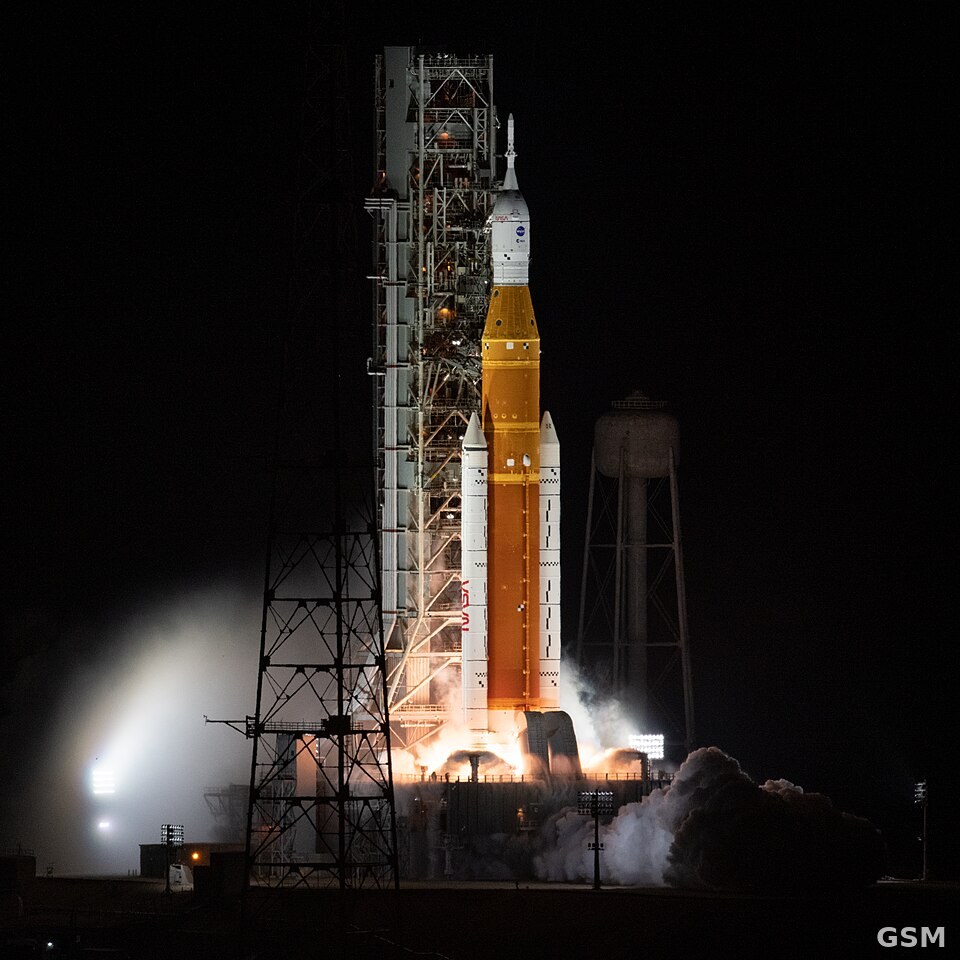
图片来源:图:太空发射系统(SLS)火箭搭载 Orion 飞船执行 Artemis I 飞行测试时发射升空(资料图)。Photo: NASA's Space Launch System rocket carrying the Orion spacecraft launches on the Artemis I flight test (file photo). NASA, public domain.