食品药品监管局拨款最高220万美元:可穿戴传感器追踪罕见病患者步态与手部功能
纽约——BioSensics LLC 与患者倡导组织 CureCMT(遗传性神经病基金会)10月22日宣布,获得美国食品药品监管局(FDA)一项为期两年、最高220万美元的合作协议拨款,首年110万美元,用于开发针对腓骨肌萎缩症1A型(CMT1A)的可穿戴数字生物标志物,把患者的运动功能测量发展为药物研发工具。CMT1A 是最常见的遗传性周围神经病。
项目编号为 1U01FD009005-01,经费来自 FDA 药品评价与研究中心(CDER)的「临床研究数字健康技术」计划,资助已于2026年9月25日开始。作为合作协议,FDA 科学家将在项目期间与研究团队协作。三位首席研究员为 BioSensics 创始人兼首席执行官 Ashkan Vaziri、University of Kansas Medical Center 的 Mazen Dimachkie 医生,以及 CureCMT 首席执行官 Allison Moore。
腓骨肌萎缩症(CMT)患者约为每2,500人中1人,目前尚无 FDA 批准的疾病修正疗法。疾病造成脚、腿与手部进行性无力,许多患者出现「足下垂」,抬不起脚尖、容易绊倒。由于 CMT 进展缓慢,诊所常规评估往往难以在临床试验的有限周期内测出有意义的变化,成为新药研发的一大障碍。
名为 BioCMT-01 的研究将在全美四个地点招募约120名 CMT1A 成年患者,牵头地点为 University of Kansas Medical Center,另包括 Massachusetts General Hospital、Hackensack Meridian School of Medicine 与 Scottish Rite for Children。18个月内,参与者将佩戴 BioSensics 的 PAMSys 传感器(挂坠加腕部、踝部设备),在家持续记录姿势、步态与手部活动,并定期在平板平台完成手指敲击与足下垂测试。研究团队将把数字测量与临床检查、患者自报结果对比,判断其能否作为未来 CMT 临床试验灵敏的真实世界终点。Allison Moore 表示,患者在日常生活中察觉到的行走与平衡变化,往往远早于诊所检查所能发现的变化。
FDA Awards Up to $2.2 Million for Wearable Digital Measures in Charcot-Marie-Tooth Disease Type 1A
NEW YORK — BioSensics LLC and CureCMT (the Hereditary Neuropathy Foundation) announced on October 22 a two-year cooperative agreement award of up to $2.2 million from the U.S. Food and Drug Administration (FDA), with $1.1 million awarded for the first year, to develop wearable digital biomarkers of motor function as drug development tools for Charcot-Marie-Tooth disease type 1A (CMT1A), the most common inherited peripheral neuropathy.
The project, grant number 1U01FD009005-01, is funded through the FDA Center for Drug Evaluation and Research (CDER) program on the use of digital health technologies in clinical investigations, and funding officially began on September 25, 2026. As a cooperative agreement, FDA scientists will work collaboratively with the study team throughout the project. The three principal investigators are Ashkan Vaziri, founder and CEO of BioSensics; Mazen Dimachkie, MD, of the University of Kansas Medical Center; and Allison Moore, CEO of CureCMT.
CMT affects an estimated 1 in 2,500 people, and no FDA-approved disease-modifying therapy exists. The disease causes progressive weakness in the feet, legs and hands, and many patients develop foot drop, which makes it hard to lift the front of the foot and leads to frequent tripping and falls. Because CMT progresses slowly, standard clinic assessments often cannot detect meaningful change within the timeframe of a clinical trial, a major barrier to treatment development.
The study, conducted under protocol BioCMT-01, will enroll approximately 120 adults with CMT1A across four U.S. sites: the University of Kansas Medical Center as lead clinical site, Massachusetts General Hospital, Hackensack Meridian School of Medicine, and Scottish Rite for Children. Over 18 months, participants will wear BioSensics PAMSys sensors — a pendant plus wrist- and ankle-worn devices — that continuously track posture, gait and hand activity at home, and will complete periodic finger-tapping and foot-drop tests on a tablet platform. Researchers will compare the digital measures with clinical exams and patient-reported outcomes to determine whether they can serve as sensitive, real-world endpoints for future CMT trials. Moore said people living with CMT notice changes in how they walk, balance and use their hands long before those changes show up on a clinic exam.
来源:GSM·美国(原文链接)
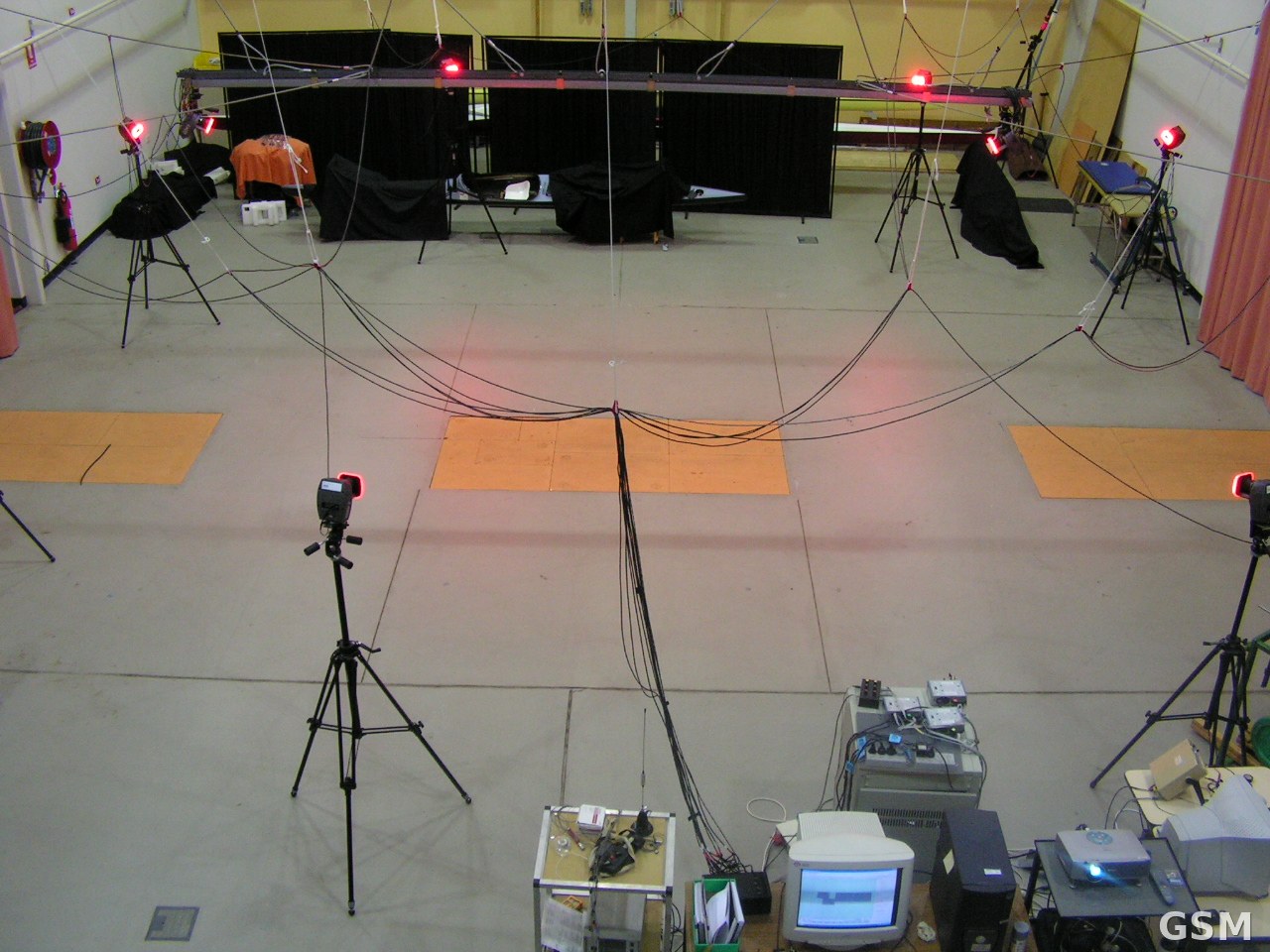
图片来源:图:步态分析实验室内的动作捕捉摄像机与测力台设备(资料图,D. Gordon E. Robertson 摄,Wikimedia Commons,CC BY-SA 3.0)