特朗普认定国内石油生产、炼化与物流产能事关国防:援引《国防生产法》第303条授权扩产
华盛顿——白宫10月22日公布一份总统备忘录,特朗普总统依据1950年《国防生产法》第303条作出认定:美国国内石油生产、炼化与物流产能事关国防,联邦政府可动用该条规定的采购、采购承诺与资金支持等手段扩充这一产能。备忘录致战争部长,白宫官网当天公布全文。
备忘录援引特朗普2025年1月20日签署的第14156号行政令。该行政令宣布国家能源紧急状态,认定美国能源生产、运输、炼化与发电能力不足,对美国经济、国家安全与外交政策构成异常且重大的威胁,并称当前能源供应不足且不稳定,使美国易受外国敌对行为体影响,对美国的繁荣与国家安全构成迫近且不断增长的威胁。
备忘录写明,具有韧性的国内石油生产、炼化与物流产能是美国国防战备的核心;石油为美国武装部队、工业基础与关键基础设施提供动力;若联邦政府不立即采取行动,美国的国防能力将持续面临供应中断的风险。
认定共三项:第一,国内石油生产、炼化与物流产能,包括勘探与生产、集输管道、储存设施与海运码头,属于对国防至关重要的工业资源、材料或关键技术物项;第二,受融资受限、交付周期长、许可与基础设施瓶颈以及供应链限制影响,若总统不依据第303条采取行动,美国工业无法被合理期待及时提供上述能力;第三,依据第303条作出采购、采购承诺、为发展生产能力提供资金支持或其他行动,是满足这一需求最具成本效益、最快捷且最切实可行的替代办法。
备忘录同时写明,特朗普已依据第14156号行政令宣布国家紧急状态,并认定扩充国内石油生产、炼化与物流产能,对避免出现将严重损害国防能力的工业资源或关键技术物项短缺是必要的;据此,他依据《国防生产法》第303(a)(7)条,豁免了第303(a)(1)至(a)(6)条的要求,以便扩充上述产能。
备忘录授权并指示战争部长落实这项认定,包括作出必要的采购、承诺与金融工具安排以推进相关项目,并将认定文本刊登于《联邦公报》;此前备忘录、公告与行政令中与本认定不一致的规定,在不一致的范围内被取代。
Trump Finds Domestic Petroleum Capacity Essential to National Defense: Invokes Defense Production Act Section 303 to Expand It
WASHINGTON — The White House on October 22 released a presidential memorandum in which President Donald J. Trump determined, under section 303 of the Defense Production Act of 1950, as amended, that domestic petroleum production, refining, and logistics capacity is essential to the national defense, and that the purchases, purchase commitments, and financial support authorized by that section may be used to expand it. The memorandum is addressed to the Secretary of War and was published in full on the White House website the same day.
The memorandum cites Executive Order 14156, issued on January 20, 2025, which declared a national energy emergency and found that America's inadequate energy production, transportation, refining, and generation capacity constitute an unusual and extraordinary threat to the nation's economy, national security, and foreign policy, leaving the country vulnerable to hostile foreign actors.
According to the memorandum, resilient domestic petroleum production, refining, and logistics capacity is central to United States defense readiness; petroleum fuels the nation's Armed Forces, industrial base, and crucial infrastructure; and without immediate federal action, United States defense capabilities will remain vulnerable to disruption.
The determination has three parts. First, domestic petroleum production, refining, and logistics capacity, including exploration and production, gathering and transmission pipelines, storage, and marine terminals, are industrial resources, materials, or critical technology items essential to the national defense. Second, without presidential action under section 303, United States industry cannot reasonably be expected to provide those capabilities in a timely manner, due to constrained financing, long lead times, permitting and infrastructure bottlenecks, and supply chain limitations. Third, purchases, purchase commitments, financial support for the development of production capabilities, or other action under section 303 are the most cost-effective, expedient, and practical alternative methods for meeting the need.
The memorandum further states that, having declared a national emergency under Executive Order 14156, the President determined that action to expand domestic petroleum production, refining, and logistics capacity is necessary to avert an industrial resource or critical technology item shortfall that would severely impair national defense capability, and therefore waived the requirements of section 303(a)(1) through (a)(6) of the Act under section 303(a)(7) for the purpose of expanding that capacity.
The Secretary of War is authorized and directed to implement the determination, including making the necessary purchases, commitments, and financial instruments to enable the projects, and to publish the determination in the Federal Register. Any provision of previous memoranda, proclamations, and Executive Orders inconsistent with the determination is superseded to the extent of the inconsistency.
来源:GSM·美国(原文链接)
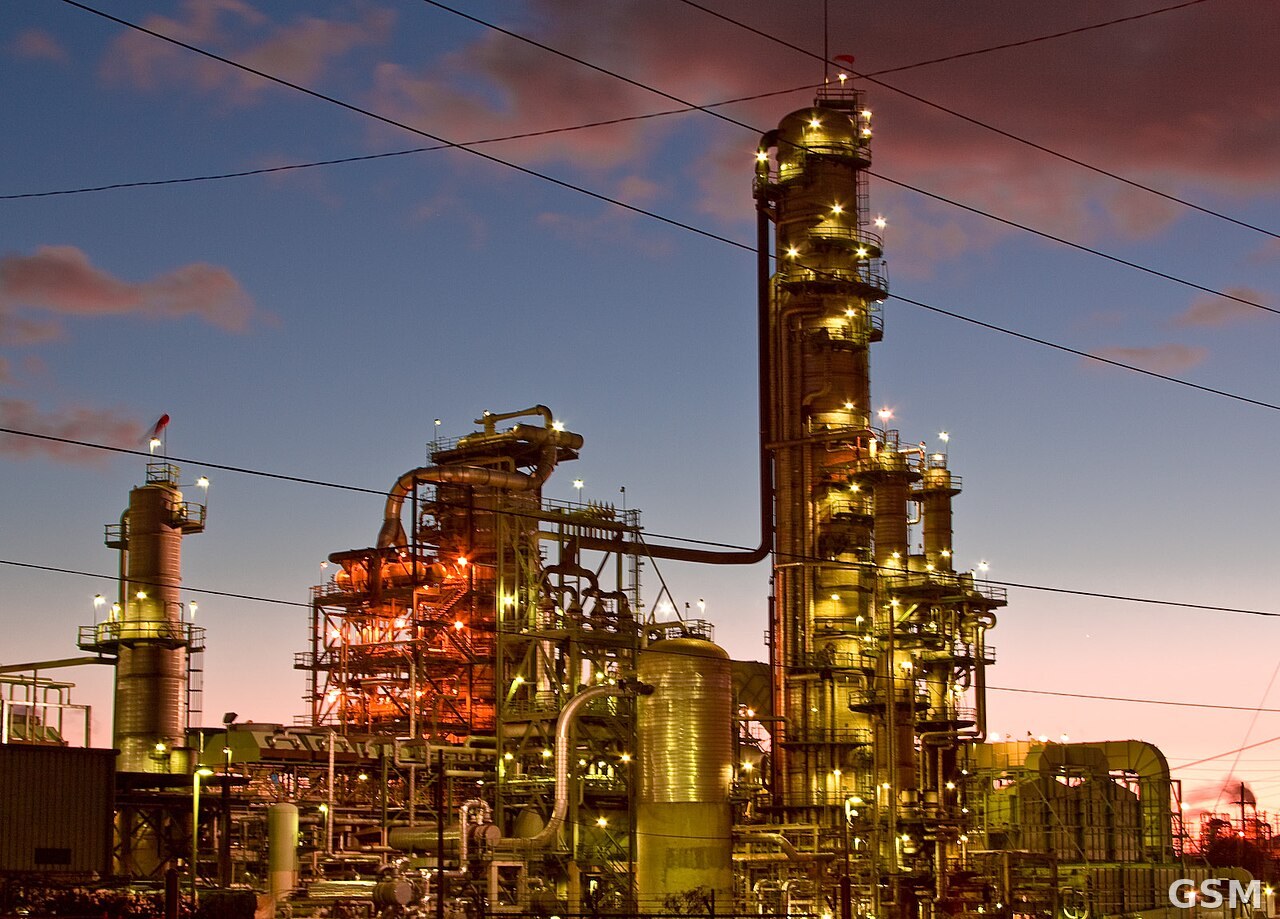
图片来源:图:位于 El Segundo 的一座炼油厂(资料图)。照片:Pedro Szekely,CC0,经 Wikimedia Commons。 / A refinery in El Segundo, California (file photo). Photo: Pedro Szekely, CC0, via Wikimedia Commons.