威斯康星州11月3日选票将有三项修宪公投:部分否决权、敬拜场所、防歧视
威斯康星州选民将于11月3日就三项宪法修正案投票,议题分别涉及州长的部分否决权、紧急状态下敬拜场所的关闭禁令,以及政府基于受保护特征的差别待遇。据 The Milwaukee Focal 10月22日报道,三项修正案均由州议会列入选票,提前投票与选举日投票的选民都会面对这三道问题。
第一项修正案将禁止州长动用部分否决权来创设或提高税费,这是对州长 Tony Evers「400年否决」的回应:他曾通过删改字词与数字,把地方为学校经费增收的授权期限从2024-25学年延长至2425学年。马凯特大学(Marquette University)政治学教授 Philip Rocco 指出,围绕部分否决权的争论源于州长与议会近年常由不同政党掌控的党派冲突。
第二项修正案将禁止州与地方政府在紧急状态(含公共卫生紧急状态)下关闭敬拜场所或禁止其中的聚会,直接回应新冠疫情期间的教堂关闭令。威斯康星大学法学院州民主研究倡议(State Democracy Research Initiative)指出,其他州多以立法方式给予敬拜场所与学校、杂货店同等对待,威斯康星州若通过,将成为全美第一个以修宪方式确立此类保护的州,且保护力度更强。Rocco 则提醒,该修正案的适用范围尚不明确,可能仅限于关闭令,也可能涵盖人数上限等限制。
第三项修正案将禁止政府实体在公共就业、教育、签约与行政中基于种族、性别、肤色、族裔或国籍进行歧视或优待。Rocco 表示,现行州法与联邦法已禁止这些领域的歧视,该修正案关于「优待」的措辞是其潜在影响的关键,可能被用于挑战平权类项目,但表述含糊使其最终适用范围难以预料。
Rocco 提醒,三项公投的措辞都不易理解,建议选民仔细权衡支持与反对双方的论据。
Wisconsin Voters Face Three Constitutional Amendments on Nov. 3 Ballot: Partial Veto, Worship Gatherings, Anti-Discrimination
Wisconsin voters will decide three proposed constitutional amendments on November 3, addressing the governor's partial veto power, government limits on gatherings in places of worship during emergencies, and government discrimination or preferential treatment based on protected characteristics. According to The Milwaukee Focal on October 22, all three were placed on the ballot by the state Legislature and will appear for early voters as well as Election Day voters.
The first amendment would prohibit the governor from using the partial veto to create or increase a tax or fee, or authorize its creation or increase. It responds to Gov. Tony Evers' "400-year veto," in which he struck words, digits and a hyphen to extend local school-funding levy authority from the 2024-25 school year through the 2425 school year. Philip Rocco, a political science professor at Marquette University, described the broader debate over partial veto authority as shaped by partisan conflict between governors and a Legislature often controlled by the opposing party.
The second amendment would bar state and local governments from ordering places of worship to close or forbidding gatherings there during a state of emergency, including a public health emergency, a direct response to church closures during the COVID-19 pandemic. The State Democracy Research Initiative at the University of Wisconsin Law School notes that other states have typically protected worship gatherings by statute and treated them the same as schools or grocery stores; Wisconsin would be the first state to adopt such protection at the constitutional level, with stronger protection than elsewhere. Rocco cautioned that the measure's reach is uncertain: it could apply only to closure orders, or also to limits such as capacity restrictions.
The third amendment would prohibit government entities from discriminating against or granting preferential treatment to individuals or groups based on race, sex, color, ethnicity or national origin in public employment, education, contracting or administration. Rocco said existing state and federal laws already prohibit discrimination in these areas, and identified the amendment's "preferential treatment" language as central to its potential effect: it could be applied to affirmative-action programs and other efforts to address disparities, though its ambiguous wording makes the ultimate scope difficult to predict.
Rocco said the wording of the three questions can be difficult to parse and encouraged voters to consider the arguments made by supporters and opponents.
来源:GSM·美国(原文链接)
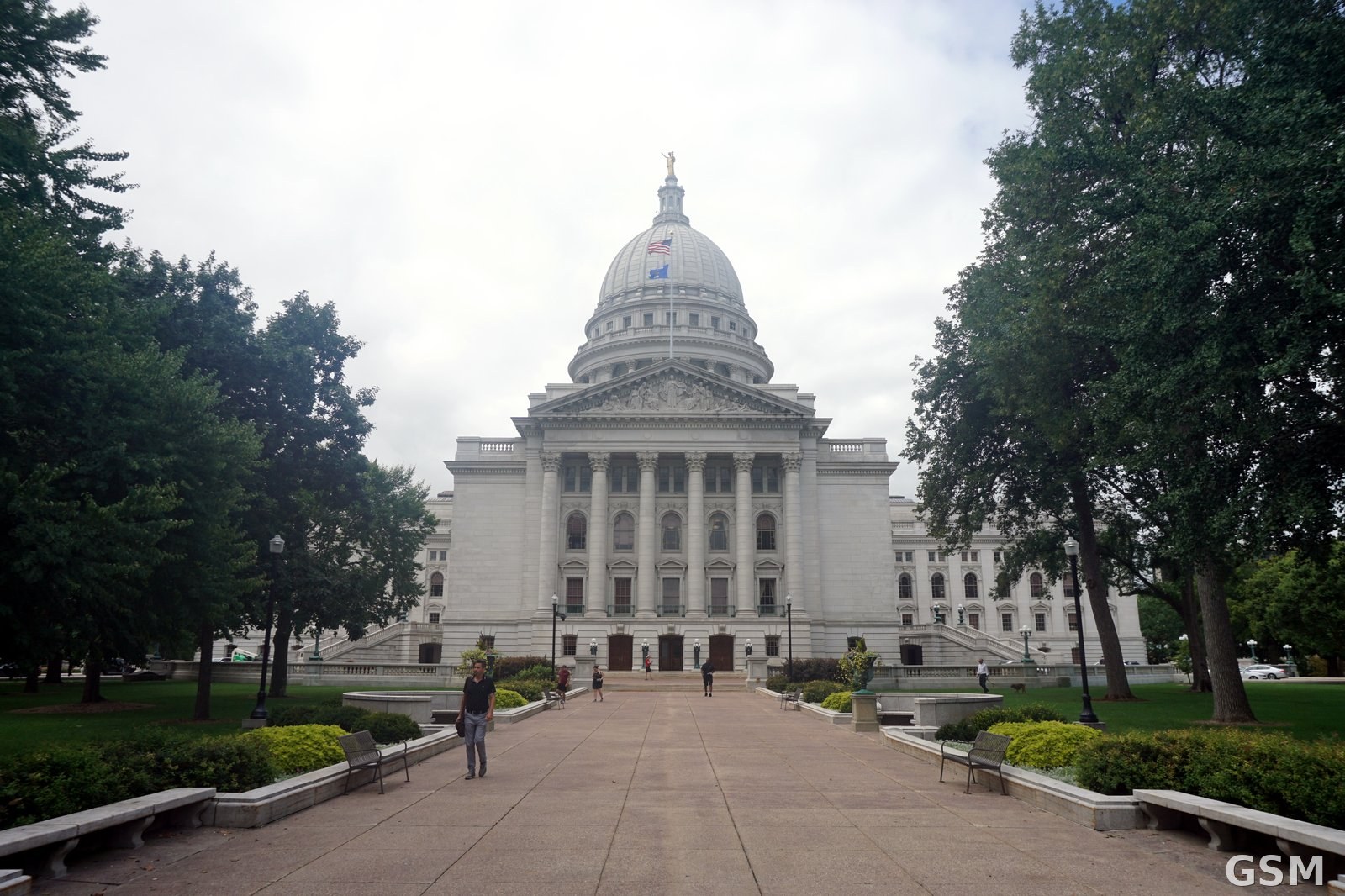
图片来源:威斯康星州议会大厦(Madison),Michael Barera 摄,CC BY-SA 4.0,Wikimedia Commons / Wisconsin State Capitol in Madison, by Michael Barera, CC BY-SA 4.0, Wikimedia Commons