联合国环境署《2026年排放差距报告》:1.5°C超标已不可避免 回落路径需2030年前减排18%
联合国环境规划署(UNEP)10月21日在肯尼亚首都 Nairobi 发布《2026年排放差距报告:回归点》。报告认定,全球升温超过工业化前水平1.5°C已不可避免,「无超标或有限超标」守住1.5°C的机会已经失去;但超标不必是永久的。报告提出「最低可能超标」情景:把本世纪中叶前后的峰值升温控制在1.7至1.8°C,并在2100年前将升温带回1.5°C或以下,实现概率约为50%。
要走上这条路径,全球温室气体排放须以2025年为基准,到2030年减少18%、2035年减少45%、2040年减少69%,相当于2025至2035年间年均减排约5.7%。相比之下,各国现有国家自主贡献(NDC)即使全部落实,到2030年也只能减排5%至8%、2035年减排11%至15%。报告估算,2025年全球温室气体排放约为584亿吨二氧化碳当量,与2024年大体持平,尚不能断定排放已经见顶;化石燃料二氧化碳排放仍在上升,甲烷排放大体未变。
报告给出的升温前景是:现行政策不变,本世纪内升温可达2.8°C;国家自主贡献全部落实并延续类似力度,升温可控制在2.6°C;即使最乐观情景下——自主贡献与额外净零目标全部实现——本世纪升温仍有2.1°C。预测较去年恶化,部分因美国退出《巴黎协定》及历史排放估算修订,过去一年提交的新自主贡献对前景几乎没有改变。报告还提出,最低超标情景需要在本世纪内从大气中移除并永久封存约3,200亿吨二氧化碳,约合2024年全球二氧化碳排放量的八年总量,其可行性存在不确定性。
联合国秘书长 António Guterres 在报告发布信息中表示:「超标不等于投降。我们仍能让超标尽可能小、尽可能短——并在本世纪末把气温带回1.5度以下。」环境署执行主任 Inger Andersen 表示,升温超过1.5°C后,每多一分、每多一年,都会增加致命洪水、热浪与野火等气候影响与风险,各国必须全力压低峰值升温。她同时指出,《巴黎协定》通过以来可再生能源快速扩张,多国气候政策已带来实际减排;220多项政策评估显示,电力部门政策平均减排约9%,碳交易与碳税等经济手段减排5%至13%。
UNEP Emissions Gap Report 2026: 1.5°C Overshoot Now Inevitable, Return Path Needs 18% Cut by 2030
The United Nations Environment Programme (UNEP) released its Emissions Gap Report 2026: The Point of Return in Nairobi, Kenya, on October 21. The report finds that a rise in global temperatures above 1.5°C over pre-industrial levels is now inevitable, and that the opportunity to hold warming to 1.5°C with no or limited overshoot has been lost. The overshoot need not be permanent, however: the report sets out a “lowest possible” overshoot scenario in which peak warming around the middle of the century is limited to 1.7–1.8°C and temperatures are returned to or below 1.5°C by 2100, with about a 50 per cent chance.
Getting onto that pathway would require global greenhouse gas emissions to fall, relative to 2025 levels, by 18 per cent by 2030, 45 per cent by 2035 and 69 per cent by 2040 — an average annual reduction rate of about 5.7 per cent between 2025 and 2035. By contrast, full implementation of countries' current Nationally Determined Contributions (NDCs) would cut emissions by only 5–8 per cent by 2030 and 11–15 per cent by 2035. The report estimates global greenhouse gas emissions in 2025 at about 58.4 billion tonnes of carbon dioxide equivalent, broadly unchanged from 2024, and says it is too early to conclude that emissions have peaked; carbon dioxide emissions from fossil fuels rose, while methane emissions were broadly flat.
On current policies, the report projects warming of 2.8°C within this century and rising thereafter; if all NDCs are delivered and similar efforts continue, warming would be limited to 2.6°C; and even in the most optimistic scenario, where all NDCs plus additional net-zero targets are achieved, warming would still reach 2.1°C this century. The projections are worse than last year's, the report says, partly because of the withdrawal of the United States from the Paris Agreement and revised estimates of historical emissions, while new NDCs submitted since last year's report have made a negligible difference. The lowest-overshoot scenario would also require removing and permanently storing roughly 320 gigatonnes of carbon dioxide over the course of the century — about eight years of 2024's global CO2 emissions — which the report says faces uncertain socioeconomic and technological prospects.
“Overshoot is not surrender. We can still keep it as small and as short as possible – and bring temperatures back below 1.5 degrees by the end of the century,” UN Secretary-General António Guterres said in a message on the report. UNEP Executive Director Inger Andersen said every additional fraction of a degree and every additional year of warming above 1.5°C increases climate impacts and risks, such as the deadly floods, heatwaves and wildfires that have plagued many nations this year, and that nations must pull out all the stops to minimize peak warming. The report also finds more opportunities than ever to accelerate action: since the Paris Agreement was adopted, renewable energy has boomed, coal and oil supply has grown more slowly than projected, and climate policies have delivered real reductions — across more than 220 policy evaluations, electricity-sector policies cut emissions by an average of 9 per cent, and economic instruments such as carbon cap-and-trade schemes and carbon taxes achieved reductions of 5–13 per cent.
发布:GSM·美国(发布链接)
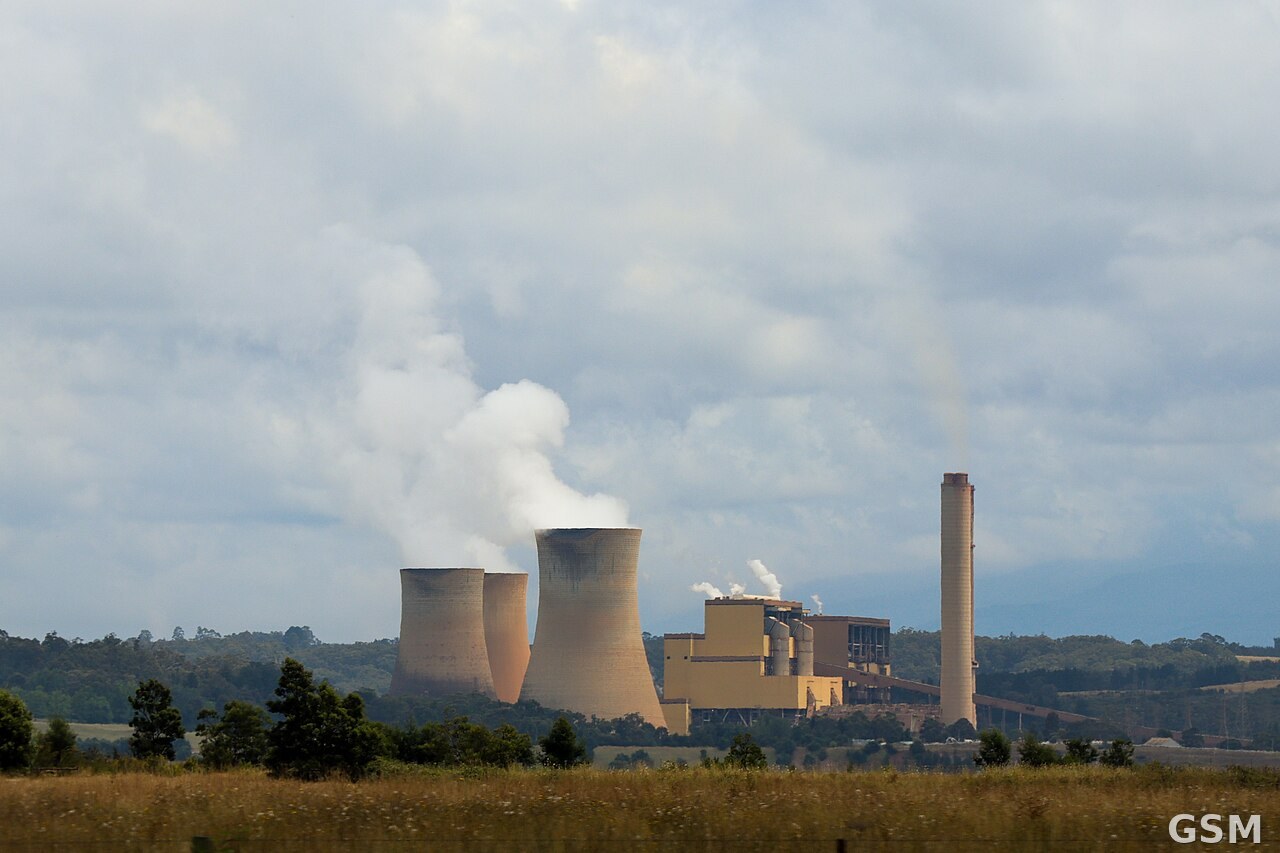
图片来源:图:澳大利亚 Victoria 州 Yallourn 褐煤发电站冷却塔与烟囱(资料图,非报告发布现场)。Joel200716 摄,CC BY 4.0,经维基共享资源。
GSM Global · 本篇英文版 English edition of this story