特稿|马友友:今晚台北第二场 从巴黎琴童到19座格莱美奖的华人琴声
台北——今晚(10月19日)19时45分,大提琴家马友友将在台北国家音乐厅登台,演出本轮台湾系列的第二场。主办单位牛耳艺术(MNA)公布的安排显示,这套全新特别制作《给破碎世界的智慧》(Wisdom for a Broken World)10月18日下午先在同一场馆演了首场,今晚续演第二场,10月21日晚间再移师台中国家歌剧院压轴。同台者包括加拿大原住民男高音杰瑞米·达彻(Jeremy Dutcher)、钢琴家鲁昀(Yun Janice Lu)、小提琴家若尾圭良(Keila Wakao),以及台湾排湾族团体「TBT泰武古谣传唱」;曲目涵盖肖斯塔科维奇《E小调第二号钢琴三重奏》与梅西安《时间终结四重奏》选段,全场约100分钟。台北场票价为新台币1980元至5980元。
马友友1955年出生于巴黎,父母都是华人:母亲是歌唱家,父亲是小提琴家、作曲家兼音乐教授。他四岁起随父亲学大提琴,五岁举行首场独奏会,七岁随家人移居纽约,先后在茱莉亚音乐学院(Juilliard School)深造、在哈佛大学攻读人文并于1976年毕业。少年时代,他曾为美国总统 Dwight D. Eisenhower 与 John F. Kennedy 演奏,也曾在 Leonard Bernstein 指挥的音乐会上登上美国电视——「神童」是他最早的标签,却不是他最后的标签。
真正定义马友友职业生涯的,是他不肯把大提琴关在音乐厅里。1983年,他录制的巴赫《无伴奏大提琴组曲》问世,次年为他赢得第一座格莱美奖;此后他的录音版图不断越界:美国阿帕拉契山区的蓝草音乐、阿根廷探戈、巴西音乐、中国传统旋律都在其中,他还为电影《卧虎藏龙》《西藏七年》等影片录制配乐。据其官方履历,他至今已发行超过120张专辑,赢得19座格莱美奖,并先后获得1978年 Avery Fisher 奖、2001年美国国家艺术奖章、2010年总统自由勋章、2011年 Kennedy 中心荣誉奖与2012年极地音乐奖;2006年,他被任命为联合国和平使者,演出足迹遍及九位美国总统的任期场合。
1998年,他创办「丝路计划」(Silkroad),把古代丝绸之路沿线不同文化的音乐家聚到同一张谱台前;2018年,他又启动「巴赫计划」,带着巴赫六首组曲走遍全球多地演出并与当地社区对话。这条「文化让我们紧密相系」的线索,正是今晚台北这套新制作的底色:节目以一把大提琴为起点,把古典室内乐、原住民歌声与影像编织在一起,探讨人与自然、土地与彼此的关系——排湾族古谣进入国家音乐厅的节目核心,也是这一理念在台湾的最新一次落地。
对全球华人乐迷而言,马友友的特殊之处在于:他是华人家庭走出的孩子,在西方古典音乐的最高殿堂站稳,又用半个多世纪把琴声带回人群——从白宫与联合国会场,到社区、学校与户外广场。今晚19时45分,台北国家音乐厅的第二场演出开场之后,这一轮台湾之行还剩10月21日的台中场,随后乐迷可在主办单位牛耳艺术的售票页面查询余票与候补登记信息。(《The Star》栏目组)
关联:
马友友携全新企划登台台北国家音乐厅 融合原住民古谣 19日续场、21日台中压轴
Feature | Yo-Yo Ma in Taipei Tonight: From Paris Child Prodigy to 19 Grammy Awards
Taipei — Cellist Yo-Yo Ma takes the stage at Taipei's National Concert Hall tonight (October 19) at 7:45 p.m. for the second performance of his Taiwan run. According to presenter MNA, his new special project "Wisdom for a Broken World" opened at the same hall on the afternoon of October 18, continues tonight, and closes on October 21 at the National Taichung Theater. He is joined by Canadian Indigenous tenor Jeremy Dutcher, pianist Yun Janice Lu, violinist Keila Wakao, and Taiwan's Paiwan singing group TBT Taiwu Ancient Ballads. The program includes Shostakovich's Piano Trio No. 2 in E minor and a movement from Messiaen's Quartet for the End of Time, running about 100 minutes; Taipei tickets were priced from NT$1,980 to NT$5,980.
Ma was born in Paris in 1955 to Chinese parents — his mother a singer, his father a violinist, composer and professor of music. He began the cello with his father at age four, gave his first recital at five, and moved with his family to New York at seven, later studying at the Juilliard School and earning a liberal-arts degree from Harvard University in 1976. As a boy he performed for Presidents Dwight D. Eisenhower and John F. Kennedy and appeared on American television in a concert conducted by Leonard Bernstein. "Child prodigy" was his first label, but not his last.
What has defined Ma's career is his refusal to keep the cello inside the concert hall. His 1983 recording of Bach's unaccompanied cello suites won him his first Grammy Award the following year, and his discography kept crossing borders — Appalachian bluegrass, Argentine tango, Brazilian music and traditional Chinese melodies, as well as film scores including Crouching Tiger, Hidden Dragon. His official biography credits him with more than 120 albums and 19 Grammy Awards, alongside the Avery Fisher Prize (1978), the National Medal of Arts (2001), the Presidential Medal of Freedom (2010), the Kennedy Center Honors (2011) and the Polar Music Prize (2012). Named a United Nations Messenger of Peace in 2006, he has performed for nine American presidents.
In 1998 he founded Silkroad, bringing musicians from cultures along the ancient Silk Road onto one stage; in 2018 he launched the Bach Project, taking Bach's six suites around the world paired with community conversations. That thread — his conviction that culture connects us — runs through tonight's Taipei program, which begins from a single cello and weaves classical chamber music, Indigenous voices and imagery into a reflection on how people relate to nature, to the land and to one another. Placing Paiwan songs at the heart of a National Concert Hall program is the latest Taiwanese expression of that idea.
For Chinese-speaking audiences worldwide, Ma holds a particular place: a child of a Chinese family who reached the summit of Western classical music, then spent more than half a century carrying his instrument back out to people — from the White House and the United Nations to schools, communities and outdoor squares. After tonight's 7:45 p.m. performance in Taipei, one date remains on this Taiwan run, on October 21 in Taichung; ticket and waitlist information is available from presenter MNA. (By The Star)
Related:
来源:GSM·美国(原文链接)
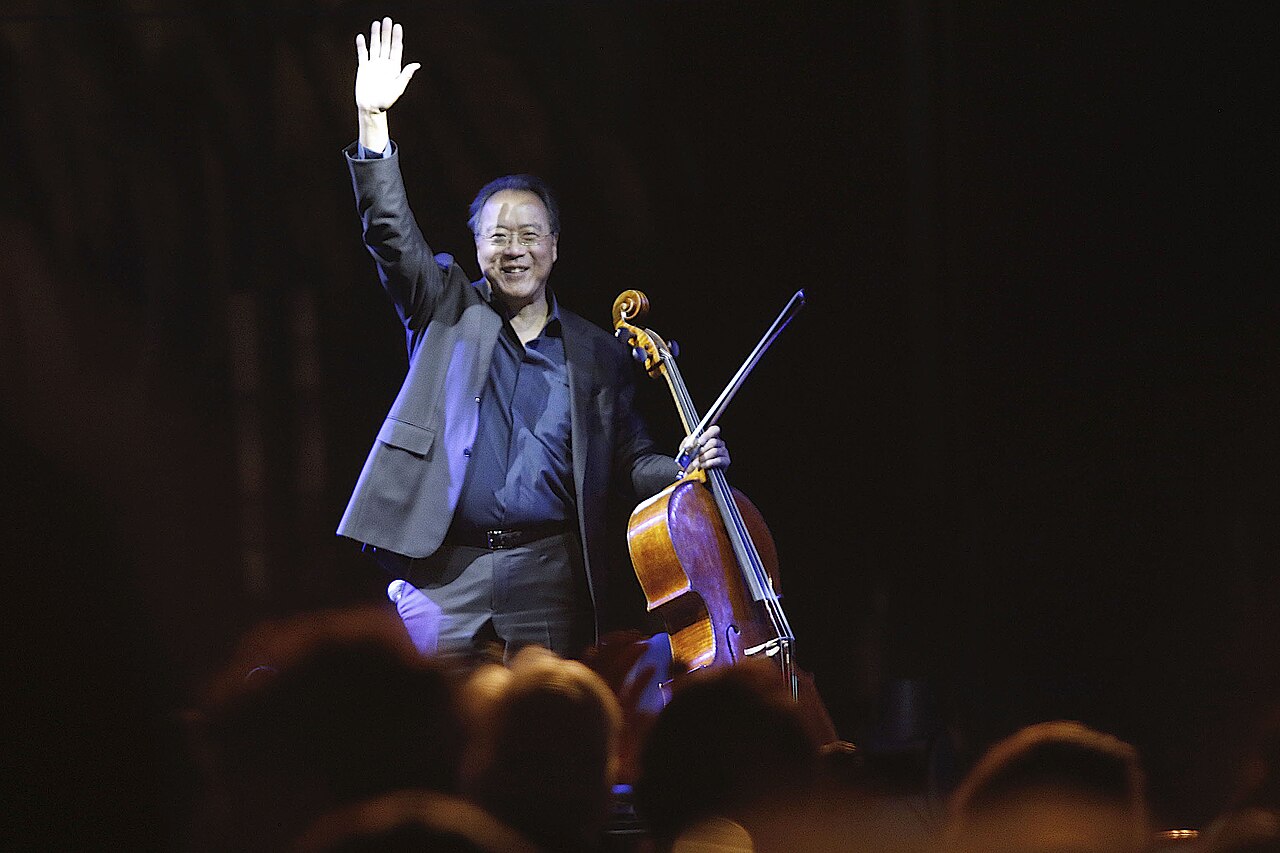
图片来源:图:马友友2019年在 Mexico City 演出「巴赫计划」后向观众致意(资料图)。Secretaría de Cultura de la Ciudad de México 摄,图片来源:Wikimedia Commons,CC BY 2.0。Photo: Yo-Yo Ma acknowledges the audience after a Bach Project performance in Mexico City in 2019 (file photo), by the Secretaría de Cultura de la Ciudad de México. Source: Wikimedia Commons, CC BY 2.0.
GSM Global · 本篇英文版 English edition of this story