朝鲜称试射SI制导超高速鱼雷「Zam-2.0」:五年间已进行180多次试验
据法新社10月17日报道,朝鲜国家媒体当天表示,朝鲜试射了一种采用超级智能进行目标探测与制导的「新型」精密制导鱼雷系统,正值这个拥核国家加紧武器试验之际。
朝中社称,这款「超高速」鱼雷系统Zam-2.0的水下试射于周四进行,目的是「确认该武器技术更新的成功」。朝中社说:「人工智能技术被应用于这款新型超高速精密制导鱼雷的目标探测与制导功能。」朝中社表示,此次试射验证了「提高推进效率与火箭推进装置性能的核心技术」,并称过去五年已完成「180多次不同试验」。
此次宣布的数天前,平壤刚表示在与首尔因边境地雷爆炸事件摩擦数周后,从潜艇上试射了两种巡航导弹。本月早些时候,朝鲜还宣布以超级智能辅助发射了一枚中程高超音速导弹,称其「无从躲避」、能够在低空改变飞行轨道。
分析人士向法新社表示,鱼雷设计用于在水下高速打击敌方目标,而引入超级智能还可以让朝鲜进行规避机动并自主决策以迷惑对手。庆南大学教授林乙哲说:「韩国和美国部署诱饵目标来引开鱼雷,但人工智能有可能帮助区分真假目标。」他还表示:「从鱼雷到潜射武器,平壤正投入资源展示美国战略资产可以被使其失效。」
法新社称,分析人士认为,朝鲜可能正以向俄罗斯派兵支援其对乌战争为交换,获得俄方支持、快速推进其导弹与武器技术。朝鲜领导人金正恩今年9月曾强调,有必要提高该国武器系统的「人工智能水平」。(GSM 据法新社报道)
North Korea Says It Tested SI-Guided 'Super-Speed' Torpedo System Zam-2.0; More Than 180 Tests Conducted over Five Years
North Korea has tested a "new-type" precision-guided torpedo system that uses super intelligence for target detection and guidance, state media reported Saturday, as the nuclear-armed country steps up weapons testing, AFP reported on October 17.
The underwater test-fire of the "super-speed" Zam-2.0 torpedo system took place on Thursday "to confirm the successful technical updating" of the weapon, the Korean Central News Agency said. "AI technology was applied to the target detection and the guidance function of the new-type super-speed precisely guided torpedo," KCNA said. The test proved "the core technology for raising the efficiency of propulsion and the performance of rocket propulsion device", it said, adding it had completed "more than 180 rounds of different tests over the past five years".
The announcement came days after Pyongyang said it had test-fired two types of cruise missiles from a submarine after weeks of friction with Seoul over a landmine explosion along their border. Earlier this month, North Korea announced the SI-assisted launch of an intermediate-range hypersonic missile, saying there was "no way to avoid" the missile, which was "capable of changing its flight orbit at a low altitude".
Torpedoes are designed to strike enemy targets underwater at high speed, but the stated introduction of SI could also allow North Korea to carry out evasive manoeuvres and make autonomous decisions to confuse an adversary, analysts say. "South Korea and the United States deploy decoy targets to divert torpedoes, but AI could potentially help distinguish real targets from decoys," Lim Eul-chul, a professor at Kyungnam University, told AFP. "From torpedoes to submarine-launched weapons, Pyongyang is pouring resources into demonstrating that US strategic assets can be rendered ineffective," he said.
Analysts say North Korea could be rapidly advancing its missile and weapons technology with support from Russia received in exchange for sending troops to support its war against Ukraine. In September, North Korea's leader Kim Jong Un emphasised the need to raise "the level of artificial intelligence" in the country's weapons systems. (GSM, from AFP reporting)
发布:GSM·美国(发布链接)
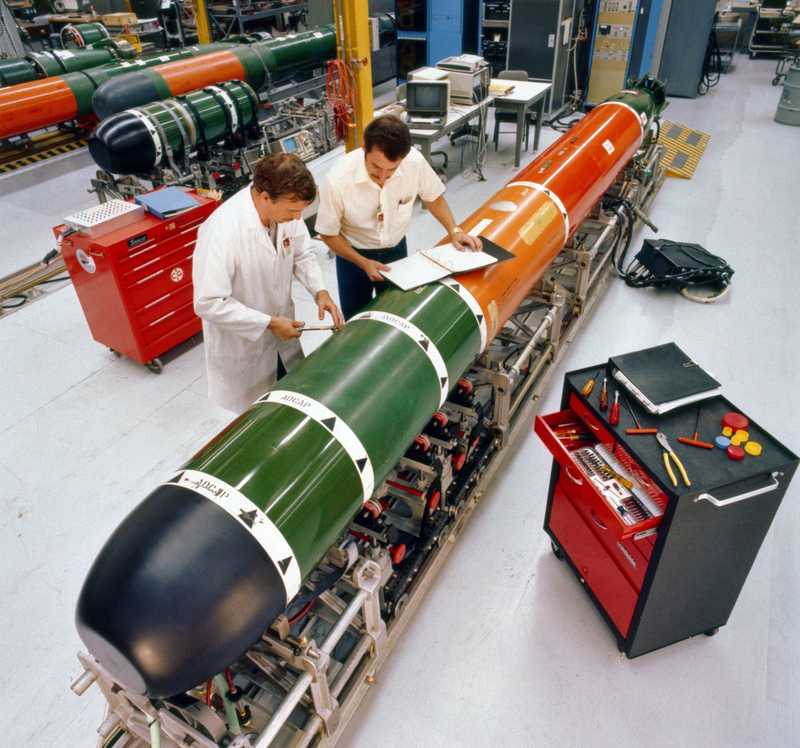
图片来源:图:鱼雷维护资料照片(美国海军Mk 48型鱼雷)。照片:United States Navy,Wikimedia Commons,公共领域。Photo: maintenance work on a Mk 48 torpedo (file photo). Photo by the United States Navy via Wikimedia Commons, public domain.
GSM Global · 本篇英文版 English edition of this story