非营利机构American Prairie野牛群首次突破1000头:年度清点达1016头,联邦法官9月已暂阻土地管理局清退令
位于美国蒙大拿州北部平原的非营利保护机构 American Prairie 于 10 月中旬公布,其年度幼崽清点显示,机构管理的美洲野牛群数量达到 1,016 头,为该机构成立二十多年来首次突破 1,000 头。据 Good News Network 10 月 16 日报道,American Prairie 自 2005 年起在自有土地与租赁的公共土地上重新引入野牛,管理层认为 5,000 头的种群规模是「非常可实现」的目标;其远期土地拼图目标为 5,000 平方英里,理论上可容纳数万头野牛。
American Prairie 是美国规模最大的私人土地保护项目之一,通过购买私人土地把分散的公共土地连接成片。野牛恢复并非一帆风顺:在蒙大拿州,野牛在法律上被归类为牲畜而非野生动物,其活动与放牧按牲畜口径监管,土地管理局(Bureau of Land Management,BLM)于 2026 年 5 月撤销了该机构在东北部三块联邦放牧配额地上的野牛放牧许可,并要求其移除野牛。机构方面称,若被迫移除,须在 9 月 30 日期限前宰杀或转移约 300 头野牛。
9 月 4 日,一名联邦法官批准初步禁令,暂时阻止 BLM 执行清退令。争议焦点是 1934 年《泰勒放牧法》(Taylor Grazing Act):BLM 以新解释称该法规定的放牧用地只供粮食与纤维的商业生产,American Prairie 则主张该法并无此区分,并指出 BLM 自 2005 年以来一直按该法批准其野牛放牧、其自有评估还认定野牛改善了草原植被覆盖与河岸健康状况。机构在诉状中说:「法治不应该是这样运作的。」
在此背景下,1,016 头的清点结果被机构视为一个里程碑:研究者认为,接近 1,000 头的规模是种群长期遗传健康所需。野牛曾在 19 世纪的大规模猎杀中从数百万头锐减至约 1,000 头,如今全美种群已恢复至约 40 万至 50 万头。American Prairie 的野牛除生态功能外,也供应部落伙伴、食物银行与社区收获项目;该机构自 2016 年以来还通过年度公共狩猎项目提供了约 75,000 磅野牛肉。案件仍在联邦法院审理中,野牛群的去留尚无最终结论。
Nonprofit American Prairie's Bison Herd Passes 1,000 for the First Time: Annual Calf Count Reaches 1,016 as Federal Judge Blocks BLM Removal Order
American Prairie, a nonprofit conservation organization on Montana's northern plains, announced in mid-October that its annual calf count put its American bison herd at 1,016 animals, the first time the herd has passed 1,000 since the organization's founding more than 20 years ago. According to Good News Network's October 16 report, American Prairie has been reintroducing bison since 2005 across land it owns and public land it leases, and its organizers believe a herd of 5,000 is a very achievable aim; its ultimate land package target of 5,000 square miles could in theory support tens of thousands of bison.
American Prairie is one of the largest private land conservation projects in the United States, stitching fragmented public lands together by purchasing private land. The restoration has not been smooth: in Montana, bison are classified in law as livestock rather than wildlife, and their movement and grazing are regulated accordingly. In May 2026 the Bureau of Land Management (BLM) revoked the organization's bison grazing permits on three federal allotments in the northeast of the state and ordered the bison removed. The organization said that absent court relief it would have had to cull or relocate roughly 300 bison by a September 30 deadline.
On September 4, a federal judge granted a preliminary injunction blocking the BLM from enforcing the removal order. The dispute turns on the Taylor Grazing Act of 1934: the BLM's new interpretation holds that grazing land under the Act is solely for commercial production of food and fiber, while American Prairie argues the Act contains no such distinction, noting that the BLM has authorized its bison grazing under the Act since 2005 and that the agency's own field assessments credited the bison with improving rangeland cover and riparian health. 'That is not how the rule of law is supposed to work,' the organization said in its complaint.
Against that backdrop, the count of 1,016 is a milestone for the organization: researchers say a herd near 1,000 animals is the scale needed for long-term genetic viability. Bison were reduced from millions to roughly 1,000 animals by the mass hunts of the 19th century and have since recovered to an estimated 400,000 to 500,000 nationwide. American Prairie's bison also supply tribal partners, food banks and community harvest programs, and since 2016 its annual public hunting program has produced about 75,000 pounds of meat from some 370 bison. The court case continues, and the herd's long-term future on the allotments has not been finally decided.
来源:GSM·美国(原文链接)
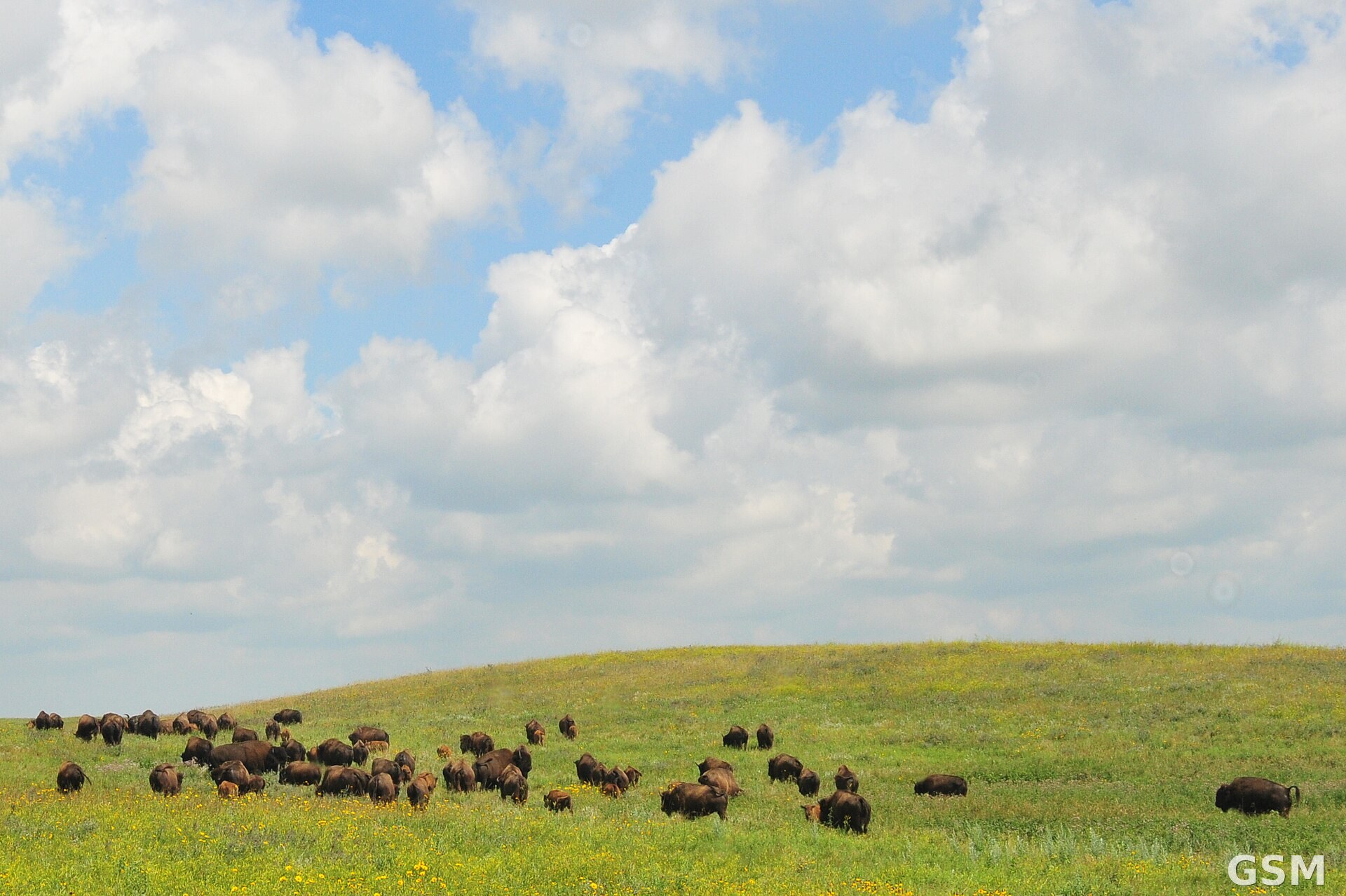
图片来源:图:草原上的美洲野牛群(资料图,非 American Prairie 牧场实景)。图片:美国鱼类与野生动物管理局 USFWS Mountain-Prairie 摄,公共领域(Wikimedia Commons)。Photo: An American bison herd on the prairie (file photo, not American Prairie's ranch). Credit: USFWS Mountain-Prairie, public domain, via Wikimedia Commons.