旧金山学区拟废除小学入学抽签制 董事会周二投票二选一
旧金山联合学区正准备废除实行多年的小学入学抽签制。学区董事会将于10月13日(周二)投票,在两个替代方案中二选一,这将重塑全市幼龄学生的入学分配方式。
现行制度下,家长可在全市范围内填报志愿,由算法分配学位,并优先照顾来自全市考试成绩历来最低的20%区域的学生。早在2018年,学区就已投票决定取消抽签制,因为数据显示该制度并未如预期那样缓解社会经济隔离,但替代方案一直未能落地。多年来,家长们形容这是全市家庭生活里最煎熬的一环:几个月的等待,换不来4、5岁孩子究竟能上哪所学校的确定答案。
目前摆在桌面上有两个选项。B方案:按时申请的家庭可保证入读住家附近的学校,同时仍可申请全市其他学校;C方案更进一步:即使错过申请截止日期,家庭也能保证入读社区学校,但其他申请只能限定在全市性项目,如K-8学校和语言沉浸项目。无论采用哪种方案,学区都将重新划定按住址对口的入学边界。
学区对2,725个家庭的调查显示,约71%的家庭倾向B方案,48%支持C方案,B方案明显领先但并非一边倒。旧金山家长联盟执行主任Rebecca Kee此前表示,抽签制带来的不可预测性,多年来一直是家长焦虑的核心来源。
如果董事会按计划在明年4月通过新政策,新分配制度将于2028年夏季正式上线。对正在为孩子择校的旧金山家庭来说,周二的投票是学区兑现八年前「住家就近入学」承诺的第一步实质性动作。
San Francisco Unified Moves to Replace School Lottery; Board Votes Tuesday on Two Neighborhood-Guarantee Options
The San Francisco Unified School District is moving to scrap the lottery system that has decided which elementary school a child may attend, years after voting to kill it. The school board will vote Tuesday, October 13, between two replacement designs, and the winner would reshape how roughly the city's youngest students are assigned to schools.
Under the current system, families rank school preferences anywhere in the city, and an algorithm assigns seats, giving priority to students from the 20 percent of the city with historically low test scores. The district voted back in 2018 to eliminate the lottery after data showed it had not reduced socioeconomic segregation as intended, but a replacement was never implemented. Parents have described the process as one of the most stressful parts of family life in the city: months of uncertainty with no guarantee of where a 4- or 5-year-old will go to school.
Two options are on the table. Option B would give families who apply on time a guaranteed seat at their neighborhood school while still allowing applications to other schools across the city. Option C goes further, guaranteeing a neighborhood placement even for families who apply after the deadline, but limiting additional applications to citywide programs such as K-8 schools and language immersion programs. Either way, the district also plans to redraw the attendance boundaries that link each address to a neighborhood school.
A district survey of 2,725 families found about 71 percent preferred Option B, while 48 percent favored Option C, suggesting a clear but not unanimous lean toward the first design. Rebecca Kee, executive director of the SF Parents Coalition, told KALW that the unpredictability of the lottery has been a core complaint fueling parents' stress for years.
If the board adopts a new policy in April as planned, the new assignment system would launch in the summer of 2028. For families navigating San Francisco's school choices today, Tuesday's vote is the first concrete step toward the neighborhood-guarantee model the district promised eight years ago.
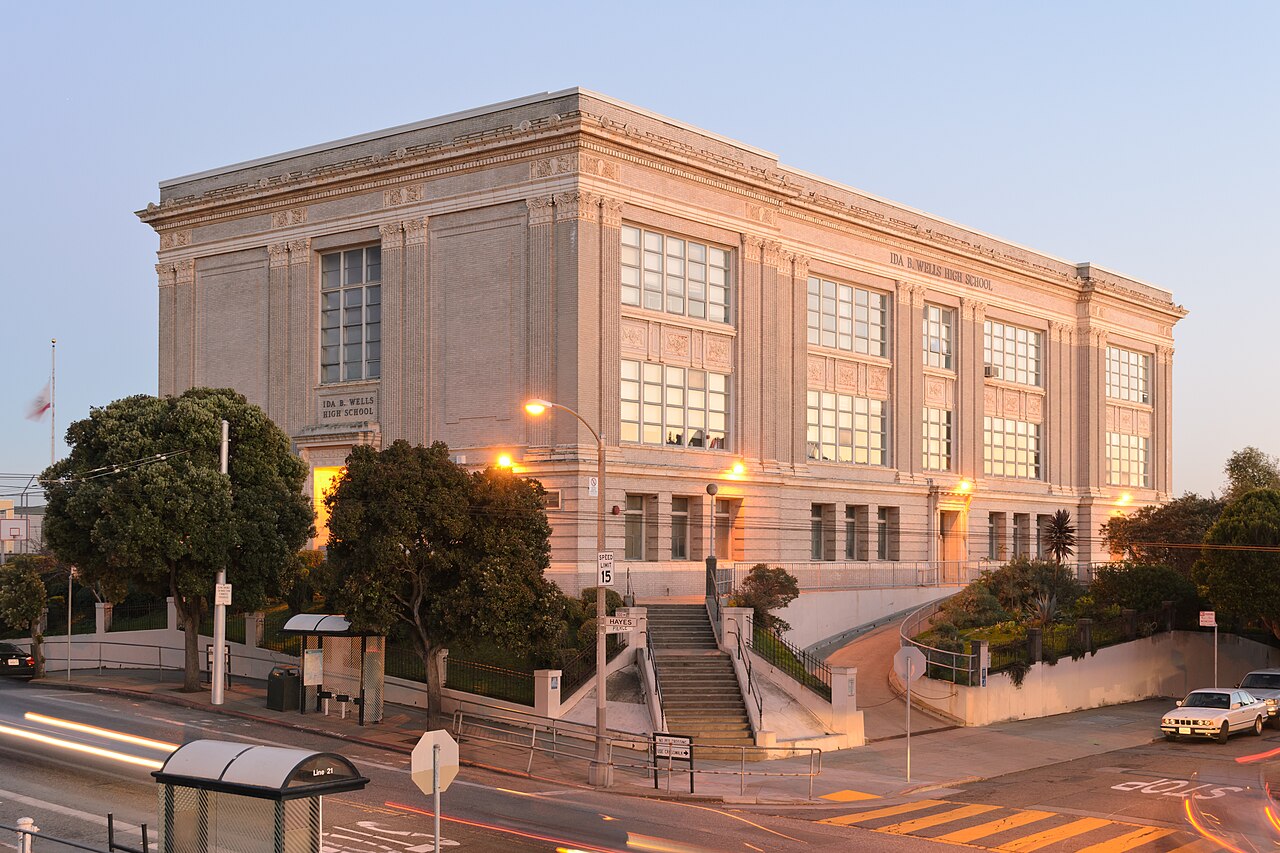
图片来源:King of Hearts 摄,CC BY-SA 3.0(Wikimedia Commons)