联邦上诉法院维持TikTok剥离法:字节跳动须在2025年1月19日前出售或面临全美禁用
2024年12月6日,美国哥伦比亚特区巡回上诉法院在华盛顿就 TikTok 与字节跳动诉司法部长 Garland 案(案号24-1113)作出裁决,三名法官一致驳回 TikTok 一方的申请,维持《保护美国人免受外国对手控制应用法》的合宪性。该法由国会两党通过、总统拜登于2024年4月签署,要求字节跳动在2025年1月19日前完成对 TikTok 美国业务的合格剥离,否则 TikTok 平台将在美国实际不可用;如剥离取得进展,总统可给予一次90天延期。
判决由资深巡回法官 Douglas Ginsburg 撰写、巡回法官 Neomi Rao 加入,首席法官 Sri Srinivasan 另撰协同意见。法院假定该法须接受最严格的司法审查而不预先裁定审查标准,认定该法在此标准下仍成立:政府提出的两项国家安全理由——防范中国收集美国人数据、防范中国暗中操纵 TikTok 上的内容——各自构成令人信服的国家安全利益,该法是实现这些利益的最小限制手段。
法院在判决中写道:「第一修正案的存在是为了保护美国的言论自由。在此,政府的行动完全是为了保护这一自由免受外国对手国家的侵害,并限制该对手收集美国人数据的能力。」法院同时驳回了 TikTok 提出的第一修正案、平等保护、剥夺公权与征收条款等其余挑战,并认定 TikTok 提出的「国家安全协议」等替代方案不足以消除风险。法院也承认,这一裁决对 TikTok 及其用户有重大影响,如不剥离,平台自2025年1月19日起将至少一度在美国不可用。
TikTok 与字节跳动表示将向联邦最高法院上诉。
(来源:美国哥伦比亚特区巡回上诉法院)
Federal Appeals Court Upholds TikTok Divest-or-Ban Law: ByteDance Faces January 19, 2025 Deadline
On December 6, 2024, the U.S. Court of Appeals for the District of Columbia Circuit in Washington ruled in TikTok, Inc. v. Garland, No. 24-1113, with a three-judge panel unanimously denying TikTok's petitions and upholding the constitutionality of the Protecting Americans from Foreign Adversary Controlled Applications Act. The Act, passed by Congress with bipartisan support and signed by President Biden in April 2024, requires ByteDance to complete a qualified divestiture of TikTok's U.S. operations by January 19, 2025, or the TikTok platform will effectively be unavailable in the United States; the President may grant a one-time 90-day extension if a divestiture is in progress.
Senior Circuit Judge Douglas Ginsburg wrote the opinion, joined by Circuit Judge Neomi Rao; Chief Judge Sri Srinivasan wrote a separate concurrence. The court assumed without deciding that strict scrutiny applied and held that the Act survived even that standard: the government's two national security justifications — countering China's efforts to collect data of and about persons in the United States, and countering the risk of China covertly manipulating content on TikTok — were each independently compelling national security interests, and the Act was the least restrictive means of advancing them.
"The First Amendment exists to protect free speech in the United States," the court wrote. "Here the Government acted solely to protect that freedom from a foreign adversary nation and to limit that adversary's ability to gather data on people in the United States." The court also rejected TikTok's remaining equal protection, bill of attainder, and takings challenges, and found the national security agreement TikTok had proposed to be an inadequate alternative. The court acknowledged the decision has significant implications for TikTok and its users and that, without a divestiture, the platform would be unavailable in the United States at least for a time starting January 19, 2025.
TikTok and ByteDance said they would appeal to the U.S. Supreme Court.
(Source: U.S. Court of Appeals for the D.C. Circuit)
来源:美国哥伦比亚特区巡回上诉法院
发布:GSM·美国(发布链接)
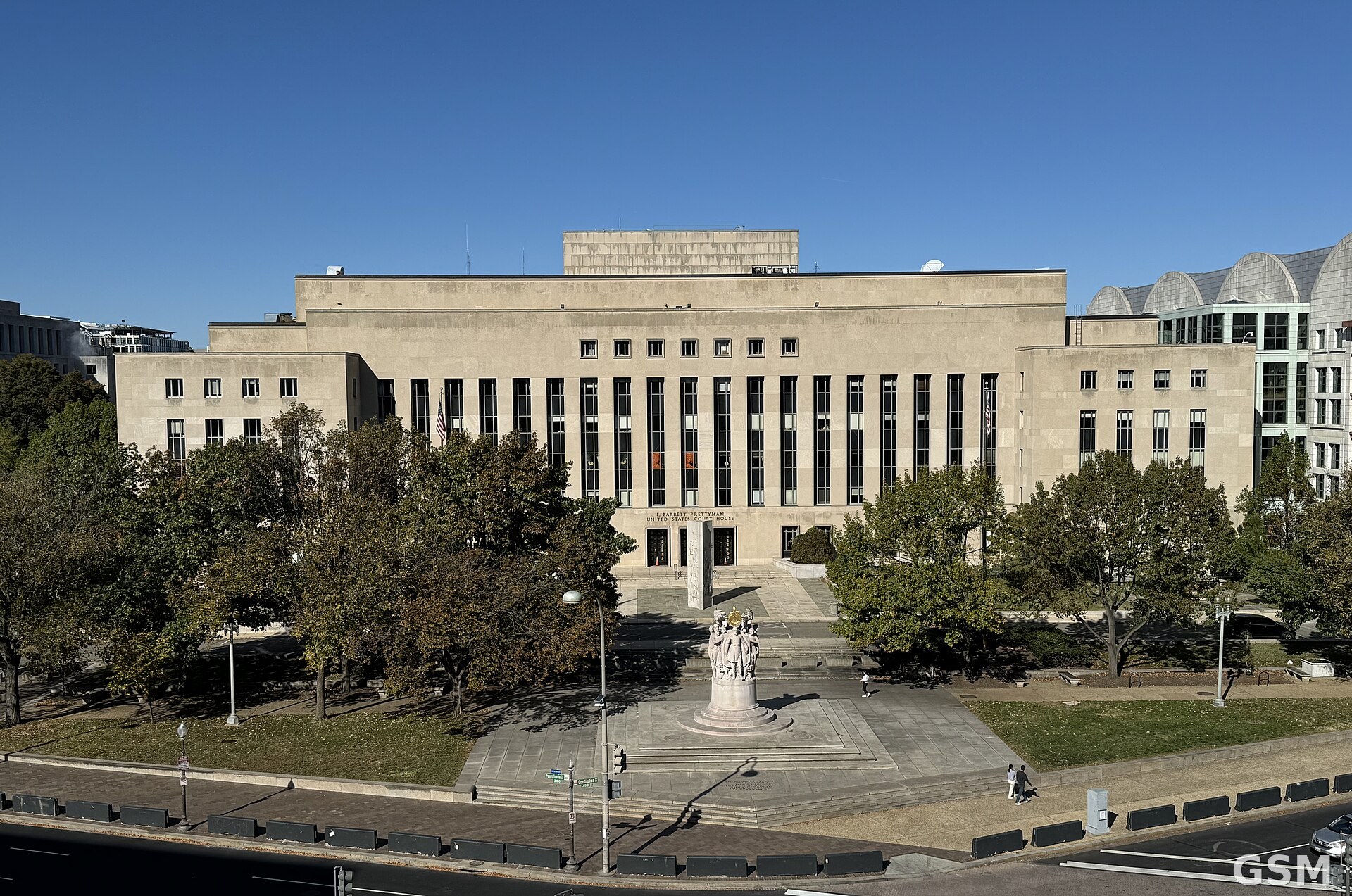
图片来源:图:位于美国华盛顿的 E. Barrett Prettyman 联邦法院大楼,美国哥伦比亚特区巡回上诉法院所在地。Toohool 摄,CC BY-SA 4.0,经 Wikimedia Commons。 / Photo: The E. Barrett Prettyman U.S. Courthouse in Washington, D.C., home of the U.S. Court of Appeals for the D.C. Circuit. By Toohool, CC BY-SA 4.0, via Wikimedia Commons.
GSM Global · 本篇英文版 English edition of this story