国土安全部最终规则生效:工签续签取消540天自动延期 另拟取消H-1B等延期「尊重既往批准」
美国国土安全部(DHS)一项最终规则10月14日刊登于《联邦公报》并即日生效,正式取消移民工作许可(EAD)续签申请的最长540天自动延期。这项最终规则原封不动地采纳了2025年10月30日发布的临时最终规则,将此前的做法固定下来。
过去,在审理积压严重的时期,及时提交续签申请的人即使旧工卡过期,也可凭待审申请继续工作最长540天。按现行规则,凡在2025年10月30日当天或之后提交的续签申请,不再获得自动延期:申请尚在审理、而现有工卡已经到期的,工作许可即告终止,须等移民局(USCIS)批准新卡后才能恢复工作。在截止日之前已及时提交续签的申请人,仍保留最长540天的自动延期;法律或《联邦公报》通知另有规定的延期安排,如部分与临时保护身份(TPS)相关的工卡,不在此规则范围内。
受影响的包括H-1B专业人员的H-4配偶、部分庇护申请人,以及调整身份(I-485)申请待批等依赖EAD工作的群体。国土安全部称,取消自动延期后,移民局可在延长工作许可之前更频繁地对申请人进行资格复核与安全审查。DHS在规则中估计,自2027年5月起的18个月内,可能有2万至3.3万份EAD因此失效。据彭博税讯报道,截至今年6月30日,USCIS积压的工签续签申请超过43.2万件,其中9.1万多件的等待时间已超过一年半,而申请人最早只能在工卡到期前180天提交续签。
这一政策在其临时规则阶段已引发诉讼:一批H-4签证持有人今年1月起诉国土安全部,指临时规则违反《行政程序法》;据彭博税讯报道,一名加州联邦法官上月裁定,该临时规则对该案原告暂不得执行。
同在10月14日,国土安全部还在《联邦公报》刊登一项拟议规则,公开征求意见至11月13日:建议删除现行法规中要求移民官员在审理延期时「尊重既往决定」的条款。按现行条款,同一雇主为同一雇员、以相同事实基础提交的延期申请——例如以I-129表格提交的H-1B、L-1、O-1、TN等非移民工作申请——移民局一般应尊重先前的批准结果。拟议规则若成为最终规则,每件延期申请都须重新审查证据与资格。据移民局在拟议规则中给出的数据,2022至2025财年,平均每年约有20.8万件I-129申请受惠于该条款,约占申请总量的三成;DHS估计,取消该条款后,每年可能多出约6000份补件要求(RFE)。该拟议规则目前尚未生效,已获批准的申请不会因此自动失效。(来源:美国国土安全部最终规则与拟议规则,《联邦公报》2026年10月14日;积压与诉讼情况据彭博税讯报道)
DHS Final Rule Takes Effect: Automatic 540-Day Work-Permit Extensions End; Agency Also Proposes Ending Deference to Prior Approvals
A U.S. Department of Homeland Security (DHS) final rule published in the Federal Register on October 14 and effective upon publication formally ends the automatic extension of up to 540 days for immigrants renewing their employment authorization documents (EADs). The final rule adopts without change an interim final rule issued on October 30, 2025, making the policy permanent.
Under the previous system, adopted during a period of severe processing backlogs, applicants who filed timely renewals could keep working for up to 540 days while their cases were pending, even after their cards expired. Under the rule now in force, renewal applications filed on or after October 30, 2025, receive no automatic extension: if a case is still pending when the current card expires, work authorization ends until U.S. Citizenship and Immigration Services (USCIS) approves the new card. Applicants who filed timely renewals before the cutoff keep the up-to-540-day extension, and extensions provided by law or by Federal Register notice, such as those for certain Temporary Protected Status-related EADs, are not covered by the rule.
Affected groups include H-4 spouses of H-1B workers, some asylum applicants, and people with pending adjustment-of-status (Form I-485) applications who rely on EADs to work. DHS says ending automatic extensions allows the agency to conduct updated eligibility reviews and security vetting before extending employment authorization. In the rule, DHS estimates that between 20,000 and 33,000 EADs could lapse over an 18-month period beginning in May 2027. As of June 30, more than 432,000 work-permit renewal applications were pending at USCIS, including more than 91,000 that had been waiting over a year and a half, Bloomberg Tax reported; applicants may file renewals no earlier than 180 days before their cards expire.
The policy had already drawn litigation at the interim stage: a group of H-4 visa holders sued DHS in January, arguing the change violated the Administrative Procedure Act, and a federal judge in California last month enjoined the interim rule as to those plaintiffs, Bloomberg Tax reported.
Also on October 14, DHS published a proposed rule in the Federal Register, with public comments due by November 13, that would remove the regulation requiring immigration officers generally to defer to prior eligibility determinations when adjudicating extensions. Under the current provision, extension petitions involving the same parties and underlying facts - such as Form I-129 petitions for H-1B, L-1, O-1 and TN workers - are generally decided with deference to the earlier approval. If finalized, each extension would be reassessed on its own evidence. USCIS figures cited in the proposal show an annual average of about 208,429 petitions benefited from the deference provision in fiscal years 2022-2025, about 30 percent of all Form I-129 filings; DHS estimates removing it would produce roughly 6,000 additional requests for evidence each year. The proposal is not yet in effect, and existing approvals are not automatically affected. (Sources: DHS final rule and proposed rule, Federal Register, October 14, 2026; backlog and litigation details via Bloomberg Tax)
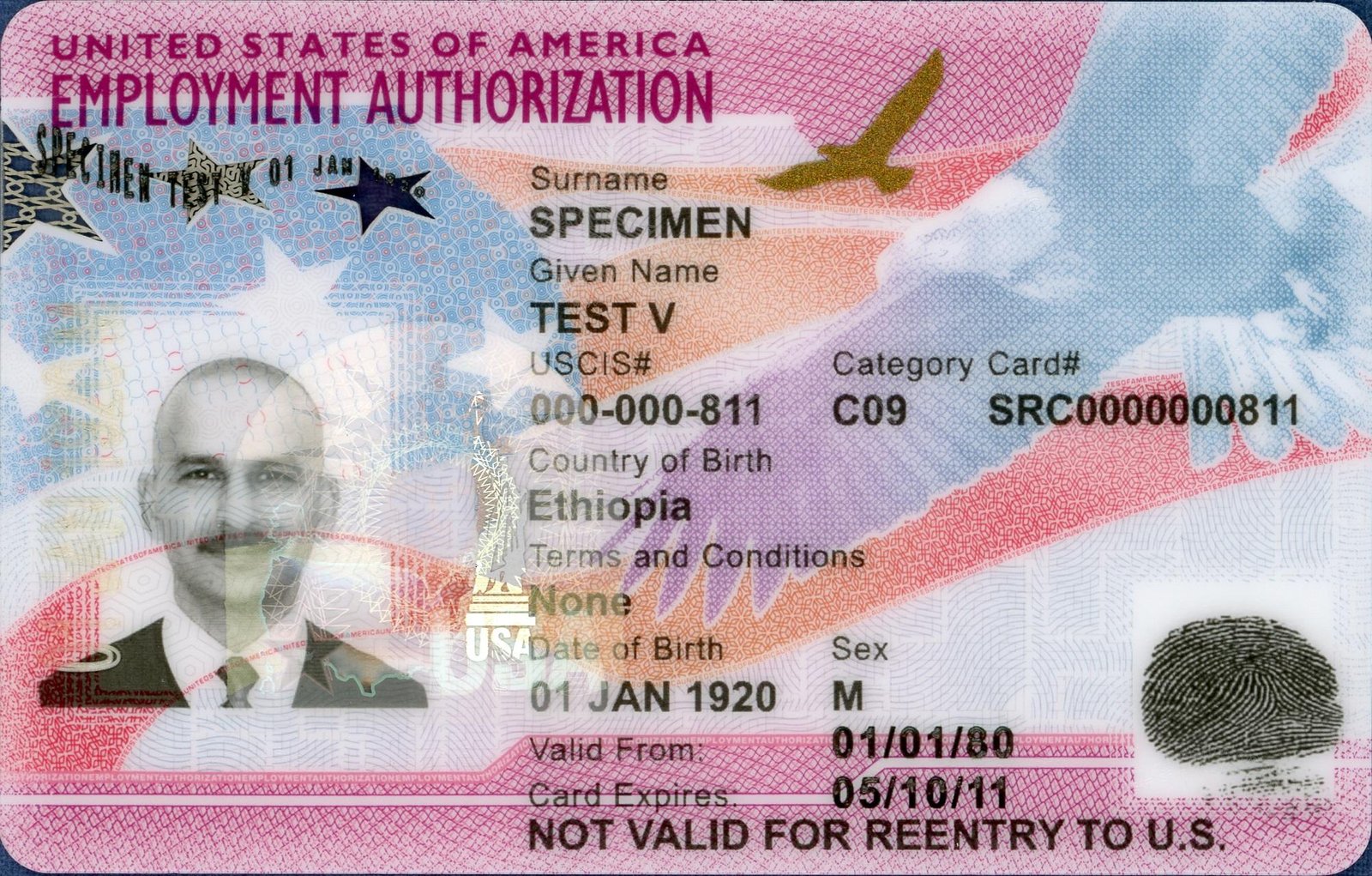
图片来源:图:美国就业许可卡(EAD)样卡正面。摄影:美国公民及移民服务局(USCIS),公有领域,来源:Wikimedia Commons