怀俄明大学中国籍研究生被控在同事茶中投毒 涉嫌离境时在洛杉矶机场被捕
据美联社报道,怀俄明大学一名来自中国的微生物学研究生被控在同事的茶中投放化学物质丙烯酰胺,并在接受校警问话后试图离境。32岁的Aili Wang于10月6日在洛杉矶国际机场被捕,检方指控她当时正试图返回中国。怀俄明州奥尔巴尼县巡回法院已受理对她的重罪指控,罪名是加重袭击与殴击。
这起案件发生在怀俄明大学位于拉勒米的校区。根据怀俄明大学校警一名警官提交的法庭宣誓书,Aili Wang与受害人共用一间办公室,两人研究领域不同、平日关系不和。受害人的姓名没有公开,法庭文件中仅以代号「K.T.」称之。宣誓书称,K.T.的研究由联邦经费支持、正在申请专利,涉及癌症、神经系统疾病与遗传疾病治疗的新技术,与Aili Wang早年在中国从事的研究方向相近。
据美联社报道,同时指导两人的微生物学教授马克·戈梅尔斯基(Mark Gomelsky)说,K.T.是来自越南的一名高成就研究生,发现了利用细菌把RNA送入人体细胞的方法;Aili Wang第一次博士论文答辩没有通过,并因此对同事的成功心生嫉妒。戈梅尔斯基说,K.T.在今年8月参加一场高规格学术会议之后,开始出现极度疲倦、失眠、手指发麻刺痛、腿部无力等不明症状,还注意到自己用桌上小咖啡机冲泡的茶有一股异味,而清洗咖啡机之后异味就会消失。
宣誓书称,K.T.的妻子等人把咖啡机里的水煮干,分离出63毫克白色粉末,经检测证实是丙烯酰胺,并把样本交给了校警。参与鉴定的化学教授塔克·苏马亚(Tak Sumaya)说,丙烯酰胺不会以那样的数量出现在那样的地方。此后,K.T.与校警在两人共用的办公室里安装了监控摄像头。
宣誓书称,监控录像显示,Aili Wang在9月27日翻查K.T.的办公桌;10月1日,她被拍到拍摄并翻动K.T.桌上的笔记本,还用自己杯子里的液体冲洗K.T.的茶杯。苏马亚说,Aili Wang把K.T.留在桌上的一本笔记本的每一页都拍了下来。警方称,Aili Wang在去年夏天曾两次通过电商平台eBay购买丙烯酰胺,购买之后还曾要求eBay删除她的账户。
10月5日,校警约谈Aili Wang。宣誓书称,她当时表示自己已经多年没有使用过丙烯酰胺。第二天,她在洛杉矶国际机场被捕。她随身携带的多台笔记本电脑、多个便携式数字存储设备及纸质文件等物品,目前均由警方保管。法庭文件显示,她目前没有登记律师;美联社通过电子邮件和领英向她求证,没有得到回应。
Aili Wang目前在洛杉矶被关押,不得保释,她何时被引渡回怀俄明州受审尚不清楚。奥尔巴尼县巡回法院法官罗伯特·桑福德(Robert Sanford)已批准检方请求,把她的保释金从20万美元大幅提高到150万美元,且必须全部以现金缴纳。检方所提的加重袭击与殴击罪一旦成立,最高可判处10年监禁,并处罚款1万美元。
戈梅尔斯基说,K.T.目前仍然有无法集中注意力、容易疲倦、左手失去知觉等症状。他表示,丙烯酰胺是一种神经毒素,目前还不确定K.T.能否完全康复。
怀俄明大学在声明中说,该校一名研究生因涉嫌在校内实验室用一种物质伤害同事,上周被奥尔巴尼县检察官办公室在奥尔巴尼县巡回法院控以加重袭击罪,指控源于校警部门的调查;校方同时按正常程序对涉事学生启动纪律处理。校长谢恩·里夫斯(Shane Reeves)在声明中表示,学校严肃对待校园社区师生的健康与安全。校方强调:目前这些只是指控,在任何案件中,当事人在受审或被定罪之前,均应被推定无罪。
Chinese Graduate Student at University of Wyoming Charged With Poisoning Colleague's Tea, Arrested at LAX
A University of Wyoming microbiology graduate student from China has been charged with a felony after prosecutors accused her of poisoning a colleague's tea with the chemical acrylamide and then trying to leave the United States after police questioned her, according to The Associated Press. Aili Wang, 32, was arrested on Oct. 6 at Los Angeles International Airport, where prosecutors allege she was seeking to return to China. She faces a charge of aggravated assault and battery in Albany County Circuit Court in Wyoming.
The case centers on the university's campus in Laramie. According to an affidavit by a University of Wyoming campus police officer, Wang shared an office with the victim, the two worked in different research areas, and they did not get along. The victim's name has not been made public and is given only as "K.T." in court documents. The affidavit says K.T.'s federally funded, patent-pending research involved new technology for the treatment of cancer and neurological and genetic diseases, and was similar to research Wang had done in China before coming to the United States.
Mark Gomelsky, the microbiology professor who oversaw both students, told The Associated Press that K.T. is a high-achieving student from Vietnam who discovered how to deliver RNA into human cells using bacteria, and that Wang failed her first attempt to defend her dissertation and became envious of her colleague's success. Gomelsky said K.T. began experiencing extreme tiredness, an inability to sleep and other unexplained symptoms soon after attending a prestigious conference in August, and noticed a strange taste in the tea he brewed with a small coffee maker on his desk, a taste that went away when he washed the machine.
According to the affidavit, K.T.'s wife and others boiled away water from the coffee maker and isolated 63 milligrams of a white powder that tested positive for acrylamide, and turned the sample over to campus police. Tak Sumaya, an assistant professor who helped identify the substance, said acrylamide is not something that would be found in that quantity in such a place. The victim and campus police then installed surveillance cameras in the shared office.
The affidavit says Wang was recorded on Sept. 27 going through K.T.'s desk. On Oct. 1, she was recorded taking photos and manipulating notebooks on his desk, as well as rinsing out his mug with a liquid from her own mug. Sumaya said Wang photographed every page of a notebook K.T. had left on his desk. Police say Wang bought acrylamide twice last summer through the online retailer eBay and asked eBay to delete her account after the purchases.
Campus police interviewed Wang on Oct. 5; according to the affidavit, she said she had not used acrylamide in years. She was taken into custody the next day in Los Angeles, carrying multiple laptops, portable external storage devices, physical records and written materials, which are now in police possession. Court documents list no attorney for Wang, and The Associated Press said it tried to reach her by email and LinkedIn without success.
Wang remains jailed in Los Angeles without bail, and it is not clear when she will be extradited to Wyoming. Albany County Circuit Court Judge Robert Sanford granted prosecutors' request to raise her bond from $200,000 to $1.5 million, cash only. The aggravated assault and battery charge carries up to 10 years in prison and a $10,000 fine.
Gomelsky said K.T. continues to suffer symptoms, including an inability to focus, tiring easily and a loss of sensation in his left hand. He said acrylamide is a neurotoxin, and that it is unclear whether K.T. will fully recover.
In a statement, the University of Wyoming said a graduate student has been charged with aggravated assault in connection with allegations that she used a substance to harm a colleague in a UW laboratory. The charge was filed last week in Albany County Circuit Court following a UW Police Department investigation and was brought by the Albany County Attorney's Office; the university is separately following its normal processes in a student conduct proceeding. UW President Shane Reeves said the university takes matters involving the health and safety of the campus community seriously. The university emphasized that these are only allegations, and that individuals are presumed innocent pending trial or resulting conviction in any matter.
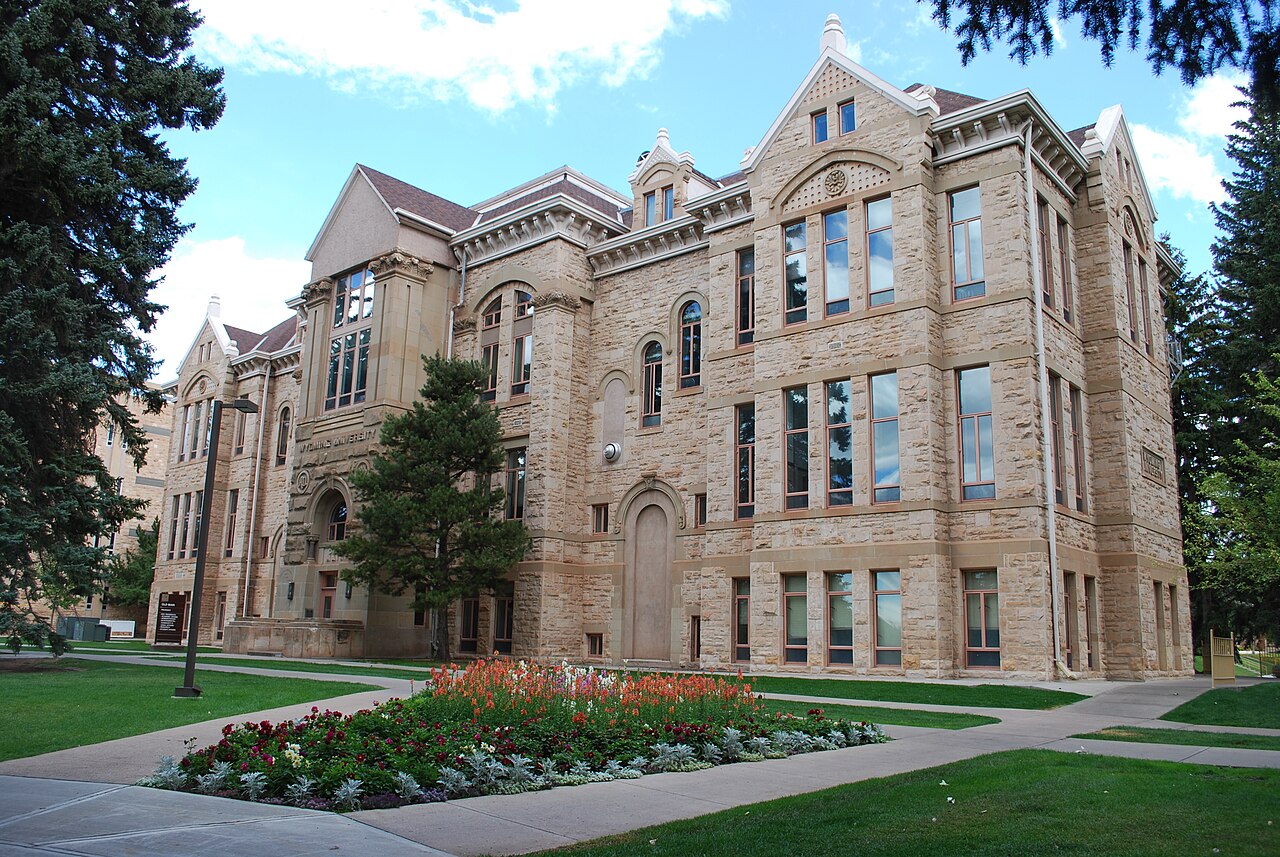
图片来源:怀俄明大学老主楼(Old Main)。Thecoldmidwest 摄,CC BY-SA 3.0,维基共享资源