跟进:亚洲盘暴跌——KOSPI重挫7.4%跌破6000点,三星与SK海力士重挫,韩国交易所触发卖方sidecar
香港/首尔——亚洲股市10月13日(周二)普遍下跌,韩国股市成为重灾区。据美联社10月13日报道,韩国综合股价指数(KOSPI)重挫7.4%,至5,914.35点,跌破6000点关口,为7月下旬以来最低;该指数今年6月曾在全球人工智能热潮推动下越过9000点、创下历史新高。存储芯片巨头三星电子下跌7.7%,SK海力士大跌8.8%。
韩国本地报道给出了盘中进程:KOSPI早盘开盘即跌3.10%报6,186.08点,跌幅随后持续扩大;韩国交易所早盘触发卖方sidecar机制,暂停KOSPI成分股的程序化卖盘5分钟,这是近两个月来首次触发。据《亚洲经济》截至首尔时间13:30的数据,KOSPI当时跌424.40点、跌幅6.65%,报5,959.84点,三星电子跌8.18%、SK海力士跌10.65%、SK Square跌12.40%;外资当时净卖出4.24万亿韩元,个人与机构分别净买入26.8万亿与11.03万亿韩元;KOSDAQ指数同期跌3.50%,报819.59点。不同时间点数据口径不同,跌幅以美联社最新报道的7.4%为准。
抛售的直接导火索是中国的长鑫存储(CXMT)。据多家媒体报道,长鑫近日披露其新一代4F²存储单元架构取得关键进展,计划今年年底前推出基于该技术的DDR5服务器内存产品;TrendForce估计该设计可使存储密度提升30%至50%。市场由此重新评估三星、SK海力士与美光这全球三大存储厂商的定价权与估值溢价。隔夜美股芯片股已先行下跌:费城半导体指数跌约2.6%,美光科技跌3.9%,英伟达跌1.3%,博通跌1.9%,AMD跌2.3%。
亚太其他市场同步走低。据美联社报道,日本日经225指数跌2.5%至67,292.39点,其中软银集团跌8%、东京电子跌6.6%,铠侠早盘一度跌约9.7%;台湾加权指数跌1.9%,台积电跌1.6%;香港恒生指数跌1%至24,033.51点,恒生科技指数跌1.5%;上证综指跌1.1%至3,754.82点;澳大利亚S&P/ASX 200微跌0.2%。油价同日回落,布伦特原油跌1.4%至每桶105.20美元,美国WTI原油跌1.5%至92.34美元。ING大宗商品策略师在报告中指出,市场对中东局势——包括胡塞武装对沙特的袭击及波斯湾石油运输风险——的担忧仍在。
这也是本周一(10月12日)A股普跌的隔日延续:本站10月12日金融稿(d20261012-fin4)记录,A股当日创业板指跌2.61%、逾4300只个股下跌,算力硬件领跌、银行股逆市创新高。周二的首尔、东京与台北市场表明,围绕存储芯片竞争格局与AI估值的抛售已扩散至整个亚洲科技链。投资者接下来还将关注本周美国大行财报,包括花旗、摩根大通与富国银行即将公布的业绩。
来源:据美联社10月13日香港电(记者及AP Business Writers Damian J. Troise、Alex Veiga参与),盘中进程与资金数据据《亚洲经济》(Aju Press)、韩国经济新闻(KED Global)10月13日报道。
Follow-Up: Asia Sell-Off Deepens — Kospi Tumbles 7.4% Below 6,000 as Samsung, SK Hynix Plunge; Sell-Side Sidecar Triggered
HONG KONG/SEOUL — Asian shares mostly declined on Tuesday, October 13, with South Korea at the center of the sell-off. The benchmark Kospi index dropped 7.4% to 5,914.35, its lowest level since late July, the Associated Press reported on October 13. The index had reached an all-time high in June after crossing 9,000, supercharged by the global artificial intelligence boom. Samsung Electronics fell 7.7%, while memory chipmaker SK Hynix plunged 8.8%.
Korean reports traced the intraday path: the Kospi opened down 3.10% at 6,186.08 and losses widened through the session. The Korea Exchange activated a sell-side sidecar in early trading — suspending program sell orders for Kospi stocks for five minutes — the first such curb in nearly two months, according to Korea Economic Daily. As of 1:30 p.m. in Seoul, Aju Press put the Kospi down 424.40 points, or 6.65%, at 5,959.84, with Samsung Electronics down 8.18%, SK Hynix down 10.65% and SK Square down 12.40%; foreign investors had net sold 4.24 trillion won at that point, while individuals and institutions net bought 26.8 trillion won and 11.03 trillion won respectively. The Kosdaq index was down 3.50% at 819.59 at the same time. Figures vary by timestamp; the AP's later reading of a 7.4% drop is the latest cited here.
The immediate trigger was China's ChangXin Memory Technologies (CXMT). Multiple outlets reported that CXMT has made key progress on a next-generation 4F2 DRAM cell architecture and plans to launch DDR5 server memory based on it by the end of the year; TrendForce estimates the design could lift memory density by 30% to 50%. Investors reassessed the pricing power and valuation premium of the world's three biggest memory makers — Samsung, SK Hynix and Micron. U.S. chip stocks had already fallen overnight: the Philadelphia Semiconductor Index lost about 2.6%, Micron fell 3.9%, Nvidia lost 1.3%, Broadcom fell 1.9% and AMD was 2.3% lower.
Other Asia-Pacific markets fell in tandem. Japan's Nikkei 225 dropped 2.5% to 67,292.39, with SoftBank Group down 8% and chip-equipment maker Tokyo Electron down 6.6%; Kioxia fell about 9.7% in early trade. Taiwan's Taiex fell 1.9%, with TSMC down 1.6%. Hong Kong's Hang Seng fell 1% to 24,033.51 and its tech gauge declined 1.5%. The Shanghai Composite was 1.1% lower at 3,754.82, and Australia's S&P/ASX 200 edged down 0.2%. Oil prices also fell, with Brent crude down 1.4% to $105.20 a barrel and U.S. benchmark crude down 1.5% to $92.34. ING commodities strategists wrote that the market remains more concerned over Middle East developments, including Houthi attacks on Saudi Arabia and lingering risks to oil flows from the Persian Gulf.
The rout extended Monday's slide in mainland China covered by GSM on October 12 (d20261012-fin4), when the ChiNext index fell 2.61%, more than 4,300 shares declined, AI-computing hardware led losses and bank shares hit record highs. Tuesday's moves in Seoul, Tokyo and Taipei showed the repricing of memory-chip competition and AI valuations spreading across Asia's technology chain. Investors are also watching this week's U.S. bank earnings, with Citigroup, JPMorgan Chase and Wells Fargo among those reporting.
Source: Associated Press, Hong Kong, October 13 (AP Business Writers Damian J. Troise and Alex Veiga contributed); intraday path and flow data from Aju Press and Korea Economic Daily, October 13.
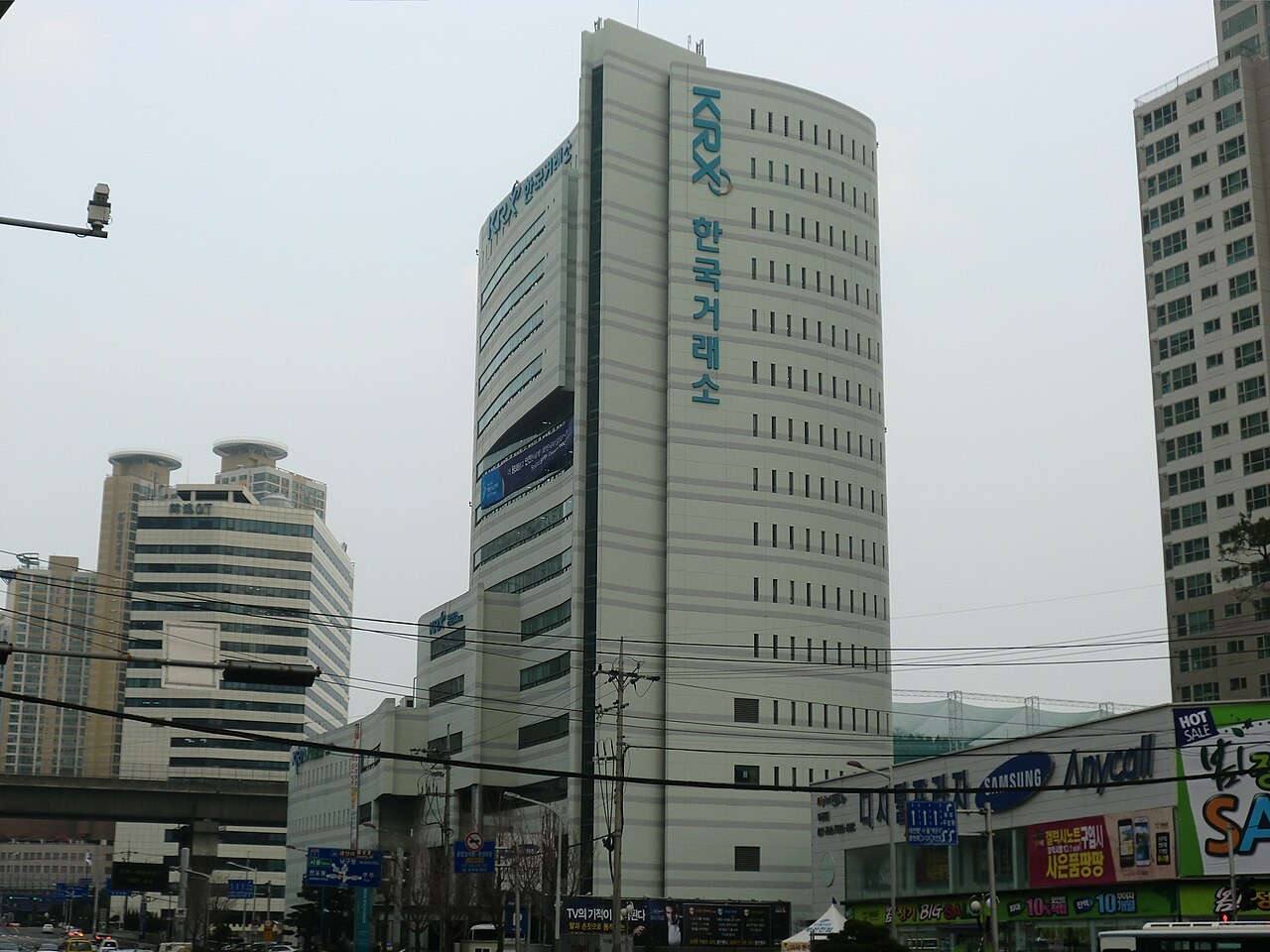
图片来源:韩国交易所(釜山),hyolee2 摄,CC BY-SA 3.0(Wikimedia Commons)