瑞士是否新建核电站将交全民公投:反对联盟在伯尔尼递交13.18万个签名
伯尔尼——瑞士要不要重新允许新建核电站,将交由选民在全国公投中决定。2026年10月6日星期二,由绿党、社会民主党、绿色自由党、中间党部分成员以及瑞士能源基金会、绿色和平瑞士分会等组织组成的「不要新核电站」联盟,把超过13.18万个签名递交到伯尔尼的瑞士联邦总理府,正式推动就此举行公投。这一数字远高于在10月8日截止日期前所需的5万个签名门槛。
这场公投针对的是瑞士议会今年6月夏季会期通过的一项修法。修法源于联邦委员会对「制止停电」(又称「随时有电」)民间倡议提出的间接反提案,内容是取消自2018年以来实施的新建核反应堆禁令。需要说明的是,修法本身并不批准兴建任何一座电站,只是移除法律障碍;反对联盟则认为,政府与议会此举忽视了民意——瑞士选民曾在2017年通过《2050能源战略》、2023年通过气候保护法、2024年通过电力法,多次选择以可再生能源为方向的能源未来。联盟批评新核电站造价高昂、会让瑞士在铀燃料上依赖进口,并拖慢可再生能源发展。
支持取消禁令的一方也在行动。今年9月下旬,包括瑞士商业联合会(economiesuisse)、瑞士核论坛、瑞士雇主与行业组织以及Axpo、Alpiq、BKW等电力公司和瑞士电力公司协会在内的「安全电力供应联盟」已宣布发起宣传,主张保留所有供电选项,并强调取消禁令不等于立即建站,具体项目仍须走安全、融资与选址的许可程序。
背景上,瑞士现有4座核反应堆——贝兹瑙核电站两座、格斯根与莱布施塔特各一座——供应全国约三分之一的电力。2011年日本福岛事故后,瑞士决定逐步退出核电,《2050能源战略》2018年1月1日生效,禁建新站即源于这一路线;与此同时,瑞士冬季用电存在缺口、需要进口电力,是支持方提出「保留选项」的主要理由。若联邦总理府核验签名后确认公投成立,选民最早可能在2027年2月28日投票,最终结果将决定瑞士能源路线是否出现自2018年以来的重大转向。
来源:据 SWI 瑞士资讯(swissinfo.ch)2026年10月报道、世界核新闻(World Nuclear News)10月7日报道及 Keystone-SDA 通讯社消息整理。
Swiss Voters to Decide on New Nuclear Plants After Referendum Campaign Submits 131,800 Signatures in Bern
BERN — Whether Switzerland should once again allow new nuclear power stations will be decided by voters in a nationwide referendum. On Tuesday, October 6, 2026, the 'No to New Nuclear Power Stations' coalition — bringing together the Greens, the Social Democratic Party, the Green Liberal Party, parts of the Centre Party and organisations including the Swiss Energy Foundation and Greenpeace Switzerland — submitted more than 131,800 signatures to the Federal Chancellery in Bern. The total is well above the 50,000 signatures required by the October 8 deadline.
The referendum targets a legislative amendment that parliament approved during its June 2026 summer session. The amendment is the Federal Council's indirect counter-proposal to the 'Stop the Blackout' popular initiative, and it would lift the ban on building new nuclear reactors that has been in place since 2018. The change would not itself authorise any plant; it would remove the legal barrier to future projects. The referendum coalition argues that the government and parliament are ignoring the public, noting that Swiss voters backed a renewables-based direction in the Energy Strategy 2050 in 2017, the Climate Protection Act in 2023 and the Electricity Act in 2024. It says new reactors would be costly, would increase dependence on imported uranium and would slow renewable development.
Supporters of lifting the ban are campaigning as well. In late September, an alliance including economiesuisse, the Swiss Nuclear Forum, business federations and utilities such as Axpo, Alpiq and BKW launched a campaign arguing that Switzerland should keep all supply options open. The alliance stresses that lifting the ban does not mean a plant will be built, and that safety, financing and siting questions would still be handled through normal permitting, with democratic participation rights unchanged.
Switzerland currently operates four reactors — two at Beznau and one each at Gosgen and Leibstadt — generating about one-third of its electricity. After Japan's 2011 Fukushima accident, Switzerland chose a gradual nuclear phase-out, and the Energy Strategy 2050, in force since January 1, 2018, included the construction ban. A winter electricity shortfall covered by imports is the main argument of those who want the option restored. If the Federal Chancellery validates the signatures, a vote could be held as early as February 28, 2027, and the result would decide whether Swiss energy policy changes course for the first time since 2018.
Sources: Reporting by SWI swissinfo.ch in October 2026, World Nuclear News on October 7, 2026, and Keystone-SDA.
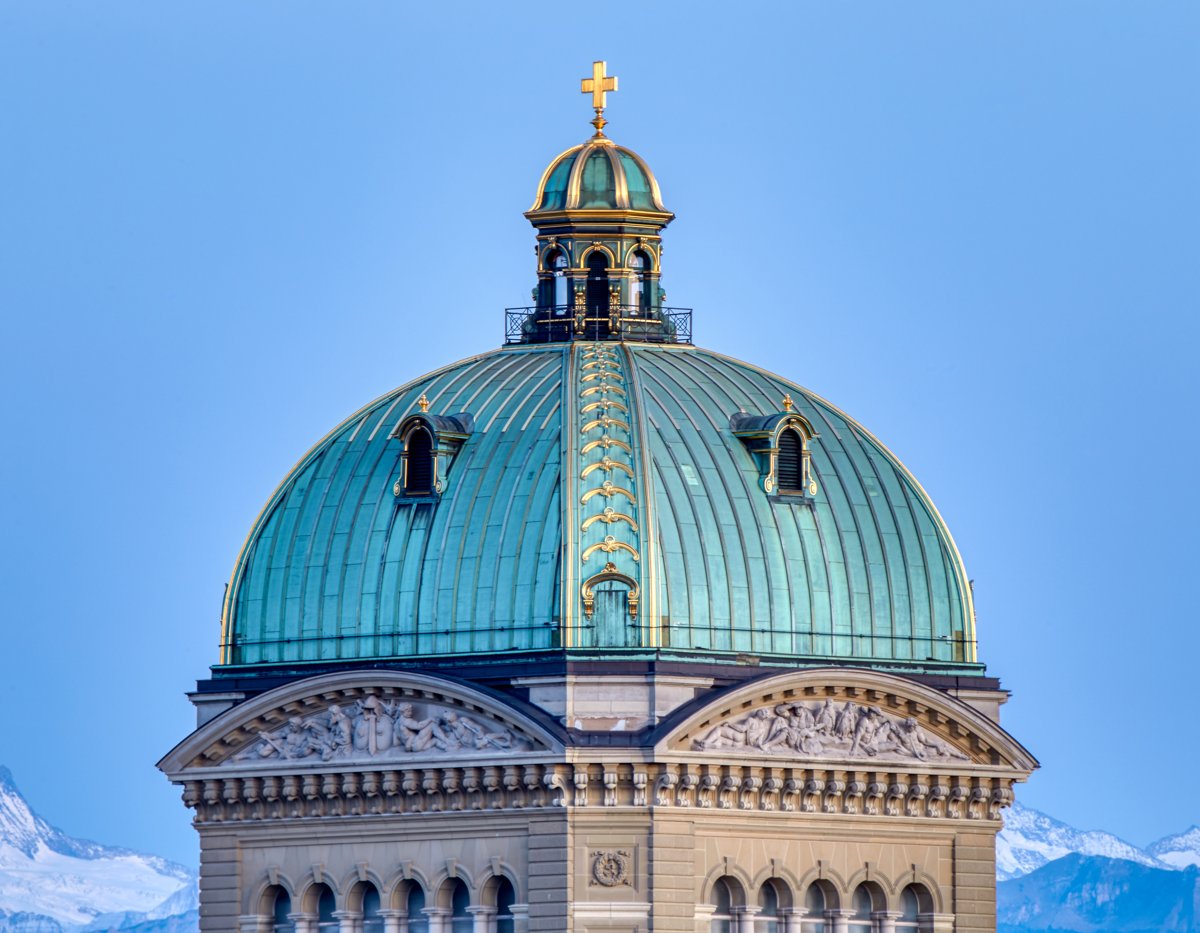
图片来源:瑞士伯尔尼联邦宫(瑞士议会与联邦总理府所在地),Axel Tschentscher 摄,CC BY-SA 4.0(Wikimedia Commons)