2026年诺贝尔经济学奖揭晓:霍尔与伍德福德获奖 为宏观经济稳定奠定微观基础
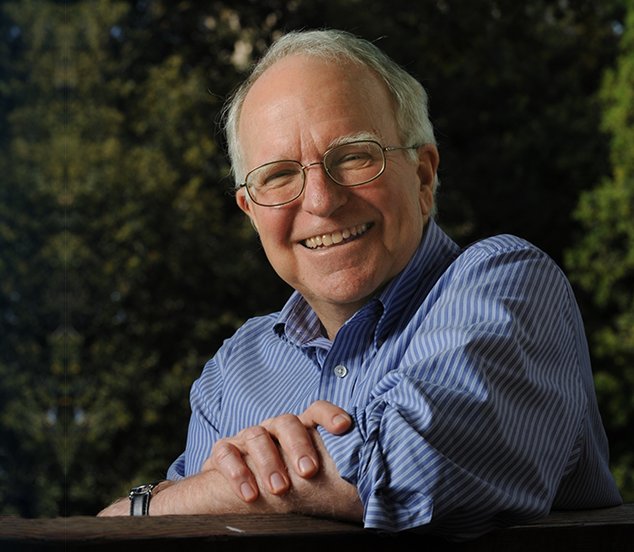
2026年诺贝尔奖季的压轴奖项揭晓。瑞典皇家科学院10月12日在斯德哥尔摩宣布,将2026年瑞典央行纪念阿尔弗雷德·诺贝尔经济学奖授予美国经济学家罗伯特·E·霍尔(Robert E. Hall)与迈克尔·伍德福德(Michael Woodford),表彰两人"为宏观经济稳定奠定了微观经济学基础"。两位得主平分1200万瑞典克朗奖金(约合120万美元)。
评委会表示,两位得主发展了全新的宏观经济模型,显著提升了各国实施有效稳定政策的能力:在这些模型基础上,时机恰当的财政与货币政策可以削平经济的波峰、填补波谷。这一评价对普通人并非抽象——经济大起大落时,受害最深的往往是抗风险余地最小的贫困家庭。
获奖工作要解决的是宏观经济学一场持续半个世纪的危机。自凯恩斯以来,政府与央行在衰退时降息扩支、在过热时踩刹车,一直是稳定政策的基本思路。但1970年代的石油危机击碎了旧模型:基于通胀、失业、消费等宏观变量之间统计关系的传统凯恩斯模型,在"滞胀"面前失灵——失业上升的同时通胀失控,留下了低增长、高通胀的十年。后来获奖的卢卡斯等人尖锐指出,旧模型的病根在于假设宏观关系恒定不变;要重建稳定政策,模型必须从微观层面出发,理解千百万家庭与企业各自的决策如何汇成宏观结果。霍尔与伍德福德正是完成这一重建的两个人,他们的工作被统称为"新凯恩斯范式"。
霍尔的突破始于1978年的一篇论文。他把消费研究"倒了过来":既然家庭花多少钱取决于对未来收入的预期,那么消费本身就是预期的最佳指标;只有出现不可预知的新信息,预期才会改变、消费才会调整——因此消费的变化在理论上不可预测。他与米什金1982年用家庭微观数据检验发现,约八成家庭的消费决策符合这一前瞻型模式,其余约两成是"月光型",这一比例可以测算,并成为今日各国央行模型中的标准部件。霍尔1943年生于加州帕洛阿尔托,1967年在麻省理工学院获博士学位,现为斯坦福大学教授;他自1978年起担任美国国家经济研究局商业周期定年委员会主席——美国经济衰退的起止日期正由该委员会裁定——并曾于2010年任美国经济学会会长。
伍德福德则完成了模型的集大成。其2003年著作《利息与价格》提出完整的三方程新凯恩斯模型,成为此后所有同类模型的原型,相当于一间供决策者使用的政策实验室:降息会把GDP与通胀推向何方、要压住通胀该加息多少,都可以在模型里先行推演。他把瑞典经济学家维克塞尔的"自然利率"思想现代化,说明央行靠调整利率而非控制货币数量即可刺激或抑制经济;他阐明价格黏性下企业定价必然是前瞻性的,由此推出一个对现代央行影响至深的结论——预期至关重要,央行的信誉与沟通透明度本身就是政策工具,这正是今日各国央行重视"前瞻指引"的理论源头。他提出的"产出缺口"概念,则为衡量一国经济离资源有效利用有多远提供了标尺,稳定政策的任务就是把缺口推向零。伍德福德1955年生于马萨诸塞州奇科皮,1983年在麻省理工学院获博士学位,现为哥伦比亚大学教授。
如今,新凯恩斯模型是全球央行与财政部的标准装备。评委会指出,衰退与高通胀并未消失,但持续时间已较前缩短,近年大危机没有演变成1930年代式的大萧条,与这套政策框架不无关系。
经济学奖并非诺贝尔遗嘱设立的五大奖项,而是瑞典央行1968年为庆祝建行300周年设立的纪念奖,1969年首次颁发。颁奖仪式将于12月10日在斯德哥尔摩举行。随着经济学奖揭晓,2026年诺贝尔奖季全部落幕。
(图片:罗伯特·E·霍尔,Wikimedia Commons,CC0)
2026 Nobel Economics Prize Awarded to Hall and Woodford for Microfoundations of Macroeconomic Stabilisation
The final prize of the 2026 Nobel season has been announced. The Royal Swedish Academy of Sciences announced in Stockholm on October 12 that the 2026 Sveriges Riksbank Prize in Economic Sciences in Memory of Alfred Nobel has been awarded to American economists Robert E. Hall and Michael Woodford, "for microeconomic foundations of macroeconomic stabilisation." The two laureates will share the 12 million Swedish kronor prize (about $1.2 million) equally.
The Academy said the laureates developed new macroeconomic models that have significantly improved policymakers' ability to implement effective stabilisation policy: on the basis of these models, well-timed fiscal and monetary measures can reduce the economy's peaks and troughs. This is not abstract for ordinary people — when the economy swings wildly, the poorest families with the least room to absorb risk suffer most.
The prizewinning work addressed a half-century crisis in macroeconomics. Since Keynes, cutting rates and expanding spending in recessions and tapping the brakes in booms has been the basic logic of stabilisation policy. But the oil crises of the 1970s shattered the old models: traditional Keynesian models, built on statistical links between macro variables such as inflation, unemployment and consumption, failed in the face of stagflation — unemployment rose while inflation ran out of control, leaving a decade of low growth and high inflation. As later laureate Lucas and others argued sharply, the old models' fatal flaw was assuming macro relationships were fixed; to rebuild stabilisation policy, models had to start from the micro level — understanding how the decisions of millions of households and businesses aggregate into macro outcomes. Hall and Woodford are the two who completed this reconstruction, and their work is collectively known as the "New Keynesian paradigm."
Hall's breakthrough began with a 1978 paper. He turned consumption research upside down: since how much a household spends depends on expectations of future income, consumption itself is the best indicator of expectations; only unpredictable new information changes expectations and thus spending — so changes in consumption should in theory be unpredictable. With Mishkin in 1982, he tested this with household microdata and found about 80 percent of households consume in this forward-looking way, while the rest live hand to mouth — a measurable split that remains a standard component of central-bank models today. Hall, born in Palo Alto, California in 1943, earned his PhD at MIT in 1967 and is now a professor at Stanford University. He has chaired the NBER Business Cycle Dating Committee — the body that dates U.S. recessions — since 1978, and served as president of the American Economic Association in 2010.
Woodford completed the synthesis. His 2003 book Interest and Prices presented the complete three-equation New Keynesian model that became the prototype for all such models since — a policy laboratory for decision-makers, where one can simulate in advance where rate cuts would push GDP and inflation, or how much to raise rates to contain inflation. He modernised Swedish economist Wicksell's "natural rate" idea, showing central banks can stimulate or restrain the economy by adjusting interest rates rather than controlling the money supply. He showed that with sticky prices, firms' price-setting must be forward-looking, yielding a conclusion of profound influence on modern central banks — expectations matter enormously, and a central bank's credibility and transparent communication are themselves policy tools. This is the theoretical origin of today's emphasis on "forward guidance." His concept of the "output gap" gave a yardstick for how far an economy stands from efficient resource use; stabilisation policy's task is to push the gap toward zero. Woodford, born in Chicopee, Massachusetts in 1955, earned his PhD at MIT in 1983 and is now a professor at Columbia University.
Today the New Keynesian model is standard equipment at central banks and finance ministries worldwide. The Academy noted that recessions and high inflation have not disappeared, but they last shorter than before, and recent major crises have not degenerated into 1930s-style depressions — not unrelated to this policy framework.
The economics prize was not among the five prizes established in Nobel's will; it was created by Sweden's central bank in 1968 to mark its 300th anniversary and first awarded in 1969. The award ceremony will be held in Stockholm on December 10. With Monday's announcement, the 2026 Nobel season is complete.
(Image: Robert E. Hall, Wikimedia Commons, CC0)
图片来源:图:2026年诺贝尔经济学奖得主之一、斯坦福大学胡佛研究所经济学家罗伯特·霍尔(资料图)