今年以来联邦层面华人重大案件盘点:司法部剥夺国籍行动涉2名中国间谍、亚凯迪亚市长认罪、尔湾经纪人涉谍案、卢建旺秘密警察站定罪、丁林葳谷歌AI间谍案、段若愚前美军认罪、FBI证实Swalwell与中国女间谍有染
2026年以来,美国联邦层面接连曝出涉及华人的重大案件,从司法部史上最大规模的剥夺国籍行动(40起诉讼中2名涉华)、亚凯迪亚市长认罪充当中国未注册代理人、FBI解密文件证实前国会议员与中国女间谍的关系、尔湾华人地产经纪人涉谍被捕,到纽约"秘密警察站"案卢建旺定罪、前谷歌工程师丁林葳AI间谍案、前美军士兵段若愚认罪向中国传输国防信息。这些案件均由联邦司法部或联邦调查局主导,在全美主流媒体持续发酵。
司法部10月5日宣布,在2026年8月21日至10月2日期间,已在19个联邦地区法院提起40起剥夺国籍民事诉讼,指控40名归化公民在入籍时隐瞒犯罪记录或关键事实;其中仅2起涉华,均为已定罪的中国间谍案被告。司法部长将此称为现代史上最大规模的剥夺国籍行动。
其中两名涉案者为中国间谍。26岁的前美国海军水兵魏金超2021年加入海军,2022年5月归化入籍,同年开始向中国情报人员提供军舰照片、技术资料等军事机密,收取1.2万多美元。2025年8月,联邦陪审团裁定其6项罪名成立,包括间谍罪和出口管制违规;2026年1月12日被判处200个月监禁,约16年8个月。司法部现以民事程序指控其入籍时隐瞒犯罪事实、未达到光荣服役标准,要求剥夺其美国国籍。
另一人为61岁的佛罗里达居民李平。2024年8月,李平认罪,承认自2012年起受中国国家安全部指使,搜集中国异议人士、民主倡导者、法轮功学员的情报,并泄露其任职的电信和科技公司的内部信息,包括网络安全培训计划和针对美国公司的黑客事件细节。2024年11月25日,李平被判处4年监禁,现也被列入剥夺国籍名单。
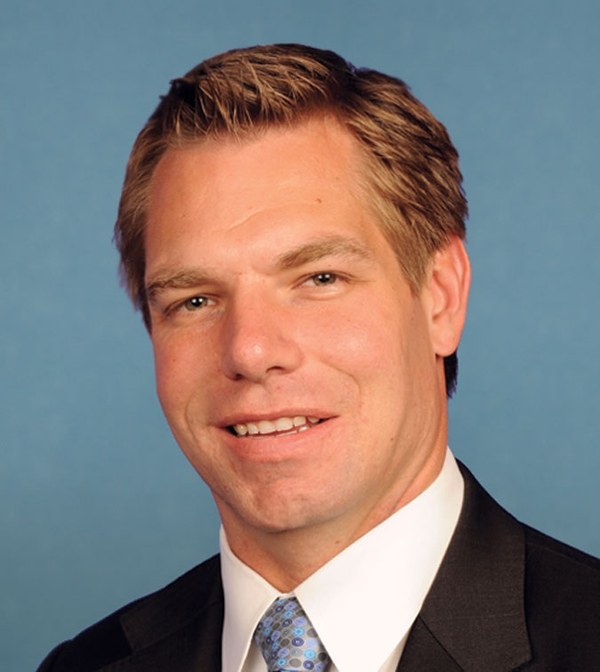
另一起引发全美关注的案件涉及前民主党众议员埃里克·斯沃韦尔。2026年8月,白宫透明度工作组公开了联邦调查局的解密文件,首次证实斯沃韦尔与被美方认定为中国间谍嫌疑人的方芳(Christine Fang)至少两次发生身体关系。
根据FBI文件,斯沃韦尔2015年向联邦调查局承认,他2012年在一场华裔社区活动上结识方芳,此后与她数次发生身体关系,但从未约会或发展恋爱关系。FBI从2014年开始调查方芳是否以国会实习机会为交换、向斯沃韦尔提供非法竞选捐款。调查未发现权钱交易的直接证据,但认定方芳违反了其他联邦刑事法律,包括大宗现金走私和充当未注册的外国代理人。方芳已离开美国,并被禁止再次入境。
解密文件还显示,方芳曾开价5000美元换取与斯沃韦尔的接触机会,并称国会实习名额要价更高。文件将方芳描述为以外国人身份居留美国、策划以竞选捐款换取接触斯沃韦尔及其国会办公室实习机会的人,其中至少两笔捐款通过中间人掩盖其被禁止的外国人身份,涉嫌违反联邦法律。
斯沃韦尔曾任加州众议员,2013年至2026年4月在国会任职。2026年4月,多名女性指控其强奸和性侵,他随后暂停加州州长竞选并辞去国会职务。众议院道德委员会2023年已结束对其与方芳往来的两年调查,决定不再采取进一步行动。斯沃韦尔的律师表示,解密文件没有披露任何新内容,并批评此次公开是对特朗普批评者的政治报复。
另一起引发全美关注的联邦案件,是加州亚凯迪亚市前市长王爱玲(Eileen Wang)认罪充当中国未注册代理人。2026年5月12日,58岁的王爱玲与美国司法部达成认罪协议,承认违反《外国代理人登记法》,并于同日辞去市长和市议员职务。
根据司法部披露,2020年底至2022年间,王爱玲与其未婚夫、商人孙耀宁(Yaoning "Mike" Sun)运营名为"U.S. News Center"的网站,表面上是服务华裔社区的本地新闻网站,实则按中国官员通过微信下达的指令发布亲北京宣传内容。王爱玲承认,2021年6月,一名中国官员发来预写好的否认新疆种族灭绝的文章,她照发不误,并向对方汇报阅读量。
亚凯迪亚位于洛杉矶县圣盖博谷,是华人聚居城市。王爱玲2022年11月当选市议员,12月宣誓就职前已停止上述活动。她的未婚夫孙耀宁已因同一罪名被判处4年联邦监狱。王爱玲面临最高10年刑期。
另一起在南加州华人社区引发高度关注的案件,是尔湾华人地产经纪人张婉莹涉谍案。2026年10月初,联邦调查局在洛杉矶国际机场(LAX)逮捕张婉莹,指控其充当中国的未注册代理人。
根据检方指控,张婉莹被控为中国监视台湾地区领导人赖清德在美国的儿子一家,涉嫌长期向中方传递相关情报。10月7日,联邦法官在保释听证中裁定张婉莹存在严重潜逃风险,不准保释,继续由联邦法警羁押候审。
检方在听证中披露,张婉莹拥有一个价值约19万美元的秘密加密货币账户、在中国银行的存款、尚未找回的中国护照,以及12次赴华记录。检方的一名同谋"1号人士"已于9月底逃回中国。张婉莹的下一次开庭为10月19日的预审听证,案件后续进展值得持续关注。
另一起具有里程碑意义的案件,是纽约"秘密警察站"案。2026年5月13日,布鲁克林联邦法院的陪审团裁定64岁的美国公民卢建旺(Lu Jianwang,又名Harry Lu)充当中国未注册代理人及妨碍司法公正两项罪名成立。卢建旺于2023年4月被捕,检方指控他于2022年在中国公安部的指导下,协助在曼哈顿华埠美国长乐公会会址内设立"福州警侨海外服务站",名义上为华人办理驾照续期等行政事务,实则协助中方监视在美中国异议人士,包括帮助定位一名居住在加州的民运人士。陪审团还认定,他在联邦调查局开始调查后删除了与中方联络人的短信记录。卢建旺面临最高30年刑期。这是美国司法系统首次就"海外警察站"网络成功定罪,联邦调查局称此案是打击所谓"跨国镇压"的重要胜利。他的同案被告陈金平已于2024年12月认罪。
2026年1月29日,加州北区联邦法院的陪审团裁定38岁的前谷歌软件工程师丁林葳(Linwei Ding)14项罪名全部成立,包括7项经济间谍罪和7项商业秘密盗窃罪。检方指控丁林葳在2022年5月至2023年底任职谷歌期间,窃取了1000多份、约14000页关于谷歌TPU AI芯片、GPU系统及超级计算机架构的机密文件,同时秘密担任一家中国AI初创公司的首席技术官,还向上海的人才计划申请资助,承诺帮助中国发展"与国际水平相当"的AI能力。这是美国司法部史上首例AI相关经济间谍定罪。不过,2026年8月20日,主审法官裁定检方未能证明丁林葳明知其行为会使中国政府受益,推翻了7项经济间谍罪的定罪,保留了7项商业秘密盗窃罪的定罪。9月,法官判处丁林葳近1年联邦监禁及2年监管释放。
2026年9月16日,41岁的前美陆军士兵段若愚(Ruoyu Duan)在俄勒冈州联邦法院认罪,承认"共谋搜集并向中国传输国防信息"。根据司法部披露,2021年11月至2025年3月期间,段若愚向现役美军士兵支付报酬,搜集布拉德利战车、斯特赖克装甲车、海马斯火箭炮等美军武器系统的技术手册、训练材料和情报报告,并将这些信息传给中国方面。段若愚曾于2013年至2017年在美军服役,接受过机密信息处理培训。他于2025年3月6日被联邦调查局逮捕,面临最高10年监禁和25万美元罚款,量刑听证定于12月10日。
以上七起案件显示,2026年联邦执法部门在反间谍和外国代理人执法方面保持高压态势,涉案领域从传统间谍活动延伸到AI技术窃取、美军武器系统情报和所谓"跨国镇压"。其中张婉莹案的预审听证定于10月19日,段若愚案的量刑定于12月10日,王爱玲案的量刑结果,以及剥夺国籍民事诉讼的进展,都值得持续关注。
Major Federal Cases Involving Chinese Nationals in 2026: DOJ Denaturalization Effort Includes 2 Chinese Spies, Arcadia Mayor's Guilty Plea, Irvine Agent's Espionage Case, Lu Jianwang's Secret Police Station Conviction, Linwei Ding's Google AI Espionage Case, Ex-Soldier Ruoyu Duan's Guilty Plea, FBI Files on Swalwell-Fang Fang Ties
Since 2026 began, a series of major federal cases involving Chinese nationals has unfolded in the United States, from the Justice Department's largest denaturalization push in modern history (2 of 40 cases China-related), to a guilty plea by a former California mayor as an unregistered agent of China, to declassified FBI files confirming a former congressman's ties to a suspected Chinese spy, the arrest of an Irvine-based Chinese real estate agent on espionage charges, the conviction of Lu Jianwang in the New York 'secret police station' case, the AI espionage prosecution of former Google engineer Linwei Ding, and a guilty plea by ex-soldier Ruoyu Duan for transmitting defense information to China. All were led by federal law enforcement and have drawn sustained national media attention.
On October 5, the Justice Department announced that between August 21 and October 2, 2026, it had filed 40 denaturalization civil lawsuits in 19 federal district courts, accusing 40 naturalized citizens of concealing criminal records or material facts during naturalization. Only two of the 40 cases are China-related, both convicted Chinese spies. The Attorney General called it the largest denaturalization effort in modern history.
Two of the defendants are Chinese spies. Jinchao Wei, 26, a former U.S. Navy sailor, joined the Navy in 2021, naturalized in May 2022, and began the same year providing Chinese intelligence officers with warship photos, technical documents and other military secrets for more than $12,000. In August 2025, a federal jury convicted him on six counts including espionage and export control violations; on January 12, 2026, he was sentenced to 200 months in prison, about 16 years and 8 months. The Justice Department now alleges in civil proceedings that he concealed criminal conduct during naturalization and failed to meet honorable service standards, seeking to strip his U.S. citizenship.
The other is Ping Li, 61, a Florida resident. In August 2024, Li pleaded guilty to acting at the direction of China's Ministry of State Security since 2012, gathering intelligence on Chinese dissidents, pro-democracy advocates and Falun Gong practitioners, and leaking internal information from the telecom and tech companies where he worked, including cybersecurity training programs and details of hacking incidents targeting U.S. companies. On November 25, 2024, Li was sentenced to four years in prison and is now also on the denaturalization list.
Another nationally watched case involves former Democratic Congressman Eric Swalwell. In August 2026, the White House Transparency Task Force released declassified FBI files confirming for the first time that Swalwell had physical relations with Christine Fang, known as Fang Fang, whom U.S. authorities have identified as a suspected Chinese spy, on at least two occasions.
According to the FBI files, Swalwell told federal investigators in 2015 that he met Fang in 2012 at a Chinese American community event and had physical relations with her on a handful of occasions, though he never dated her or had a romantic relationship. The FBI investigated from 2014 whether Fang made illegal campaign contributions in exchange for internships in Swalwell's office. The probe found no direct evidence of a quid pro quo but determined Fang violated other federal criminal laws, including international bulk cash smuggling and acting as an unregistered foreign agent. Fang has since left the United States and is barred from reentry.
The declassified files also show Fang offered $5,000 for access to Swalwell and said internships would cost even more. The documents described Fang as a Chinese foreign national residing in the United States who facilitated a scheme trading access to Swalwell and internships in his congressional office for campaign contributions, with at least two contributions concealed through conduits to hide her prohibited foreign-national status, in potential violation of federal law.
Swalwell served as a California congressman from 2013 until April 2026. In April 2026, multiple women accused him of rape and sexual misconduct, after which he suspended his California gubernatorial campaign and resigned from Congress. The House Ethics Committee concluded a two-year investigation into his interactions with Fang in 2023 and decided to take no further action. Swalwell's lawyer said the declassified files reveal nothing new and criticized the release as political retaliation against a known critic of President Donald Trump.
Another nationally watched federal case is the guilty plea of Eileen Wang (王爱玲), former mayor of Arcadia, California, as an unregistered agent of China. On May 12, 2026, the 58-year-old Wang reached a plea agreement with the U.S. Department of Justice, admitting to violating the Foreign Agents Registration Act, and resigned as mayor and city councilmember the same day.
According to the Justice Department, from late 2020 through 2022, Wang and her fiancé, businessman Yaoning "Mike" Sun, operated a website called "U.S. News Center" that presented itself as a local news site serving the Chinese American community but in fact published pro-Beijing propaganda content at the direction of Chinese officials conveyed via WeChat. Wang admitted that in June 2021, a Chinese official sent her a pre-written article denying genocide in Xinjiang, which she published as instructed, and reported readership figures back to her handler.
Arcadia, in Los Angeles County's San Gabriel Valley, is a city with a large Chinese American population. Wang was elected to the city council in November 2022 and had already ceased the illicit activities before being sworn in that December. Her fiancé Sun has already been sentenced to four years in federal prison on the same charge. Wang faces up to 10 years in prison.
Another case drawing intense attention in Southern California's Chinese American community is the espionage case against Zhang Wanying, a Chinese real estate agent based in Irvine. In early October 2026, the FBI arrested Zhang at Los Angeles International Airport (LAX), charging her with acting as an unregistered agent of China.
Prosecutors allege Zhang spied on the U.S.-based family of the son of Taiwan leader Lai Ching-te, passing related intelligence to Beijing over an extended period. On October 7, a federal judge ruled at a bail hearing that Zhang posed a serious flight risk, denied bail, and ordered her to remain in federal custody pending trial.
At the hearing, prosecutors disclosed that Zhang held a secret cryptocurrency account worth about $190,000, bank deposits in China, an unrecovered Chinese passport, and had traveled to China 12 times. A co-conspirator identified as "Person 1" fled back to China in late September. Zhang's next court date is a preliminary hearing on October 19, with further developments worth watching.
Another landmark case is the New York "secret police station" prosecution. On May 13, 2026, a federal jury in Brooklyn convicted Lu Jianwang, 64, a U.S. citizen also known as Harry Lu, of acting as an unregistered agent of China and obstruction of justice. Lu was arrested in April 2023. Prosecutors said that in 2022 he helped set up a "Fuzhou Police Overseas Service Station" under the guidance of China's Ministry of Public Security inside the offices of the America ChangLe Association on East Broadway in Manhattan's Chinatown — ostensibly helping Chinese nationals with driver's license renewals, but in fact helping Beijing monitor Chinese dissidents in the United States, including locating a pro-democracy activist in California. The jury also found he deleted text messages with his Chinese handler after the FBI began investigating. Lu faces up to 30 years in prison. It is the first criminal conviction in the U.S. judicial system against an operator in China's global "overseas police station" network, which the FBI called a major win against what it terms "transnational repression." His co-defendant Chen Jinping pleaded guilty in December 2024.
On January 29, 2026, a federal jury in the Northern District of California convicted Linwei Ding, 38, a former Google software engineer, on all 14 counts — seven of economic espionage and seven of theft of trade secrets. Prosecutors said that between May 2022 and late 2023, while employed at Google, Ding stole more than 1,000 files — roughly 14,000 pages — of confidential information about Google's proprietary Tensor Processing Unit (TPU) chips, GPU systems and supercomputing architecture, while secretly serving as chief technology officer of a China-based AI startup and applying to a Shanghai government "talent plan," pledging to help China develop AI capabilities "on par with the international level." The Justice Department called it the first AI-related economic espionage conviction in U.S. history. However, on August 20, 2026, the presiding judge ruled prosecutors had failed to prove Ding knew his actions would benefit the Chinese government, throwing out the seven economic espionage convictions while leaving the seven trade-secret theft convictions intact. In September, Ding was sentenced to nearly one year in federal prison followed by two years of supervised release.
On September 16, 2026, Ruoyu Duan, 41, a former U.S. Army soldier from Hillsboro, Oregon, pleaded guilty in federal court to conspiracy to gather and transmit national defense information. According to the Justice Department, between November 2021 and March 2025, Duan paid active-duty U.S. Army soldiers to obtain technical manuals, training materials and intelligence reports on U.S. weapon systems — including the Bradley and Stryker combat vehicles and the HIMARS rocket artillery system — and transferred that information to people in China. Duan served in the U.S. Army from 2013 to 2017 and had been trained in handling classified military information. Arrested by the FBI on March 6, 2025, he faces up to 10 years in prison and a $250,000 fine; sentencing is scheduled for December 10, 2026.
These seven cases show federal law enforcement maintaining a high-pressure posture on counterespionage and foreign-agent enforcement in 2026, with the cases spanning traditional spying, AI technology theft, U.S. weapons-system intelligence and what officials call 'transnational repression.' Zhang Wanying's preliminary hearing is set for October 19; sentencing in Duan's case is scheduled for December 10; sentencing in Wang's case and the progress of the denaturalization suits are also worth watching.
图片来源:Eric Swalwell 官方国会肖像,美国国会,公有领域(Wikimedia Commons)