宾州反电话推销新法10月18日生效:短信、语音信箱、无声语音信箱首次纳入监管
宾夕法尼亚州一项全面收紧电话推销监管的新法将于10月18日正式生效,短信、语音信箱和无声语音信箱首次被明确纳入监管范围,数百万宾州居民的手机将迎来更强保护。
这项名为《2026年第47号法案》(参议院992号法案)的法律由州参议员米歇尔·布鲁克斯发起,在州参众两院均获全票通过(参议院50比0、众议院202比0),州长乔什·夏皮罗于7月20日签署,将于签署90天后、即10月18日生效。该法大幅更新了宾州近30年未修订的《电话推销员注册法》。
新法将“电话推销”的法律定义扩展至短信、语音信箱、无声语音信箱和自动语音电话,覆盖固定电话与手机。推销时段被压缩为周一至周六上午9时至下午7时(此前为上午8时至晚上9时),周日与法定假日全面禁止。新法还禁止伪造来电显示号码和虚假名称,禁止在欺诈性推销中使用人工智能技术,要求自动语音电话事先获得消费者的书面同意,要求推销时开门见山披露推销目的、身份与商品信息,并在消费者要求时立即停止。消费者回复“stop”、“quit”、“end”、“revoke”、“opt out”、“cancel”或“unsubscribe”等词即可退订。违规者每起最高罚款1000美元,若受害者年满60岁,罚款可高达3000美元。事先获得书面同意、以及过去12个月内有业务往来的消费者可豁免。
修法背景是,近几个月来越来越多联邦法院裁定,短信不属于联邦《电话消费者保护法》中“谢绝来电”条款所指的“电话”,宾州新法用明确条文堵上了这一漏洞。支持该法的AARP宾州分会指出,美国人每年因垃圾电话诈骗损失250亿美元。该会消费者事务负责人玛丽·巴赫表示:“这项两党法律让消费者保护现代化,让人们对骚扰与欺诈电话短信有更多掌控。”据消费者法律组织、AARP宾州分会、PennWatch等机构报道。
Pennsylvania's tougher telemarketing law takes effect Oct. 18: texts, voicemails and ringless voicemails covered for the first time
A sweeping new Pennsylvania law tightening telemarketing oversight takes effect Oct. 18, bringing text messages, voicemails and ringless voicemails explicitly under regulation for the first time and giving millions of Pennsylvanians stronger protection for their phones.
Act 47 of 2026 (Senate Bill 992), sponsored by state Sen. Michele Brooks, passed both chambers of the General Assembly unanimously — 50-0 in the Senate and 202-0 in the House — and was signed by Gov. Josh Shapiro on July 20. It takes effect 90 days after signing, on Oct. 18. The law substantially updates Pennsylvania's Telemarketer Registration Act, untouched for nearly three decades.
The law expands the legal definition of telephone solicitation to cover SMS text messages, voicemails, ringless voicemails and robocalls, across landlines and wireless phones. Solicitation hours shrink to 9 a.m. to 7 p.m., Monday through Saturday (previously 8 a.m. to 9 p.m.), with Sundays and legal holidays fully off-limits. It also bans caller ID spoofing and false names, bans the use of artificial intelligence in fraudulent or deceptive telemarketing, requires prior written consent for robocalls, mandates upfront disclosure of the solicitation's purpose, the caller's identity and what is being sold, and requires solicitation to stop immediately when asked. Consumers can opt out of texts by replying with words such as 'stop,' 'quit,' 'end,' 'revoke,' 'opt out,' 'cancel' or 'unsubscribe.' Violations carry civil penalties of up to $1,000 each, rising to $3,000 when the victim is 60 or older. Communications with prior express written consent or to consumers with an established business relationship within the previous 12 months are exempt.
The backdrop: in recent months, a growing number of federal courts have ruled that a text message is not a 'telephone call' under the Do-Not-Call provisions of the federal Telephone Consumer Protection Act, and Pennsylvania's new law closes that loophole in plain language. AARP Pennsylvania, which backed the bill, notes that Americans lose $25 billion a year to scams originating with spam calls. 'This bipartisan law modernizes consumer protections and gives people more control over unwanted and fraudulent calls and texts,' said Mary Bach, the group's Consumer Issues Task Force chair. Reported by consumer-law organizations, AARP Pennsylvania, PennWatch and others.
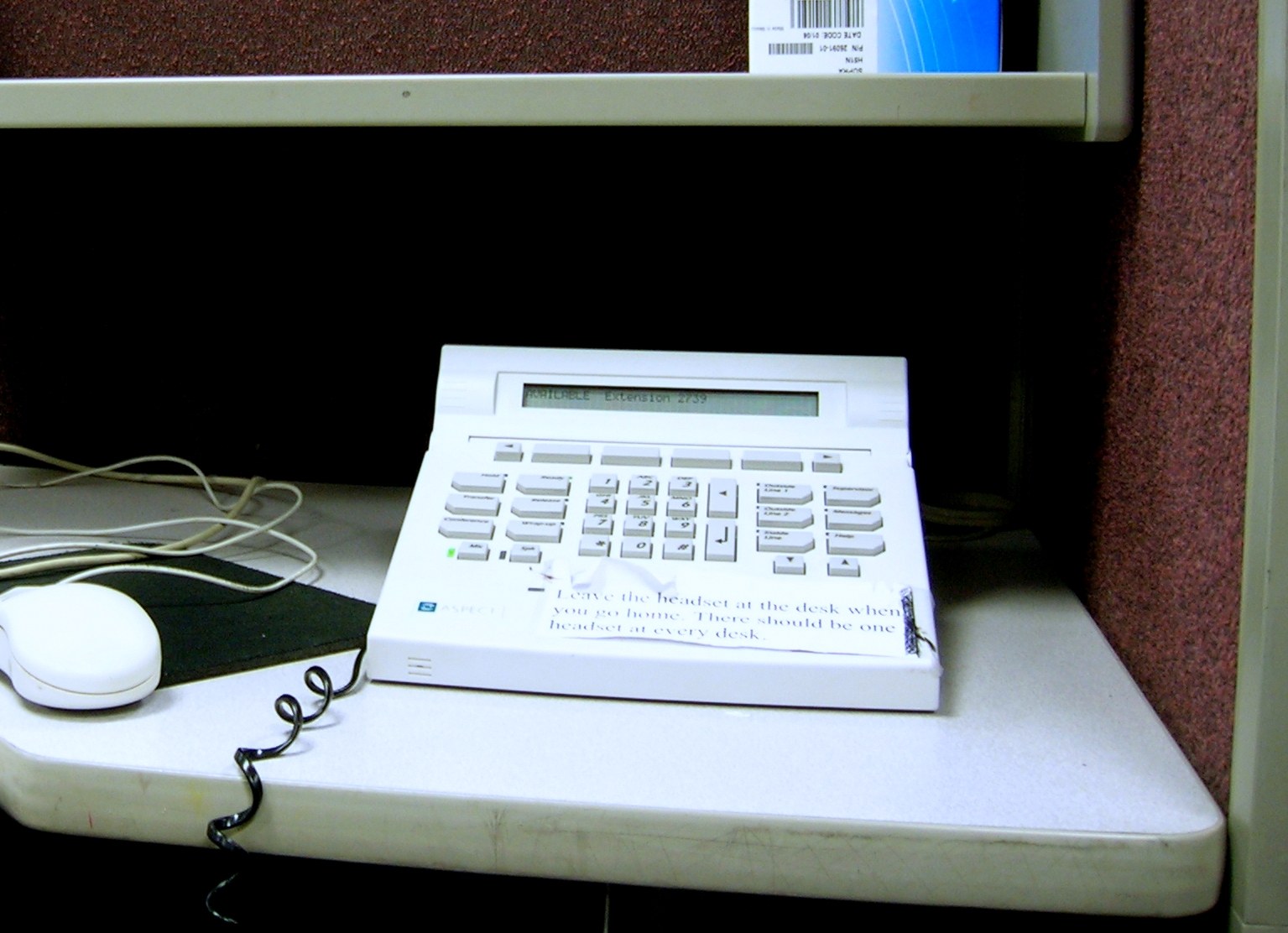
图片来源:电话营销呼叫中心桌面电话终端,Petiatil 摄,CC BY-SA 3.0(Wikimedia Commons)