美军战机在阿曼湾打瘫一艘闯封锁线货船:悬挂巴拿马旗的“海洋莫利卡”号无视警告,船尾中弹失去动力、船员无人受伤
美国对伊朗海上封锁的执法周六(10 月 10 日)首次以公开的空中打击形式升级。美国中央司令部(CENTCOM)周六在社交平台 X 上表示,一艘商船在阿曼湾(Gulf of Oman)无视警告、试图冲闯美军对伊朗实施的海上封锁,美军一架战机以精确制导弹药击中该船船尾,令其完全失去动力,船员无人受伤。涉事船只是悬挂巴拿马旗的散货船“海洋莫利卡”号(M/V Ocean Molica,另名“Arika Sun”);中央司令部称,该船此前曾从伊朗港口离港,事发时正试图通过该区域水域。路透社表示,暂时无法联系上该船运营商置评。
中央司令部同时向阿曼湾及霍尔木兹海峡入口水域的船员发出警告:务必遵守封锁警告、收听航行通告广播,并与美国海军保持联系。据中央司令部在声明中的说法,美军自 7 月 14 日起恢复对所有进出伊朗港口船只的封锁,约三个月严格执法期间,已使 4 艘商船失去动力、令 135 艘船只改道返航,并摧毁了 10 艘与伊朗伊斯兰革命卫队“影子网络”有关的油轮——周六这起打击正是这一执法模式的最新一例:先警告、后以非致命方式打瘫推进系统,既不登船、也不伤人。
时机格外敏感。路透社指出,上周针对油轮的袭击达到自今年 2 月美国与以色列对伊朗开战以来的最高水平,受此影响,通过霍尔木兹海峡的船只数量已跌至两个多月来的最低点,航运受阻的担忧正在支撑原油价格。战前,全球约五分之一的石油消费量经由霍尔木兹海峡运输。对读者来说,这条线与本周的油价、柴油价格波动直接相连:封锁执法越强硬、过峡船只越少,能源市场的风险溢价就越难回落。
后续看点包括:涉事货船的后续处置与船东回应、伊朗方面是否表态或采取反制、以及封锁执法是否进一步常态化为“警告后直接开火打瘫”的模式。这也是本周中东局势多线升温中的一环——GSM 今日已报道利雅得机场再遭胡塞导弹袭击、特朗普称美国可能加入打击胡塞,以及伊朗核设施疑似重启;阿曼湾这起打击则显示,对伊朗本国的海上施压也在同步加码。
U.S. Fighter Jet Disables Cargo Ship Running the Iran Blockade in the Gulf of Oman; Panama-Flagged Ocean Molica Loses Propulsion, Crew Unharmed
Enforcement of the U.S. naval blockade against Iran escalated into open use of air power on Saturday, Oct. 10. U.S. Central Command said on X that a U.S. military fighter jet struck the stern of the Panama-flagged bulk carrier M/V Ocean Molica (also known as the "Arika Sun") with a precision munition in the Gulf of Oman, fully disabling the ship's propulsion without harming the crew, after the crew ignored warnings and attempted to run the blockade. CENTCOM said the vessel had previously left an Iranian port and was attempting to transit regional waters. Reuters said it was not immediately able to reach the ship's operator for comment.
CENTCOM also warned mariners in the Gulf of Oman and the approaches to the Strait of Hormuz to heed blockade warnings, monitor notice-to-mariners broadcasts and contact U.S. naval forces. In its statement, the command said U.S. forces resumed the blockade of all ships entering or departing Iranian ports on July 14 and, over roughly three months of enforcement, have disabled four commercial vessels, turned around 135 others, and destroyed 10 tankers linked to the Islamic Revolutionary Guard Corps' shadow network — a pattern of warning first, then disabling propulsion without boarding or injuring crews.
The timing matters for energy markets: Reuters noted that tanker attacks last week reached their highest level since the U.S. and Israel launched the war on Iran in February, and that the number of vessels transiting the Strait of Hormuz has fallen to its lowest in more than two months, supporting crude prices. Before the war, the strait carried about 20% of the world's oil consumption. For readers, this line connects directly to this week's oil and diesel price swings: the tougher the blockade enforcement and the fewer vessels transiting the strait, the harder it is for the energy market's risk premium to fall.
What to watch next: the fate of the disabled vessel and the shipowner's response, whether Iran issues a statement or retaliates, and whether blockade enforcement further normalizes into a "warn-then-disable" pattern. This is one of several fronts where Middle East tensions escalated this week — GSM has reported today's Houthi missile strike on Riyadh airport, Trump's remarks about possible U.S. involvement in strikes on the Houthis, and suspected Iranian nuclear facility restarts; the Gulf of Oman strike shows maritime pressure on Iran itself is also intensifying.
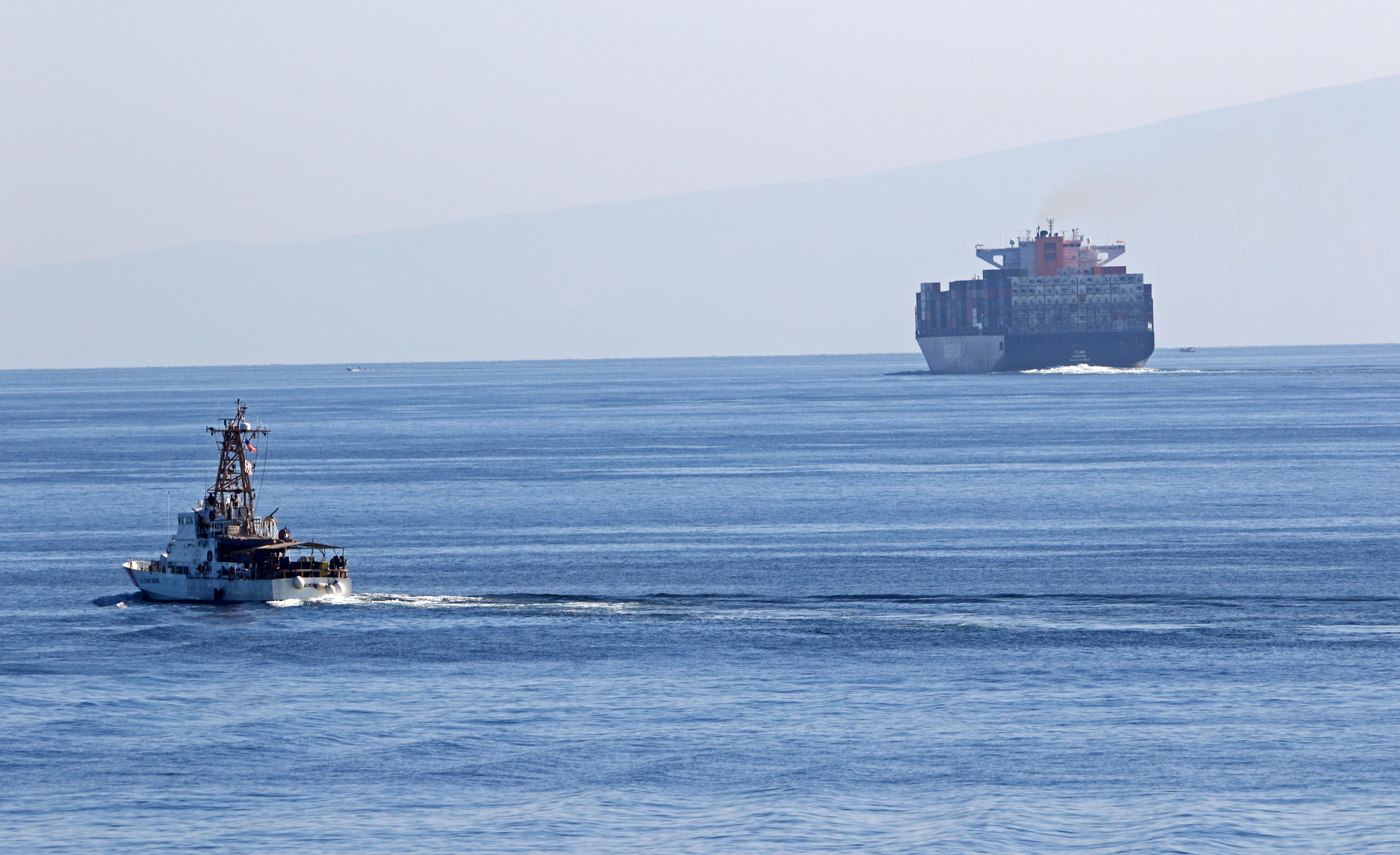
图片来源:美国海岸警卫队作品,公有领域(Wikimedia Commons)