菲律宾9月通胀加速至7.2%,大米与电价推高生活成本
10月6日,菲律宾统计局公布:9月年通胀率从8月的6.1%加速至7.2%。据路透社10月6日报道,这一数字高于经济学家调查预期的6.6%,落在央行此前预测的6.4%至7.4%区间内;剔除波动较大的食品与能源价格后,核心通胀率为4.7%。
统计局表示,通胀上行主要由大米、电价及其他燃料、交通价格上涨推动。商业媒体BusinessWorld此前的分析指出,9月恶劣天气推高了蔬菜、鱼类、大米与水果价格,本币贬值与国内成品油涨价同样助推物价:9月下半月,本地普通大米均价同比上涨25%至每公斤49.97比索,优质大米涨19%至56.07比索。
通胀已连续第七个月高于央行3%的目标。菲律宾央行将于本月晚些时候召开货币政策会议,市场关注其是否会以加息回应物价压力——在经济增长与民生负担之间,央行的选择将直接影响借贷成本与比索汇率。
对在菲华人家庭与商家而言,大米、电费与油价是日常开支的大头:7.2%的通胀意味着餐饮、零售等行业的成本传导还将持续。统计局的数据同时显示,9月物价加速与台风季的供应扰动密切相关,随着雨季结束、供应恢复,后续月份的通胀走势值得观察。
Philippine Inflation Accelerates to 7.2 Percent in September on Rice, Power and Fuel Costs
Philippine annual inflation accelerated to 7.2 percent in September from 6.1 percent in August, the statistics agency announced on October 6. Reuters reported the reading beat the 6.6 percent expected in its poll of economists and landed within the central bank's forecast range of 6.4 to 7.4 percent; core inflation, which strips out volatile food and energy prices, was 4.7 percent.
The statistics agency attributed the rise to higher prices of rice, electricity and other fuels, and transport. BusinessWorld's earlier analysis pointed to bad weather pushing up prices of vegetables, fish, rice and fruit, alongside a weaker peso and higher domestic petroleum prices: in the second half of September, local regular milled rice averaged 49.97 pesos a kilo, up 25 percent year on year, while well-milled rice rose 19 percent to 56.07 pesos.
Inflation has now run above the central bank's 3 percent target for a seventh straight month. The Bangko Sentral ng Pilipinas meets later this month, and markets are watching whether it answers price pressure with higher rates — a choice that directly affects borrowing costs and the peso.
For Chinese-Filipino households and businesses, rice, electricity and fuel are the big-ticket items: 7.2 percent inflation means continued cost pass-through for restaurants and retailers. The September spike was closely tied to typhoon-season supply disruptions, making the next readings — as the rainy season ends and supply normalizes — the ones to watch.
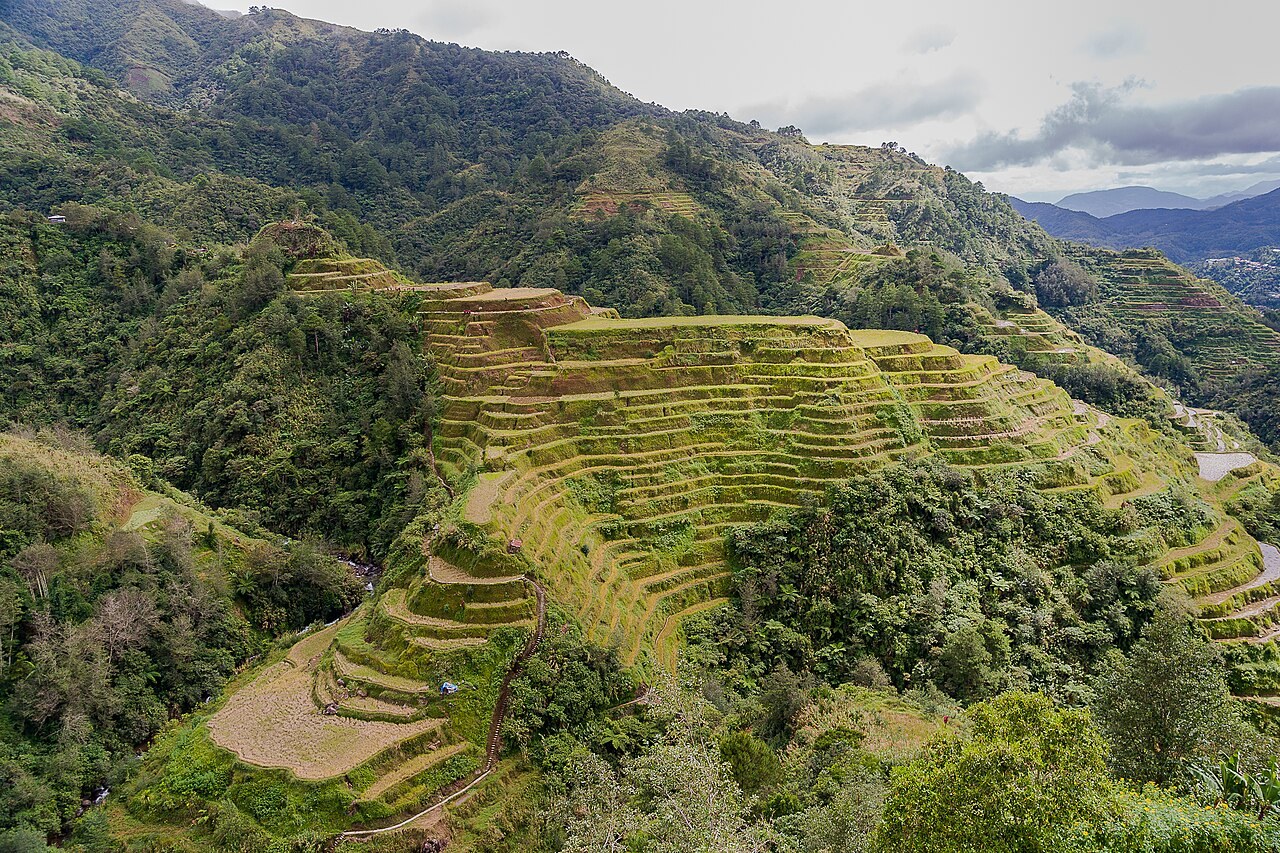
图片来源:图:菲律宾巴纳韦梯田。摄影:CEphoto, Uwe Aranas,CC BY-SA 3.0,取自 Wikimedia Commons