淡马锡高管:不担心科技巨头AI投入规模,将继续加大人工智能生态投资
波士顿——新加坡主权投资机构淡马锡的一名高管10月1日表示,淡马锡并不担心科技巨头为建设人工智能基础设施投入的巨额资金,并正致力于提高自身在这一技术上的敞口。淡马锡北美区主管简·阿瑟顿(Jane Atherton)在路透社于波士顿举行的投资活动上说,资助这些基础设施的公司相信,随着AI采用扩大,大规模投资将产生与风险相匹配的回报。
“支撑整个AI建设的,是世界上一些资产负债表最强的公司……我们对AI依然极其乐观。”阿瑟顿说。淡马锡持有Anthropic和OpenAI的股份,是全球最大的主权投资者之一,投资组合总价值约4000亿美元。其美国资产占组合的26%,主要持股包括贝莱德(BlackRock)、万事达卡和英伟达等金融服务与科技公司。
淡马锡今年早些时候公布计划:未来五年把对AI生态的投资占比从目前约6%提高到最高15%。与此同时,全球债券抛售和货币政策收紧预期,正在引发对科技巨头在高利率时代巨额资本开支可持续性的质疑。分析师预计,到2027年,超大规模云服务商的资本开支将超过1万亿美元,主要用于购买昂贵的芯片和建设数据中心。
阿瑟顿同时表示,AI安全问题需要由政府和开发技术的公司来解决。对新加坡而言,淡马锡的取态是观察这个城市国家如何押注AI经济的窗口:从数据中心、芯片供应链到国家级AI战略,新加坡正把人工智能放在经济议程的中心。
来源:据路透社2026年10月1日报道整理。
Temasek 'Comfortable' with AI Spending Levels, Executive Says, as It Raises Exposure to the Technology
BOSTON — Singapore's Temasek is not worried about the massive levels of spending from hyperscalers powering the AI buildout, an executive said on October 1, as the state investor works to increase its exposure to the technology. Jane Atherton, Temasek's North America head, told a Reuters investment event in Boston that the companies funding the infrastructure believe the large investments will yield risk-adjusted returns as adoption of AI grows.
'Underpinning all of this AI buildout are some of the strongest balance sheets in the world... we remain incredibly positive on AI,' Atherton said. Temasek, which owns stakes in Anthropic and OpenAI, is one of the world's largest state investors, with overall holdings valued at about $400 billion. Its holdings in the United States account for 26 percent of the portfolio, with major investments spanning financial services and technology, counting BlackRock, Mastercard and Nvidia among them.
Temasek laid out plans earlier this year to increase its investment in the AI ecosystem to as much as 15 percent of the portfolio over the next five years, from about 6 percent now. The remarks come as a selloff in global bonds and expectations of tighter monetary policy call into question the sustainability of tech giants' enormous spending commitments in a high-interest-rate era. Analysts have forecast hyperscaler capital expenditure to surpass $1 trillion by 2027, driven predominantly by the need to fund costly chips and data centres to satisfy huge amounts of compute demand.
Atherton added that the question of AI safety needed to be addressed by governments and the companies developing the technology. For Singapore, Temasek's stance is a window onto how the city-state is positioning for the AI economy — from data centres and chip supply chains to its national AI strategy, Singapore has placed artificial intelligence at the centre of its economic agenda.
Source: Compiled from Reuters reporting on October 1, 2026.
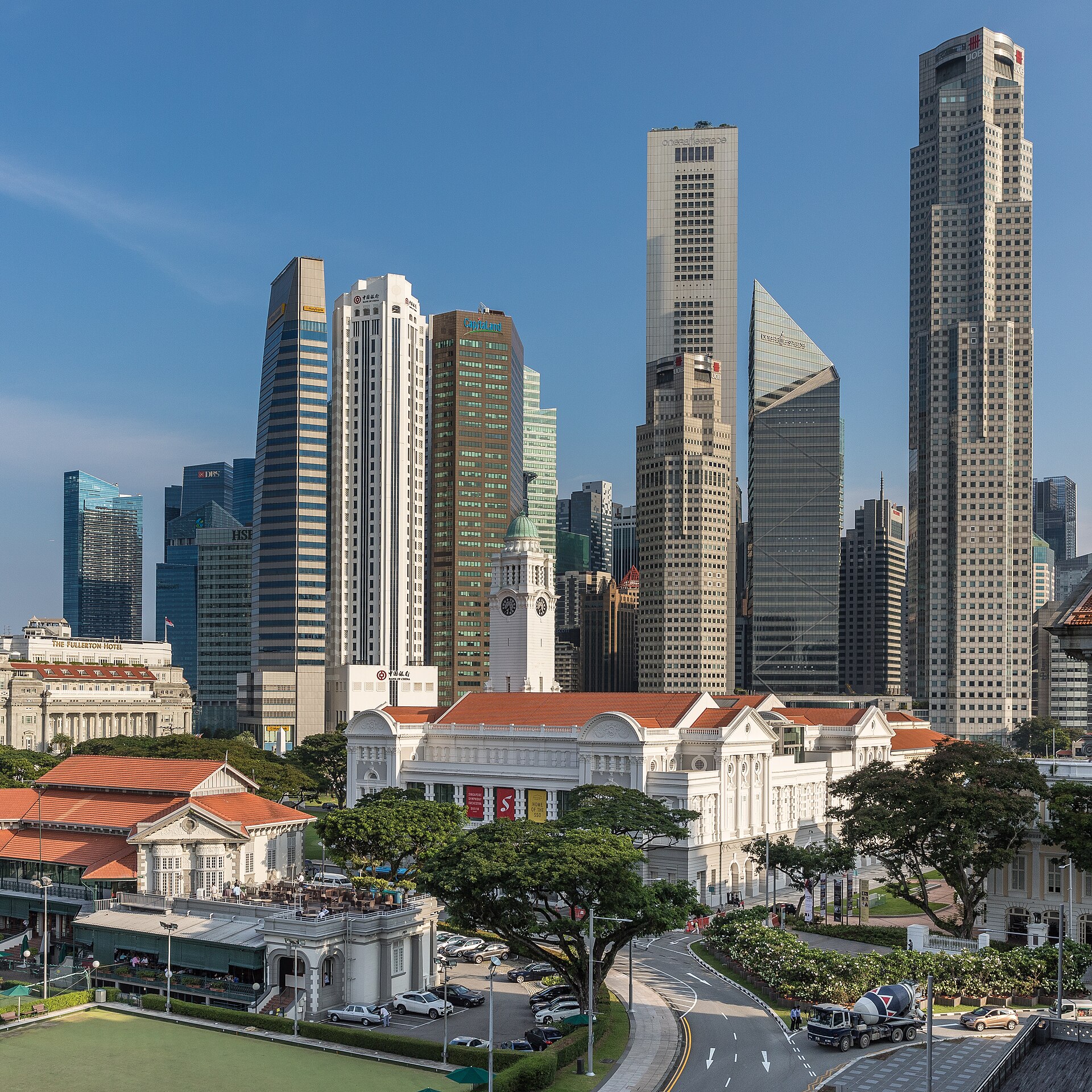
图片来源:新加坡中央商务区天际线与旧国会大厦,Basile Morin 摄,CC BY-SA 4.0(Wikimedia Commons)